Category Archives: Outdoor/Nature

Image

Missouri Legislation Filed to Halt the Sale of Five Invasive Plants

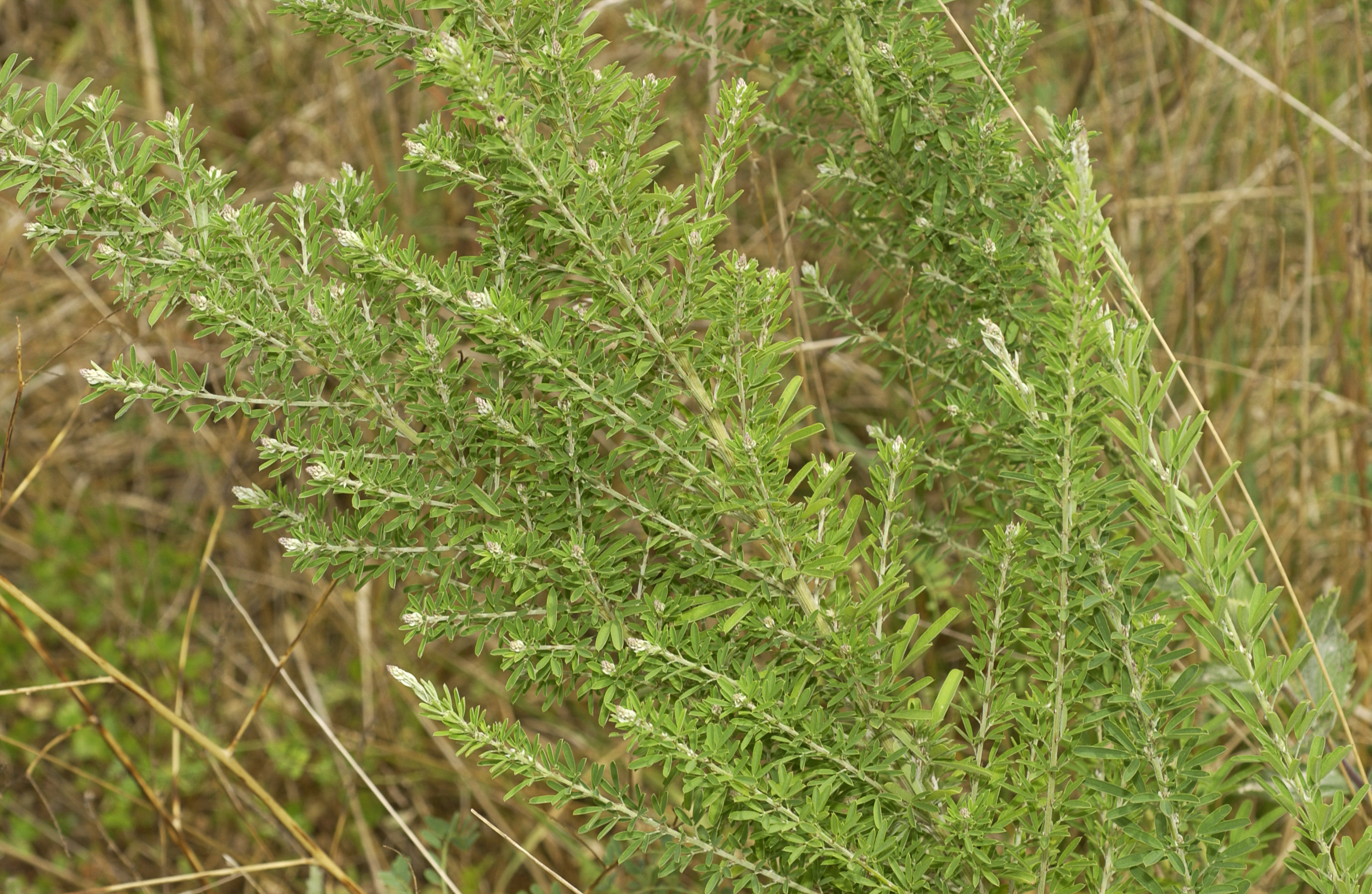
Sericea lespedeza, a highly invasive plant that can infest grasslands, pastures, rights-of-way, and other areas, is one of five species whose sale would be halted with the passage of Representative Sassmann’s legislation filed on December 1, 2023.

Locally and globally, invasive plants and animals are the second leading cause of native biodiversity decline and also threaten the economic stability of the forest product, livestock, and outdoor industries. In addition, Bradford pear, sericea lespedeza, and other non-native, invasive plants are costly and time-consuming for Missouri landowners and suburban and urban homeowners to control.

Of the state’s 142 invasive plants, as assessed by the Missouri Invasive Plant Council (MoIP), many continue to be sold in Missouri, contributing to their future, unintended spread across the landscape.

On December 1, 2023, Representative Bruce Sassmann (District 061), took action to help protect the state from invasive plants by filing HB 1555 to halt the sale and intentional distribution of five invasive plant species: burning bush (Euonymus alatus), Callery pear (Pyrus calleryana and its cultivars, including Bradford and Chanticleer), climbing euonymus (Euonymus fortunei; also commonly known as wintercreeper); Japanese honeysuckle (Lonicera japonica), and sericea lespedeza (Lespedeza cuneata).

Once passed, the Missouri Department of Agriculture is expected to be the agency tasked with enforcement of the legislation, issuing violations if any of the five plants listed above are found to be sold or intentionally distributed. Because of the investment that nursery owners and other plant sellers must make before many shrubs and trees are large enough to sell, two species on the list of five—burning bush and Callery pear plants—acquired by a licensed Missouri wholesale or retail plant nursery before January 1, 2025, shall be exempt from enforcement until January 1, 2028.

Continue reading

Image

Alan Hopefl – “Honeysuckle Slayer” To Be Honored By Kirkwood Park Board

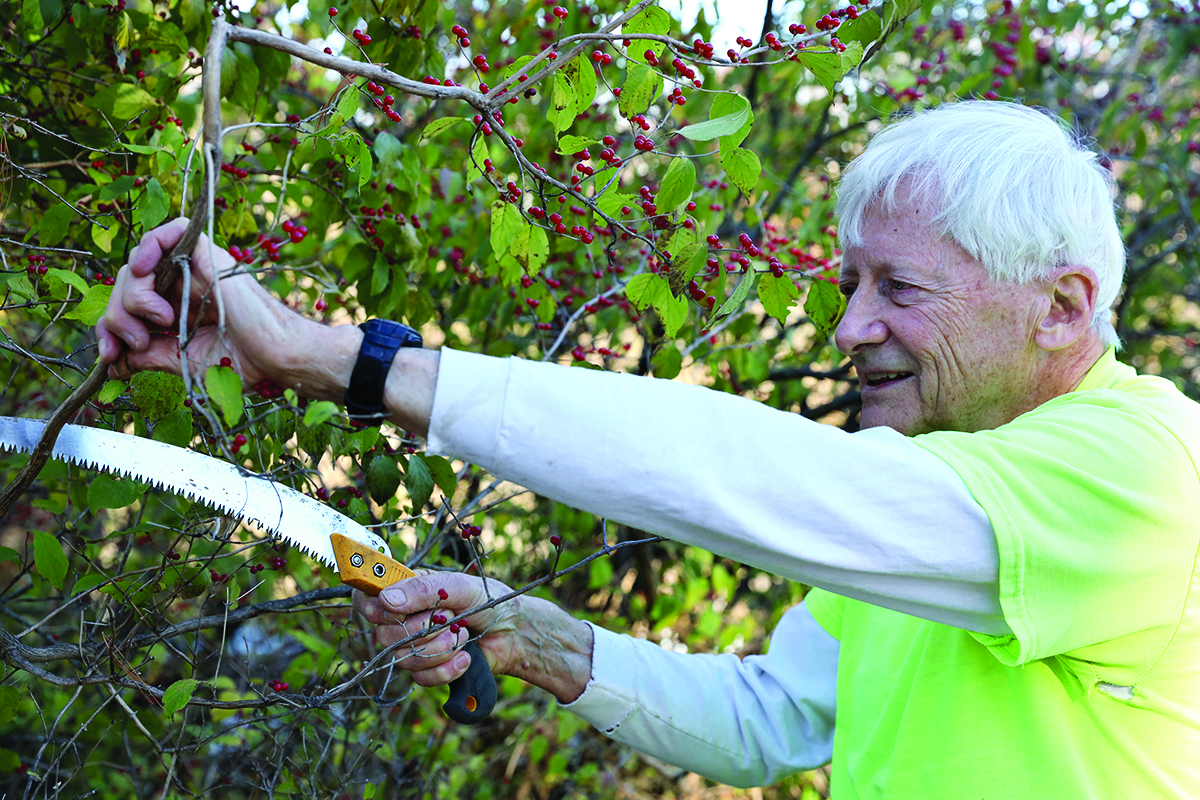
Above: Alan Hopefl clears the invasive honeysuckle bush. Photo courtesy Ursula Ruhl/Webster-Kirkwood Times.

by Don Corrigan

Some people see a bit of Christmas this time of year in the red berries and
fading green leaves of honeysuckle. Alan Hopefl only sees an enemy. He
sees it as an invasive that deserves no quarter.

“I’ve probably done 3,000 hours of honeysuckle cutting just in Emmenegger
Park in the past decade,” said Kirkwood resident Hopefl. “Emmenegger is
close for me. I can get to it walking from my backyard.

“Sometimes when I cut plants down close to a neighborhood, residents will
come out and ask if they can hire me to cut them down in their yard,”
laughed Hopefl. “I am not for hire. I have enough to cut in the park areas.”

Hopefl has been a Kirkwood Park Volunteer since 2010. At that time, he
was involved in all kinds of park work, not just removing honeysuckle. But
since the pandemic, he’s been a one-man team focused on honeysuckle.

“I don’t mind being called ‘the honeysuckle slayer.’ I’m sure I’ve been called
worse things,” said Hopefl. “I have a master naturalist ticket and I’ve
studied the plant enough to know all its bad effects.”

Continue reading

Image

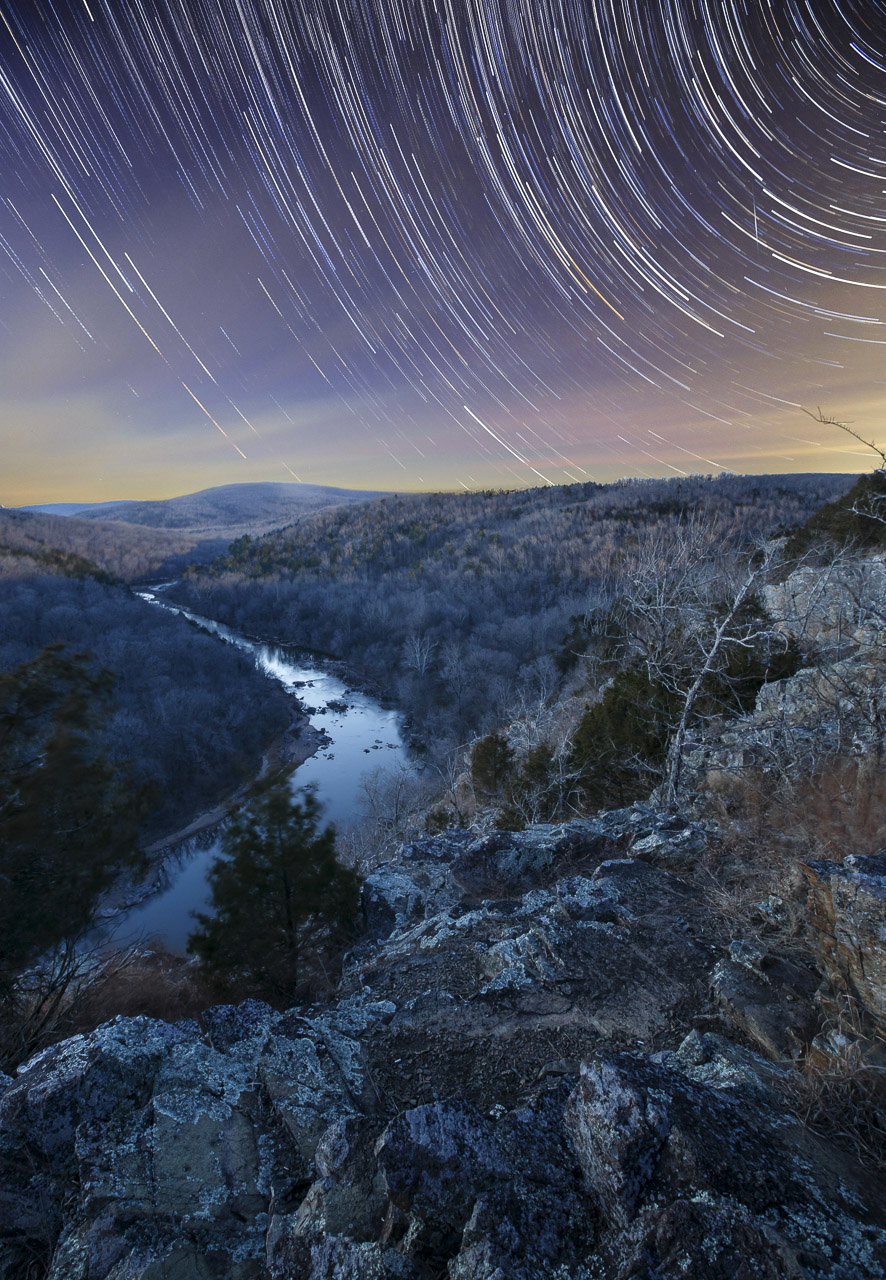
Night Visions: The Natural World Under Twilight, Moonlight and Starlight

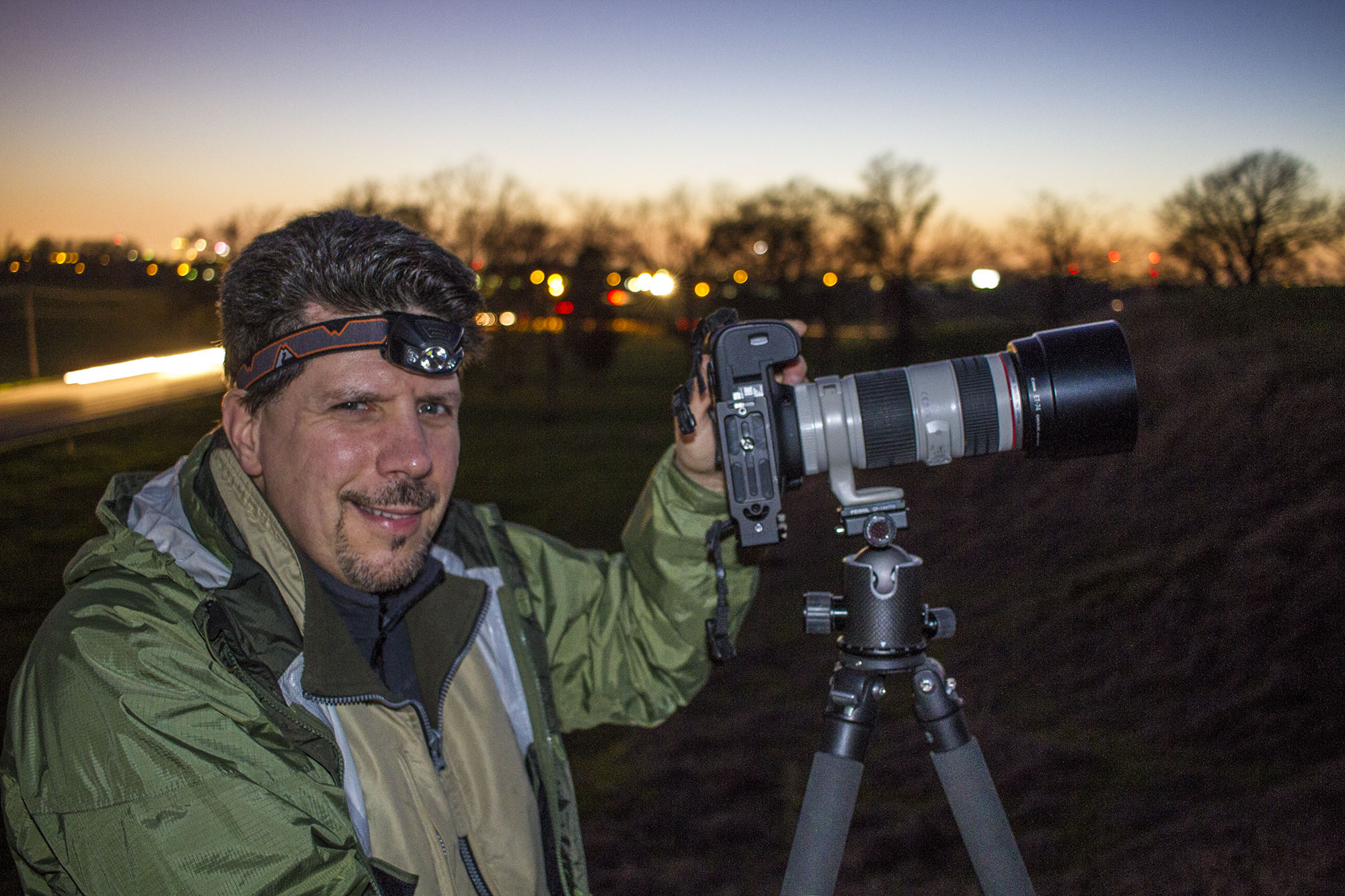
Pictured: Dan Zarlenga.

The Fantastic Photography of Dan Zarlinga

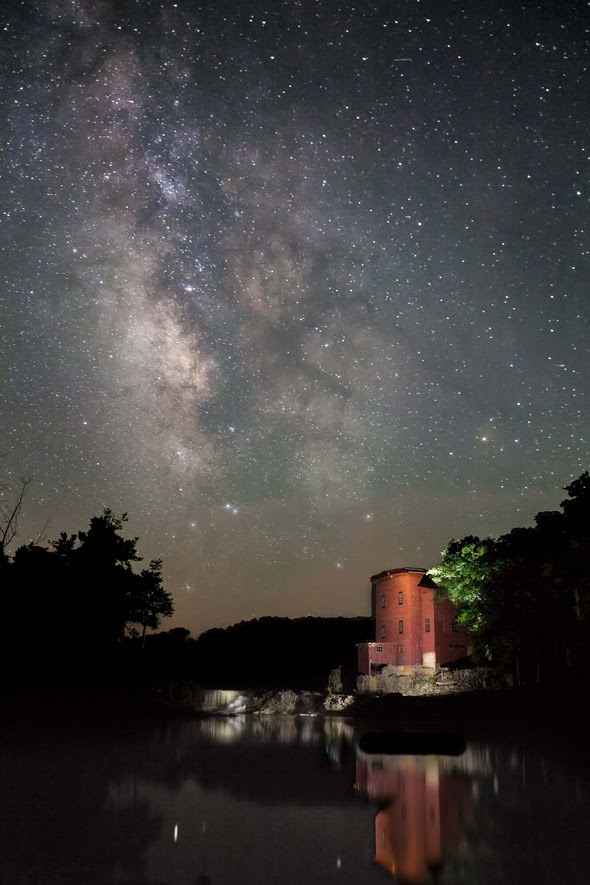
A lot of people may not think of night as the best time to take pictures. But while many photographers are putting their cameras away, Dan is usually getting his out. Zarlinga explains, “I’ve been in love with the night sky and the stars all my life.  After becoming interested in photography, it seemed only natural to bring the two together. The world looks different after the sun goes down . . . unique, mysterious, and intriguing.”

These photographs are a collection of twilight scenes, starscapes, long exposure star trails, and moonlit landscapes, all revealed by the photographic magic of long exposures.

See this amazing photo and more at Powder Valley Conservation Nature Center through the month of September.

Image

Get Outside This Fall With Help From Agents of Discovery Mobile App

MDC is again partnering with the Agents of Discovery mobile gaming app for its Missouri Explorer Campaign. Through Oct. 31, users can complete challenges at five MDC nature centers to connect with nature and earn special prizes.

The fall season is a great time to explore and learn about Missouri’s outdoors. To help kids and adults discover nature this season, the Missouri Department of Conservation (MDC) is again partnering with the Agents of Discovery mobile gaming app for its Missouri Explorer 3.0 Campaign.

Agents of Discovery is an educational gaming app that allows users to engage with nature while completing “Missions”, or games – proving that screen time can be green time.

The Missouri Explorer Campaign will run through Oct. 31. Anyone can join in by downloading the free app and completing the Missions at participating locations. Each Mission is made up of educational challenges that teach players about local history, culture, ecosystems, and safety.

The Campaign includes prizes to reward “Agents”, or players who participate. Once an Agent completes a Mission, they’ll earn a lanyard and a player card. If Agents complete three Missions, they’ll be entered to win raffle tickets to the Wonders of Wildlife National Museum and Aquarium, Dogwood Canyon Nature Park, the Discovery Center of Springfield, Arabia Steamboat Museum, and St. Louis Botanical Gardens. If they complete six Missions, they’ll fill out their player card and get upgraded to a new lanyard.

Agents can again complete Missions at five MDC nature centers: the Anita B. Gorman Discovery Center in Kansas City, Runge Nature Center in Jefferson City, Powder Valley Nature Center in Kirkwood, the Springfield Nature Center, and Cape Girardeau Nature Center.

Continue reading

Image

Fall Colors Are Coming! – Hit the Water and Kick Back for Fun at Creve Coeur Lake

Plenty of canoes and kayaks are available for use at the Creve Coeur Lake Rentals.

By Don Corrigan

Popular venues for major outdoor activities in the St. Louis area include Forest Park, the Gateway Arch grounds and Jefferson Barracks. But Cheryl Beckmann wants you to know you’re missing out if you don’t include Creve Coeur Lake.

Beckmann touts the miles of hiking and biking trails, plus a recreational lake for kayaking, canoeing and boating. There’s also a sandy beach for sunning, sand castle building or casting to catch the big one.

Of course, Beckmann readily admits  she has a vested interest in promoting fun times at the 2,125-acre park that includes a 320-acre lake. She and her husband, Rick, have operated Creve Coeur Lake Rentals for the past 13 years.

A staff member at Creve Coeur Lake Rentals prepares a kayaker for a trip on the lake located east of the Missouri River.

If you need a mobile surrey for the loop trail, or a single or tandem kayak, canoe or paddle board for the lake, the Beckmanns have you covered with rentals on the shoreline  just northwest of the park’s famous waterfall.

“We were out on the lake 15 years ago in our canoes, and some people on the shore asked if they could rent them from us,” said Cheryl Beckmann. “So I said to myself, that sounds like a great idea. We should start a rental business.

That’s exactly what they did.

“We started with five canoes and two quad bikes, and it just took off from there,” she explained.

Continue reading

Image

Native Gardens of Excellence Program inducts Peers Store Pollinator Garden Near Marthasville, MO

The Grow Native! Native Gardens of Excellence program has inducted the Peers Store Pollinator Garden, located at 16011 Concord Hill Road near Marthasville, on the Katy Trail at Mile Marker 81.2.

Along with four more newly inducted sites, this garden joins 20 other locations in Missouri, Arkansas, Kansas, and Illinois recognized by the program since it launched in 2021.

With its location on the Katy Trail, this pollinator garden, a partnership between Missouri State Parks and Magnificent Missouri, provides tens of thousands of yearly visitors a look at native plants and how powerful they can be in transforming a landscape. Visitors can see a prairie reconstruction with a variety of native plants, like rattlesnake master, sideoats grama, and slender mountain mint, that support wildlife and beautify the surroundings.

Continue reading

Image

Missouri Wine Country: Beauty Worth Protecting

Pictured: Dan Burkhardt

by Dan Burkhardt

Missouri Wine Country is getting noticed. Its grapes and wineries have made more news in the past two years than when a state wine was named “best red wine of all nations” in Vienna in the late1800s. With growing prestige, it may be time for Missouri Wine Country to learn a thing or two from Napa Valley.

America’s, and probably the world’s, best known wine destination is Napa Valley. Napa’s Mediterranean climate, scattered small towns, and location just a short drive from San Francisco make for a grape-growing mecca.

However as they looked at their future way back in the 1960s, Napa County leaders saw this list of remarkable advantages as something that also held the potential to destroy the natural beauty and rural ambience that was the area’s greatest asset. They realized the need to develop a plan to protect what people came to Napa for — the rustic and open feel of the valley itself. They established the Napa Valley Agricultural Preserve.

A recent article about Napa asked, “What really draws people to the Napa Valley?”

Continue reading

Image

Rock Island Trail State Park: Missourians Get Their 93rd State Park That’s 47.5 Miles Long

All photos courtesy Bruce Sassmann.

By Don Corrigan

Missourians got their 93rd State Park, which is a total of 47.5 miles long, when mayors, state officials and citizen supporters had an unveiling and a little speech-making on June 30 in Windsor, Mo.

Among those in attendance was Rep. Bruce Sassmann, R-Belle, who has been
advocating for the park to extend 144 miles across the state. It would rival the Katy Trail State Park as a wonderful route for hikers, bikers, sight-seers and outdoor enthusiasts.

Sassmann advocates for the completion of the Rock Island Trail State Park and will frequently show photos of the corridor and the amazing sights and scenes that will be available when funding becomes available to complete the corridor’s entire length. Some of those visuals are posted with this article.

With completion of the Rock Island Trail State Park, the corridor will likely have
trailheads at Windsor, Ionia, Cole Camp, Stover, Versailles, Barnett, Eldon, Eugene Meta Argyle Freeburg Belle Bland Owensville Rosebud Gerald Beaufort and Union.

The open section now runs 47.5 miles from Pleasant Hill to Windsor. There are five trailheads, including the trailhead at Windsor that the park shares with Katy Trail State Park.

This developed section was originally considered the Rock Island Spur of Katy Trail State Park. With the acquisition of the Rock Island Railroad corridor, the developed spur became part of Rock Island Trail State Park.

Rock Island Trail State Park is part of a larger rail-to-trail system within Missouri State Parks. At Windsor, Rock Island Trail State Park connects to Katy Trail State Park, the nation’s longest developed rail-trail stretching 240 miles between Clinton and Machens in St. Charles County.

Katy is built on the former corridor of the Missouri-Kansas-Texas Railroad (MKT or Katy) and features 26 trailheads and four fully restored depots along the way. The trail is open to walkers, hikers and bicyclists with sections also open for equestrian use. Katy Trail State Park annually attracts more than 400,000 visitors.

Rock Island Trail State Park will connect to Jackson County’s Rock Island Trail and will become part of a trail network spanning the entire state of Missouri, linking Kansas City to St. Louis.

At the recent unveiling of Missouri’s 93rd State Park, the Missouri Department of Natural Resources released some fascinating factoids about the corridor:

Did you know…

Continue reading

Image

Sunflower’s Are Back at Columbia Bottom Conservation Area Despite Drought

Photo courtesy of the MDC.

Missouri is starting off summer in droughty conditions.  Sunflower fans will be pleased to know that Missouri Department of Conservation (MDC) biologists still expect the sunflowers planted at Columbia Bottom Conservation Area in Spanish Lake to put on a show this year.   MDC staff has continued to plant multiple sunflower plots again this season.

Though the extremely dry conditions can put a lot of stress on plants and wildlife, MDC staff believe we’ll still see a good amount of blooming in the sunflower fields.  If the plants are especially stressed, the flowers may be somewhat smaller than previous years, and they might shift their blooming a little earlier and end a bit sooner.  But there should still be plenty to see for sunflower enthusiasts and photographers.

Showy sunflower fields have been an annual tradition at Columbia Bottom Conservation Area.  MDC staff have been planting sunflowers for years as part of their management for mourning doves.  The area is known for dove hunting each September.  The large flowers supply seeds that entice the birds, and their lofty stalks create cover for the hunters who pursue them.  Sunflowers also benefit a wide variety of other birds and pollinators.  They lure plenty of photographers, too.

MDC work crews began planting additional sunflower stands in addition to the regular dove management fields again a few years ago.  These viewing fields are easily spotted from the road and intended to provide convenient access for taking photos.  MDC crews also stagger the timing of the plantings to spread their blooming periods out over a longer period.  Visitors should be able to see sunflowers in bloom somewhere on the area from early July through the middle of August—depending on weather conditions.

Continue reading

Image

Outdoor Writing Workshop: Press Club Joins Up With MoBOT For Nature Inspiration

Press Club members pause in the English Woodland Garden at the Missouri Botanical Garden to collect their thoughts before composing prose at a nature writing workshop. Photo by Jessica Brown.

by Don Corrigan

You don’t have to go to David Thoreau’s Walden Pond or Joan Didion’s Tinker Creek to get some outdoor inspiration for writing prose and poetry. The Missouri Botanical Garden has some perfect spots, some quieter than others, for inspiration.

Michaella Thornton and Sean Dougherty give nature writers some instructions and encouragement before a June 10 creative writing workshop at the Missouri Botanical Garden. Photo by Jessica Brown.

Earlier this month, St. Louis Press Club members were hosted by the Missouri Botanical Garden to take a nature writing tour led by Sean Dougherty and Michaella Thornton.

Doherty is vice president for education for MoBOT and Thornton is an award-winning educator whose work has been nominated for a Pushcart Prize, best of the Net and Best Microfiction.

The educational tour was designed to acquaint participants with special park locations, to build nature vocabularies, and to provide background on the natural world and local landscapes.

Participants were invited to bring their electronic tablets or pens and notebooks. There was plenty of space and time allotted for some short writing exercises.

Among the park sites visited:

– The Victorian District, which includes statues and the home of Henry Shaw.

– The English Woodland Garden, with tall, leafy trees shading a hot sun.

– The Japanese Garden, with its soothing waters gurgling away.

At the Victorian District, Thornton read from Aimee Nezhukumatathil’s Calendar Poetica, including this excerpt: “My writing instrument is a Sheaffler fountain pen with a #304 nib. Everything else in my life is chaos: I am, of course, sleep-deprived, and the edges of my garden start to blur and shimmer as if near a gas flame  … ”

Continue reading