Category Archives: Outdoor/Nature

Image

MoIP Invasive Plant Action Award Winners Announcement

The Missouri Invasive Plant Council (MoIP) is pleased to announce the winners of the 2026 MoIP Invasive Plant Action Awards. MoIP established its Invasive Plant Action Award program to recognize the outstanding work being done in Missouri to control invasive plant species. The MoIP Invasive Plant Action Awards recognize exceptional effort and leadership, and also serve as a way to demonstrate to the broader community how controlling the spread of invasive plants on Missouri farms, forests, woodlands, prairies, gardens, parks, neighborhoods, roadsides, and along waterways is attainable and very important land stewardship. Members of MoIP evaluate nominations and select winners annually. For more information about the awards program, visit the MoIP website, moinvasives.org.

The 2026 MoIP Award Winners

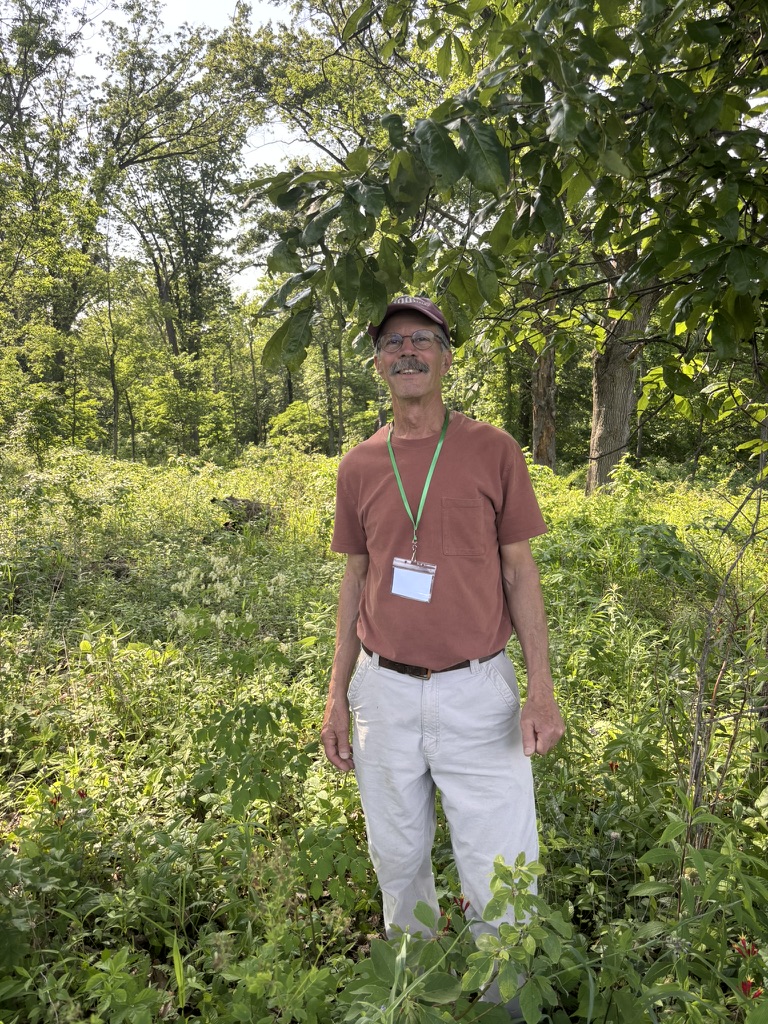
Mike Smith (Photo by Carol Davit)

Mike Smith is the winner in the Individual Citizen category, awarded to a private landowner that has demonstrated progress in reducing invasive plants over at least two years. In March 2015, he began volunteering at Shaw Nature Reserve (SNR) in Gray Summit, Missouri, and quickly became a regular. Mike became SNR’s first volunteer land steward in March 2018, leading workdays in 16 acres of SNR’s Brush Creek corridor. At the time, this area was classified as a high-priority restoration site where at least ten invasive species were successfully identified as targets. Through this project, Mike became a highly skilled and capable land manager. His education background is apparent in his work, keeping everyone eager and engaged.

“Through his work, Mike embodies the belief that stewardship fosters connection—between people and the land, and among one another. He demonstrates that shared effort on common ground can lead to meaningful, lasting change.” ~ Alex Conley, Missouri Botanical Garden – Shaw Nature Reserve

 

Brittany Shultz (Photo by Nathan Kwarta)

Brittany Shultz is the winner in the Individual Professional, awarded to a natural resources professional who has demonstrated progress in reducing invasive plants over at least two years. She is the Living Collections Data Specialist at the Missouri Botanical Garden (MBG). Brittany co-authored “The potential role of public gardens as sentinels of plant invasion” (2022) in the Invasive Plant Science and Management Journal.

Brittany played a central role in developing and implementing the Weed Risk Assessment (WRA), a tool to systematically categorize the likelihood that a plant in botanical collections may escape cultivation. She compiled and organized diverse invasive plant data sources for integration into the Garden’s Living Collections Management System (LCMS). She collaborated with database developers to build and refine the assessment framework, then tested and validated the scoring methodology, enabling the automated evaluation of more than 7,600 species for invasive potential.

Through this work, Brittany helped create a scalable decision-support tool that continues to guide responsible plant acquisition and collections management at MBG. This work minimizes the ecological risk of plants newly introduced to Missouri. Her participation in Public Gardens as Sentinels against Invasive Plants (PGSIP), a database for public gardens in North America to share information about plant taxa that they are observing escaping from cultivation on site, ensures best practices are shared with public gardens on a national level.

“Colleagues consistently describe Brittany as deeply passionate about invasive species prevention, exceptionally detail‐oriented, and unwavering [in] her dedication. Through innovation, collaboration, and sustained commitment, she has made a lasting contribution to invasive plant prevention and exemplifies the spirit of the MoIP Invasive Plant Action Award.” ~ Rebecca Sucher, Missouri Botanical Garden

For more information about the 2026 Invasive Plant Action Award Winners, please CLICK HERE.

About MoIP
The Missouri Invasive Plant Council (MoIP) advocates for making early detection and control of known and potential invasive plants a statewide priority. In 2015, the Missouri Prairie Foundation’s Grow Native! program spearheaded this multi-agency, multi-industry networking and advocacy group to bolster statewide efforts to identify and control the invasive plants that severely impact several sectors of the Missouri economy and native biodiversity. The purpose of MoIP—working as a united, supportive front—is to review, discuss, and recommend educational and regulatory action related to managing known and potential non-­native invasive plants. Representatives from the fields of conservation, agriculture, botanical science, ecological services, plant production, horticulture, landscape services and design, and forestry make up the council.

Image

Missouri Geological Survey Awarded USGS Grant to Study Landslides

The Missouri Geological Survey, a division of the Missouri Department of Natural Resources, will identify and map the location of historic landslides in southeastern Missouri through a grant recently awarded by the U.S. Geological Survey. The study area will be along the Interstate 55 corridor through the Benton Hills area of Scott and Cape Girardeau counties. MoDNR’s Missouri Geological Survey will release maps and other data generated through the study to the public in the fall of 2027.

“In this region, we know landslides have been caused by seismic activity, such as along the Chickasaw Bluffs area of Tennessee after the New Madrid Earthquakes of 1811-1812,” said Fletcher Bone, the geohazards geologist with the Missouri Geological Survey. “To better understand this potential threat, our first step is to know where landslides have occurred in the past. This study will be the first in the state to map historic landslides in this area of southeastern Missouri using modern mapping methods, including 1-meter, LiDAR-derived digital elevation models.”

Bone said future goals of the effort include building on this project with available funding to conduct additional landslide studies in other areas of Missouri.

“By documenting and investigating historical or existing landslides, the Missouri Geological Survey will provide emergency managers, planners and citizens with a better understanding of potential landslide locations and occurrences,” Bone said. “This information will give local community planners and first responders the tools they need to make informed and timely decisions in the face of adverse conditions, especially if a substantial earthquake were to occur in the New Madrid Seismic Zone. Ultimately, these maps will increase awareness of landslide risks and improve community preparedness through better risk assessment and mapping.”

The study’s funding, in the amount of $39,106, comes from the U.S. Geological Survey Cooperative Landslide Hazard Mapping and Assessment Program. MoDNR’s Missouri Geological Survey proposal was titled, “Mapping Landslides Along the Interstate 55 (I-55) Corridor in Scott City and Morley 7.5’ Quadrangles of the Benton Hills, Scott and Cape Girardeau Counties, Missouri.”

Visit MoDNR’s Geologic Hazards webpage to learn more information about landslides and other geohazards in Missouri.

Image

Help Study Crayfish at Tower Grove Park July 10-11

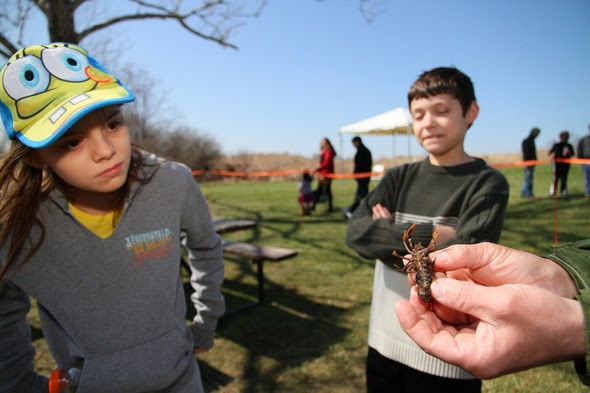
MDC invites the public to get hands-on experience exploring the “mini lobsters” of Missouri’s aquatic ecosystems.

There’s an aquatic creature in Missouri that plays an essential role in keeping streams and rivers healthy. Crayfish help recycle nutrients, create habitat for other aquatic species, and serve as one of our best indicators of water quality.  And the fact that they could pass for miniature lobsters make them even more fascinating.  Unfortunately, not all crayfish are a welcome sight. Invasive species can threaten native crayfish populations and disrupt aquatic ecosystems.

The Show-Me-State is home to 38 species of native crayfish.  The Missouri Department of Conservation (MDC) is offering a chance to discover their secrets during the Crayfish Craze! Citizen science project July 10-11 at Tower Grove Park in St. Louis.

It turns out that Tower Grove Park has a crazy problem – a crayfish problem.  This two-part program is an opportunity to learn about native and invasive crayfish in Missouri and practice trapping them for study, while helping staff manage the garden.  This is an excellent chance to learn about and participate actively in a citizen science project.

Each of the sessions is open to anyone age 9 years and up and free to attend but requires online registration.   The two-part program is as follows:

Continue reading

Image

Grow Native! Launches New Online Guide for Beginning Native Plant Gardeners

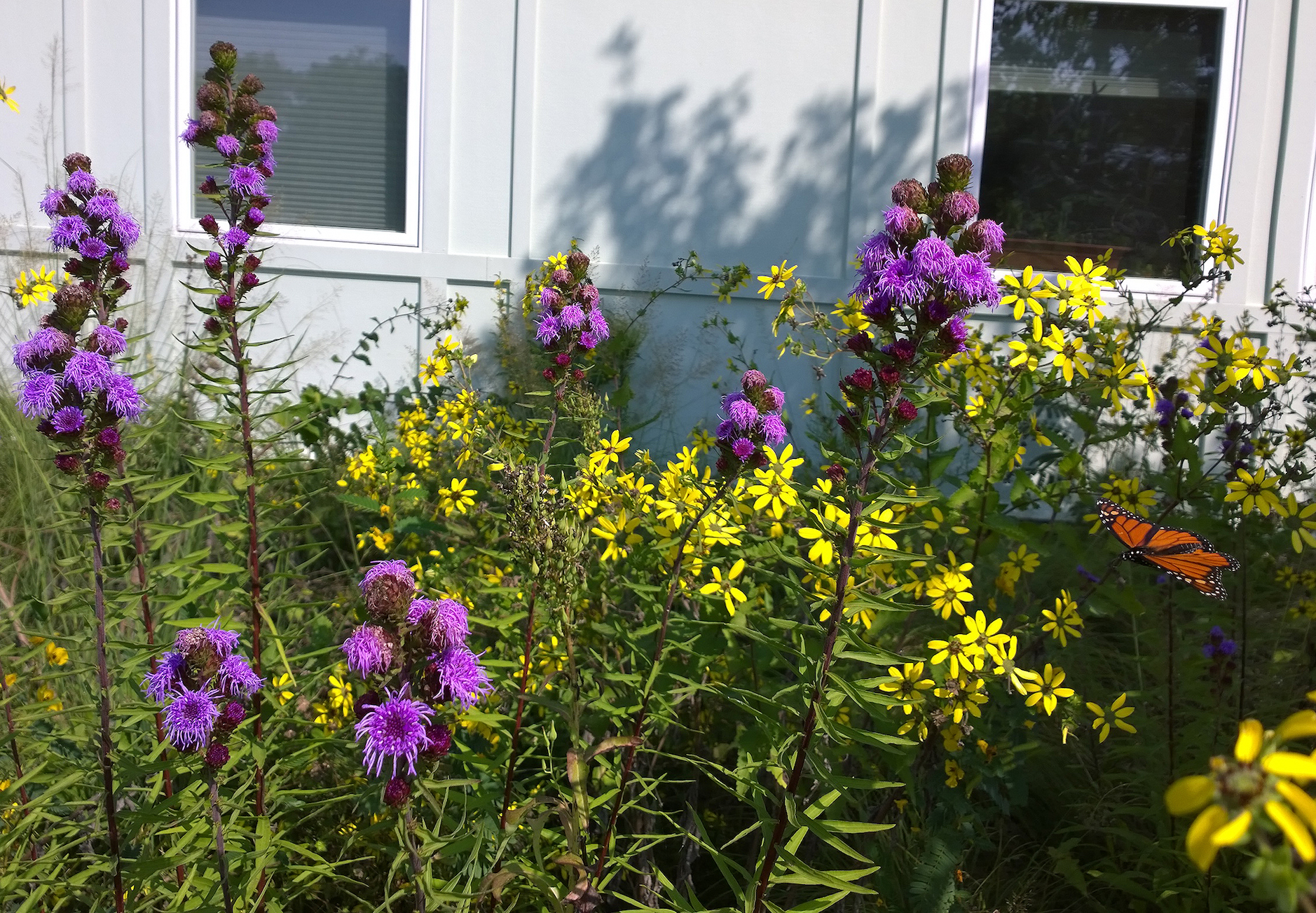
A monarch butterfly flies past a garden planted with eastern blazing star (Liatris scariosa) and Texas green eyes (Berlanderia texana). Monarch butterflies need nectar from fall-blooming plants like these to fuel their migration south. Photo by Scott Woodbury.

Whether starting a small container garden on a porch, planting a native canopy tree, or filling a bed with many grasses and wildflowers, anyone can garden with native plants—no experience or “green thumb” required. For would-be gardeners with little or no gardening experience, the Missouri Prairie Foundation’s (MPF) Grow Native! program has launched a free Guide for Beginning Native Plant Gardeners for do-it-yourself (DIY) native plant gardening in the lower Midwest.

The online Guide for Beginning Native Plant Gardeners (or “Beginner’s Guide”) features step-by-step instructions for planning, preparing, and installing a new native plant garden, worksheets to guide the process, and beginner-friendly garden plans. Special topics include conducting a site assessment, transforming areas of lawn into native plant beds, and shopping for native plants. It also includes links to resources from Grow Native! and its conservation partners with information about the region’s pollinators, songbirds, butterflies, edible native plants, and more.

The Beginner’s Guide is available to use online at grownative.org/beginner-guide. It is also available to download as a PDF at the link.

“When I started thinking about native landscaping in my own yard, I was very enthusiastic about native plants, but didn’t know where to start,” said Emily Gustafson, MPF’s Director of Operations who developed the guide. “With the new Beginner’s Guide, we sought to craft a resource tailored to folks just starting out that would be accessible, practical, and inspirational, while drawing on the wealth of educational materials Grow Native! has produced over so many years.”

Continue reading

Image

National Parks Guide: Chalice Books’ Author Brad Lyons Makes U.S. Travel A Spiritual Journey

By Don Corrigan

Kirkwood’s Brad Lyons has a long history publishing books with spiritual themes. His Chalice Press, once located at Eden Theological Seminary in Webster Groves, has published 240 titles on faith issues and spirituality.

In recent years, he has turned to writing his own books for Chalice Press including a 2026 edition entitled, “The National Parks Inspiration Guide: Your Journey to Connection, Meaning, and Discovery.”

“I grew up in a ‘Big Vacation’ family,” said Lyons, originally from Oklahoma. “One year we went to Los Angeles via Seattle and we stopped at so many parks on the way. This book grew from a natural curiosity into a passion.”

Lyons has carried on the “Big Vacation” tradition with his own family. He and his wife, Courtney, and their three children, Zoe, Summer and Blake, have made vacation memories that have focused on national park visits.

“Watching my daughters see Mesa Verde for the first time will be one of my favorite memories,” said Lyons. “We took a nine-park trip a few years ago, with horseback riding in Bryce Canyon; wading The Narrows at Zion; and hiking other national parks.

“We were at Glacier National Park in 2009, and my son was really wanting to burn off some energy, so I let him run down a path on his own,” recalled Lyons. “Watching him sprinting through the trees was a blast. He’s a history buff, so he also really engages with national park units focused on history.”

With his long-time role at Chalice Press, Lyons is a bit of a religious buff. Chalice Press is the imprint of the Christian Board of Publication, publishing house of the Christian Church (Disciples of Christ). A non-profit ministry, the CBP was founded in 1911.

Lyons interest in the spiritual life and in outdoor exploration merged naturally into book writing. He found a kindred spirit for his literary aspirations with friend and co-author, Bruce Barkhauer.

“Bruce grew up in Cleveland and attended Ohio University and Christian Theological Seminary. He lives in Indiana now. Bruce is a career minister, whereas I’m a layperson with an MFA in creative writing and a publishing background,” Lyons explained.

Continue reading

Image

Flags Fly High Over Mark Twain State Park

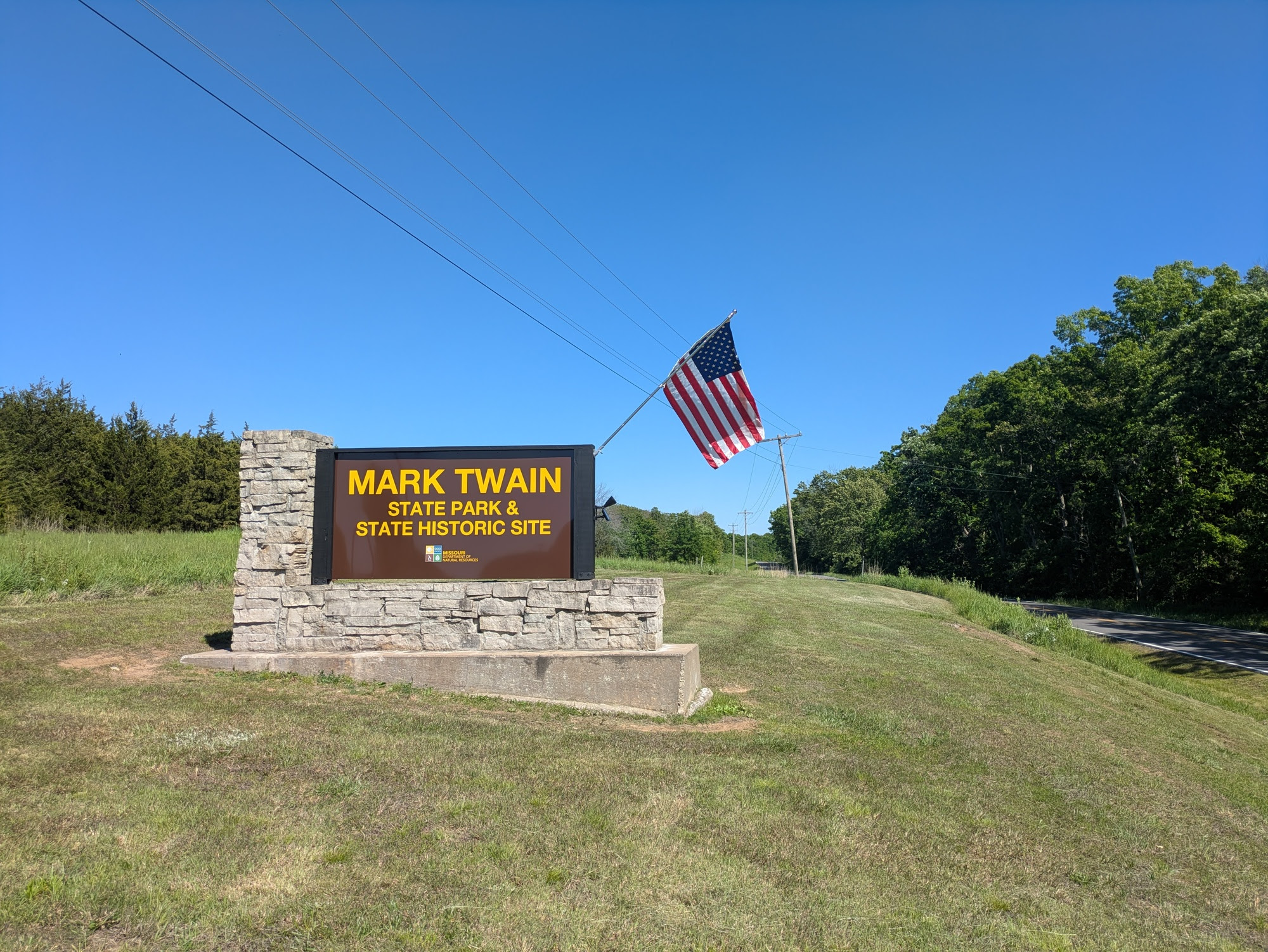
America is turning 250 this year, and Mark Twain State Park near Florida, Missouri, is making sure the milestone doesn’t go unnoticed. Throughout the park, a new wave of flags marks the park’s role in the national celebration, inviting visitors to reflect on two-and-a-half centuries of history in the namesake park of one of the country’s greatest icons.

The team at Mark Twain State Park is known for their patriotism. Rachel Hoemann, park superintendent, said the flags at the park represent not only the spirit of America, but also the spirit of Missouri’s state parks.

“Seeing these flags will remind our guests that history isn’t just in books; it’s in the land as well,” Hoemann said. “Mark Twain said true patriotism is loyalty to your country all the time. By placing these flags in the park, we aren’t just celebrating a date on a calendar; we are honoring the honest and often humorous spirit that Twain gave to the American identity.”

For those spending time camping, fishing or hiking the trails of Mark Twain State Park this year, the message is simple: America is still unfolding, and its history is as vibrant and enduring as the Missouri hills themselves. Hoemann invites guests to visit the park and reflect on the past as well as the future, and to celebrate our beloved country.

Continue reading

Image

MDC reminds people to be “BearWise” about black bears

MDC reminds people to be BearWise to avoid conflicts with black bears. Store garbage, recyclables, and compost inside secure buildings or in bear-proof containers.

With warming weather and the many wonders of nature awakening in spring, the Missouri Department of Conservation (MDC) reminds people to be BearWise.

Missouri’s estimated 1,000+ black bears are waking up and are focused on fattening up after a long winter’s sleep. Unsecured food sources around homes and outbuildings could attract the attention of a hungry bear.

MDC Furbearer Biologist Nate Bowersock said it is important that people remove or secure bear attractants from their property, such as bird feeders, trash, barbeque grills, pet food, and food waste.

“Black bears are super-focused on finding food in the spring,” said Bowersock. “The quest for calories keeps bears active. When the eating is good, a bear can put on two to three pounds a day.”

Bowersock added that keeping areas free of food attractants and letting bears find natural foods is in everyone’s best interest. “If you see a bear, let the animal be and enjoy the sighting, but be sure to not offer it any food,” he said

Intentionally feeding bears can be dangerous because it makes them comfortable around people and can lead bears to cause significant damage to property while searching for food.

“When bears lose their fear of humans, they could approach people in search of food or may become defensive of the food sources they find near people, which could lead to conflict,” Bowersock said. “When this happens, the bear cannot be relocated and has to be destroyed. A fed bear is a dead bear.”

Click to read more about tips to avoid attracting black bears from the MDC below.

Continue reading

Image

Conservation Federation of Missouri Celebrated 90th Anniversary at Historic Tiger Hotel this past Summer, Unveiled a New CFM Logo

The Conservation Federation of Missouri (CFM) proudly celebrated its 90th anniversary on Wednesday, September 10, 2025, with a special event at the Tiger Hotel in Columbia — the very place where the organization was founded in 1935. Affiliates, members, and supporters from across the state gathered to honor nine decades of conservation leadership and to witness the unveiling of CFM’s new logo.

“CFM has been making a vitally important impact on Missouri conservation and the outdoors for 90 years,” said Tyler Schwartze, Executive Director and Editor of CFM, “I’m very excited about the history of what we’ve accomplished, and equally optimistic about what lies ahead for the members of the Federation protecting our precious resources for generations to come.

Since its founding at the Tiger Hotel 90 years ago yesterday, CFM has grown into Missouri’s largest citizen-led conservation organization, uniting individuals, businesses, and partner organizations to protect the state’s fish, forests, and wildlife resources.

The 90th anniversary not only celebrated historic achievements but also marked the start of a new chapter as CFM continues to engage Missourians in conservation for the future.

“The Conservation Federation of Missouri is the leading advocate for thriving wildlife, clean air and water, and vibrant lands throughout the Show Me State,” said Collin O’Mara, president and CEO of the National Wildlife Federation (NWF).”

The new logo not only captures the breadth and depth of the Conservation Federation of Missouri’s mission, but also the deep history and dedication to conservation across the state.  Conservation Federation of Missouri — one of NWF’s 52 state and territorial affiliates — continue to help wildlife and people thrive for future generations in Missouri.

About the Conservation Federation of Missouri:

The Conservation Federation of Missouri (CFM) is a nonprofit organization dedicated to the conservation and preservation of Missouri’s wildlife and natural resources. Founded in 1935, CFM represents thousands of individuals and more than 100 affiliated organizations across the state. For more information, visit www.ConFedMo.org.

(This EE story comes courtesy of the Missouri Outdoor Communicators)

Image

Missouri Convenes Environmental Crimes Task Force

After a roughly 25-year hiatus, Missouri has reconvened an Environmental Crimes Task Force to investigate and prosecute violations of state and federal environmental laws. Missouri’s task force combines local, state and federal law enforcement, prosecutors and environmental regulators who will focus on crimes like illegal dumping, hazardous waste disposal, illegal discharges into waterways and more.

While a similar task force existed several years ago, the Missouri Department of Natural Resources is leading the effort to activate a new team responsible for ensuring that prosecution of environmental violations and crimes is efficiently and effectively coordinated between the different enforcement partner entities.

“Missouri has effectively prosecuted environmental crimes for decades, but we felt it was time to convene a new task force that will be even more focused, collaborative and effective,” said Kurt Schaefer, director of the Missouri Department of Natural Resources. “Ultimately, our goal is to protect public health and the environment.”

“Protecting Missouri’s communities and environmental resources is a top priority,” said Attorney General Catherine Hanaway. “Those who violate environmental laws and jeopardize public health will be held accountable. We appreciate Director Schaefer’s leadership in convening this task force and look forward to working together to enforce our laws.”

Continue reading

Image

Creve Coeur Lake: It Can Be Your Winter Wonderland

Story and photos by Don Corrigan

After Snowmaggedon 2026, it’s important to focus on nature  – and not just icy roads, snowplows and schools closing. Missouri has some key locations for winter scenery, although it is important to bundle up before trekking off to sample magnificent icy eye candy.

Creve Coeur Lake in West St. Louis County offers snow-packed bluffs, craggy waterfalls with icicles, frozen creeks and shimmering lakes, and wildlife that somehow finds a way to survive and thrive despite intense cold.

Creve Coeur means “broken heart” in French. A legend holds that the lake was split in two when a young Native American woman threw herself to her death after being heartbroken in love. A waterfall at the lake, known as “Dripping Springs,” is said to be the site of the tragic death of a lovelorn girl.

Pictured: Don Corrigan

The “Dripping Springs” are destined to be frozen for days in the wake of the giant snowstorm that blanketed the nation this January 2026. It’s a wonder to behold this time of year. The silvery site precedes us and will captivate observers long after we are gone.

Area residents may be surprised to learn that Creve Coeur Lake is the largest naturally-formed lake in Missouri. It covers 320 acres and was formed thousands of years ago when the Missouri River to the west shifted and created the lake as an oxbow.

Located in Maryland Heights Creve Coeur Lake sits in the largest park in St. Louis County, the Creve Coeur Lake Memorial Park. In warmer weather, bicyclists love to circle the lake or head across the Missouri River to St. Charles on the Katy Trail

Every kind of recreation is available in the park. Hikers and bicyclists love the trails. A trail spur can take them over the Page Avenue Extension Bridge for a meet-up with the beloved Katy Trail, which allows travel literally across the state.

The lake itself also supports multi-modal transportation. Kayakers and canoeists love to explore the many nooks and crannies of the lake. A sailing club and a sculling club are located here. Their boats add to the ambiance of the area.
(Watch for the spring release of Don Corrigan and Diana Linsley’s Scenic Natural Wonders of Missouri. Pre-orders are available at reedypress.com)