Category Archives: Outdoor/Nature

Webster Takes A Hike STL Suburb Celebrates Its Trees Before April 29 Arbor Day

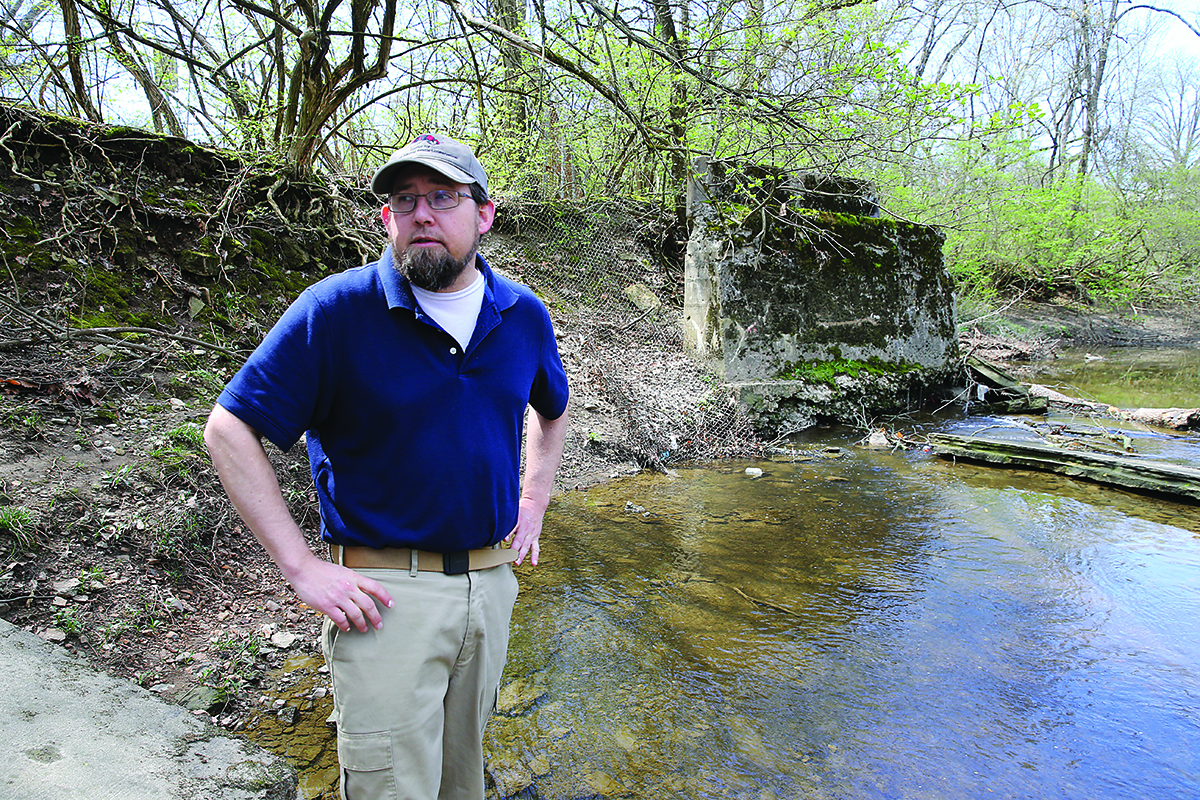
Pictured: David Gunn. All photos by Ursula Ruhl, WKT.

by Don Corrigan

In anticipation of the nationally-designated tree holiday of April 26, the city of Webster Groves set aside Wednesday, April 17, for its formal Arbor Day Ceremony and Awards Celebration.

Prior to its official celebration on the evening of April 17, citizen volunteers and city team members planted 200 trees to honor Arbor Day. At 5 p.m., that day an awards ceremony commenced at Southwest Park Pavilion.

Tree Steward Lynnda Greene was posthumously granted a Tree of Distinction Award. Greene was a Master Gardener, and a member of the International Dark-Sky Association. She was praised for her love of nature, animals and the environment.

Greene was a member of the Webster Groves Garden Club and founding member of Webster Groves Greenkeepers. She assisted the city’s Greenspace Commission and one of her passions before her death in May 2023 was promoting the NO-MOW green movement to benefit pollinators.

The honor for Greene was followed with a tree tour given by David Gunn. An arborist certified by the International Society of Arboriculture, Gunn’s talents were enlisted by the city’s “Eco-Ed” program series.

Arborist’s Tree Walk

On the tree walk, Gunn pointed out some of the city’s most interesting trees in Southwest Park. He also spoke to the hikers on the basics of tree anatomy, soil structure, tree identification and his favorite park trees .

“I like the black locusts that reach down and touch the ground with their trunks,” said Gunn. “I love when we can see trees that are allowed to do their own thing, instead of always being managed to be neat and tiny.

“There’s also a great hackberry that I love,” noted Gunn. “What parks can do – that residences can’t do – is let trees age and fall apart a little bit. Let the woodpeckers and the raccoons add some character as well.”

Continue reading

Image

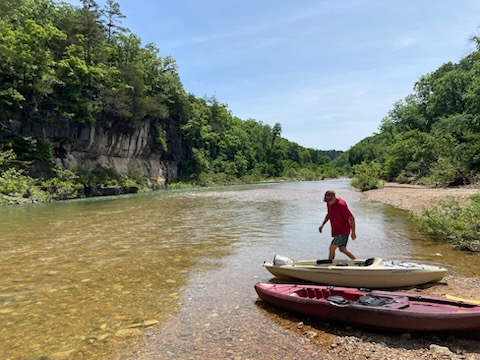
Battle Against Invasive Asian Carp Continues

Photo by MDC Staff, courtesy Missouri Department of Conservation.

By: Zoe DeYoung

A billion dollar project to prevent invasive Asian carp from entering the Great Lakes is set to begin construction this year, but don’t feel too bad for the nuisance fish.

The species has been wreaking havoc throughout the Mississippi River Basin, out-competing native fish for living space and resources since the 1980s.

Pictured: Jill Moon

Longtime Alton Telegraph reporter Jill Moon first heard of the invasive carp issue at a 2009 city council meeting in Grafton, a river town where the Illinois River acts as a perfect feeder for breeding carp.

Three entrepreneurs presented a plan at the meeting to capitalize on the carp. “They thought they had a good money making venture,” Moon said.

The plan involved an Asian carp processing plant. It got the green light. Moon was on the story from there: if you have lemons, make lemonade; if you have carp, put them on the menu.

“When I went to these city council meetings, they would have the boring stuff like, ‘The Street Department fixed Oak Avenue.’ A factory to make Asian carp byproducts stood out to me. And I already knew that the Asian carp was a problem,” Moon said.

A problem not only for native aquatic life, but for boaters. Asian carp tend to feed at the water’s surface and are very easily disturbed. When agitated by a boat propeller or even a sculler’s oar, they can jump up to 10 feet in the air. Think popcorn, but instead it is hundreds of soaring fish.

“Certain times of year when they are spawning, the Asian carp will jump out of the Illinois River. They’ve jumped in boats before, and they’ve accidentally given bloody noses,” Moon explained. “They’re a nuisance species,” Moon added. “So that just struck a nerve in me to find out more.”

The Grafton-based American Heartland Fish Products plant was the brainchild of those entrepreneurs at the meeting Their plan came to fruition, soon processing as much as 60,000 pounds of carp a day, as well as fish oil, fish meal and a funky smell.

The odor began to bother residents, so much so that the plant was given 30 days to address the stink. Ultimately, the plant went kaput.

Continue reading

Image

Meramec College Event: Area Tree Celebrations Blossom In Month of April Showers

STLCCM Arbor Day, Carrie Coyne with Horticulture students. Photos by Robert Weaver.

by Don Corrigan

April showers may bring May flowers, but April 2024 has brought an abundance of events honoring trees in the St. Louis area. Missouri is celebrating both a state and a national Arbor Day on the April calendar.

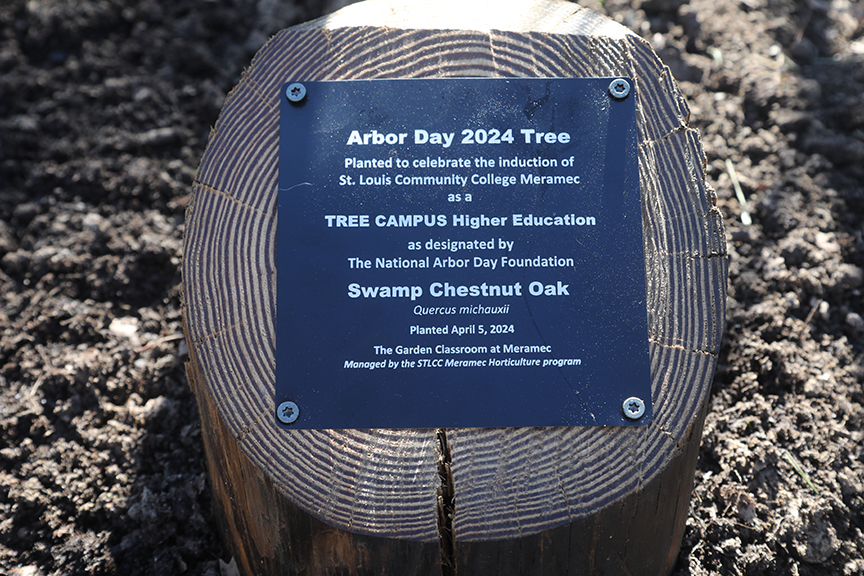
On the state-designated Arbor Day of April 5, a crowd at the Meramec campus of St. Louis Community College in Kirkwood enjoyed the addition of a new oak species to the campus oak collection.

The Missouri native swamp chestnut oak was the gift of Bill Ruppert, who is with the school’s Horticulture Program Advisory Committee. Horticultural student Abigail Andrews expressed appreciation for the tree addition.

“This ceremony today means so much to us, because trees are so important,” said Andrews, an Oakville resident. “To plant a tree is to do something for posterity.

“Trees are all about future generations,” added Andrews. “We don’t plant them just for us, but more for the coming generations who will enjoy them.”

Continue reading

Image

Explore Missouri With The MDC’s Driving Tours

Bennett Spring Fish Hatchery. Photo, MDC.

The Missouri Department of Conservation (MDC) is a great resource to explore our beautiful state’s outdoor treasures.

As Missourians, we have not only a beautiful state, but an accessible one. Many public areas, many managed by the MDC, are a fun and family-friendly escape from the busy, noisy, and crowded urban landscape. Plus, being outdoors is good for the body, mind, and soul.

Take advantage of the MDC’s driving tours website page. You’ll find lots of places to visit, tour, and enjoy.

From the MDC website: View Missouri’s recently restored elk herd, fall color, spring flowering trees and an Ozark woodland from your car. Get tour routes, maps and info – CLICK HERE.

Image

Happy Birthday To Us! Environmental Echo Eyes Its Future On 10-Year Anniversary

How many blogs last 10 years? Or even one year?

Statistics show the average life of a blog is less than two years. There are literally hundreds of millions of abandoned blogs on the worldwide web. In 2023, there were 600 million active blogs worldwide.

If each of those blogs had as many hits as EE has had over its 10 years, we would be talking 36,000,000,000,000 hits.
Environmental Echo is happy to report it will celebrate 10 years this October! Hurray for us! The blog started as a class project in an environmental communications class at Webster University in October 2014.

Stories posted in those early months of EE included such topics as fracking, raising urban chickens, climate change and coverage of Gateway Greening and Ethical Society events on climate justice.

Many of the first EE posts were written by Webster students. EE became independent of the university when the School of Communications pulled the plug on the Outdoor/Environmental Journalism Certificate in 2018.

Professor Don Corrigan and environmental writer Holly Shanks resolved to continue EE. They became the ad hoc co-editors of the blog and kept it lively – never going a month without some informational posts.

“I am pleased to report that EE will soon be posting some great student writing again from Jack Farish, Zoe DeYoung, Jess Holmes and more,” said Corrigan. “I’m teaching in the school’s sustainability course area and the students are as motivated as ever to make a better world.

Continue reading

Image

Free Virtual Mushroom Hunting Class March 16, MDC


Morels – Photo MDC.

Spring warmth stimulates natural life, including fungi such as morels and other edible mushrooms. The Missouri Department of Conservation (MDC) is offering a free virtual Mushroom Hunting 101 class from 1 to 2 p.m. on Saturday, March 16.

This online course will cover how mushrooms are produced and their role in ecology. Nikki King, MDC naturalist, will explain where and how people can look for mushrooms. King will provide tips on identifying edible mushrooms and avoiding those that are not safely edible.

Mushroom Hunting 101 is open to all ages. Registration is required. To register, CLICK HERE.

For more information about mushrooms in Missouri, CLICK HERE.

Image

Webster’s Champion Birder: Phoebe Snetsinger’s Fans Gather For Blackburn Park Event

The weather was perfect for a tribute to the world’s most famous birder in Blackburn Park in the St. Louis suburb of Webster Groves. The proviso in the WGNSS flyer regarding inclement weather was unneeded.

by Don Corrigan

Admirers of the late champion birder, Phoebe Snetsinger, gathered at the entrance of the Bird Sanctuary at Blackburn Park on Saturday, Feb. 3. An avid naturalist, she turned a humble hobby into a worldwide adventure.

Snetsinger fans were happy to celebrate the unveiling of an informational structure dedicated to her birding accomplishments. They described it as great way to get an introduction to the “Bird Woman of Webster Groves.”

“It’s my privilege to unveil this new sign for the most famous birder of Webster Groves,” said Bill Duncan, who is president of the Webster Groves Nature Study Society. “This new display is dedicated to birding and to Phoebe Snetsinger.

“What was here before was worn out and damaged, as might be expected for something 20 years-old,” said Duncan. “So, Rich Thoma of WGNSS saw that something new was needed and took the initiative to get it replaced.”

Continue reading

Image

Tiger-Lily To Visit Powder Valley Nature Center Starting Jan 23

The famous two-headed western rat snake, Tiger-Lily, will be at Powder Valley Conservation Nature Center in Kirkwood from Jan. 23 through the end of February.

Are two heads really better than one?  Visitors to the Missouri Department of Conservation’s (MDC) Powder Valley Nature Center in Kirkwood can soon find out.

Tiger-Lily, a two-headed western rat snake, (Pantherophis obsoletus), will arrive at Powder Valley Conservation Nature Center on Tuesday, Jan. 23.  The snake will remain there for visitors to see until the end of February.  From there, the two-headed snake will continue her journey around Missouri, staying temporarily at other MDC sites across the state.

Tiger-Lily is on loan from her home at the Shepherd of the Hills Conservation Center near Branson, which is currently closed for construction.

Western rat snakes are non-venomous and native to Missouri.  Tiger-Lily is actually a pair of conjoined identical snake twins that were never completely separated.  Such snakes are rarely seen in the wild, partly because snakes born this way have a low survival rate.

“Tiger-Lily” is the name given to the two-headed snake by the family who found this unique reptile in Stone County in 2017,” said MDC Interpretive Center Manager Alison Bleich. “The female snake was donated to the Shepherd of the Hills Conservation Center for display purposes. “Tiger-Lily is almost five feet long and has a healthy appetite,” according to Bleich, but she said that feeding time always presents a challenge.

Continue reading

Image

Rock Island Rails To Trails Plan Hits Roadblocks: Update

Photo courtesy Bruce Sassmann.

by Don Corrigan 

The Rock Island Trail proposal took a hit this month when Republican gubernatorial candidates Mike Kehoe and Jay Ashcroft announced they have serious doubts about the cross-state project.

This comes less than three weeks after Environmental Echo (EE) noted Republican Gov. Mike Parson’s support of the project as a significant tourism magnet for the state. EE cited the trail as a bright spot in 2024 for state nature lovers.

Kehoe and Ashcroft are running to replace Parson in 2024 as he is retiring. Leading Democratic gubernatorial candidate Crystal Quaid had indicated that she supports the trail as an economic boon to the state.

Continue reading

Image

Missouri Legislation Filed to Halt the Sale of Five Invasive Plants

Sericea lespedeza, a highly invasive plant that can infest grasslands, pastures, rights-of-way, and other areas, is one of five species whose sale would be halted with the passage of Representative Sassmann’s legislation filed on December 1, 2023.

Locally and globally, invasive plants and animals are the second leading cause of native biodiversity decline and also threaten the economic stability of the forest product, livestock, and outdoor industries. In addition, Bradford pear, sericea lespedeza, and other non-native, invasive plants are costly and time-consuming for Missouri landowners and suburban and urban homeowners to control.

Of the state’s 142 invasive plants, as assessed by the Missouri Invasive Plant Council (MoIP), many continue to be sold in Missouri, contributing to their future, unintended spread across the landscape.

On December 1, 2023, Representative Bruce Sassmann (District 061), took action to help protect the state from invasive plants by filing HB 1555 to halt the sale and intentional distribution of five invasive plant species: burning bush (Euonymus alatus), Callery pear (Pyrus calleryana and its cultivars, including Bradford and Chanticleer), climbing euonymus (Euonymus fortunei; also commonly known as wintercreeper); Japanese honeysuckle (Lonicera japonica), and sericea lespedeza (Lespedeza cuneata).

Once passed, the Missouri Department of Agriculture is expected to be the agency tasked with enforcement of the legislation, issuing violations if any of the five plants listed above are found to be sold or intentionally distributed. Because of the investment that nursery owners and other plant sellers must make before many shrubs and trees are large enough to sell, two species on the list of five—burning bush and Callery pear plants—acquired by a licensed Missouri wholesale or retail plant nursery before January 1, 2025, shall be exempt from enforcement until January 1, 2028.

Continue reading