Category Archives: Outdoor/Nature

Jack Lorenz: From High School Cutup To Outdoor Champ

Environmental Echo will periodically single out outdoor / environmental heroes who have made a difference in the St. Louis area and beyond. Many of these individuals hail from the Webster Groves – Kirkwood area, where writer Don Corrigan is Editor Emeritus of the weekly Webster-Kirkwood Times. Corrigan is the author of Environmental Missouri by Reedy Press.

Jack Lorenz CR
by Don Corrigan

Who says environmentalists are all stuffy, humorless, killjoys? Jack Lorenz, who went to Webster Groves High School in the Happy Days era, enjoyed 1950s fast cars, fish stories and cutting up. He sometimes wore a monster mask he called “The Face.” He wore it while in the front seat of buddy Cy Perkin’s car. At a stop light in South St. Louis, they spied Stan the Man in the car next to them. Musial cracked up when “Jack The Face” rolled down the window to let out a hearty, “Hi, Stan!”

No big surprise that Lorenz coached football, basketball and baseball at a prep school while majoring in journalism at the University of Tulsa. He later joined the PR team of Falstaff Brewing, “America’s Premium Quality Beer,” a favorite of another WGHS alumnus named Harry Caray. While hustling Falstaff, Lorenz started a river clean-up campaign and helped create the “Pitch-in” anti-litter campaign.

A growing interest in outdoors lured the lifelong fly fisherman to move to Washington, D.C., to become editor in 1973 of Outdoor America, the magazine of the Izaak Walton League. A year later he was named executive director of the League, a post he would hold for 18 years. During his tenure as CEO of the League, he was asked to the White House to advise Presidents Ford, Carter, Reagan and Bush. This was in the halcyon days of the environmentalism, when most politicians saw clean air and water, protection of parks and wilderness areas as winning issues.

Continue reading

MDC Collaborates With University of Illinois For Ongoing Crayfish Study

Missouri Department of Conservation (MDC) has partnered with University of Illinois at Urbana-Champaign for a project focused on burrowing crayfish, led by master’s student Caitlin C. Bloomer, Dr. Christopher Taylor, and MDC Scientist Bob DiStefano. Recently, a portion of the project was held at Duck Creek and Otter Slough Conservation Areas in Puxico.

The venture examines primary burrowing crayfish, which are a specific subset of crayfish that create burrows and spend most of their lives in them. They are also quite evasive and difficult to excavate, which is why there is currently a lack of data on them, especially life history data and habitat data, Bloomer said.

“We are trying to see how the crayfish respond to land management practices that MDC use in their conservation areas,” she said. “Specifically, we are interested in mowing, disking, and controlled burns that are widely used to manage native vegetation and waterfowl habitat. We’re hoping to also measure other habitat data as we sample so we can get an idea of where else there may be burrowing crayfish populations.”

Continue reading

Missouri State Parks adds 22 trails to National Audubon Society’s Birdability program

unnamed (1)Missouri State Parks has joined the National Audubon Society to add 22 state park trails to the society’s Birdability website. Through the Birdability program, the Audubon Society and partner entities across the nation strive to make bird watching, also known as birding, accessible to everyone, regardless of disabilities or other health concerns.

By going to Birdability.org, people can learn more about the program and use the online maps and other information to find nearby handicapped-accessible trails on which they can pursue their passion for birding or discover the popular activity for the first time. In keeping with its dedication to making the state’s beautiful and wild places accessible to everyone, the opportunity to add some of its trails to the Birdability website was a natural fit for Missouri State Parks.

Continue reading

Bear Sightings Reported in St. Louis and Nearby Counties—MDC Biologists Say Don’t Feed Them

blackbear MDC

Photo: Missouri Department of Conservation

The Missouri Department of Conservation (MDC) has received several reports of recent bear sightings in Fenton—as well as others in neighboring Jefferson, Franklin, and Crawford Counties.  They remind us that black bears are becoming a growing part of the St. Louis regional landscape.

Why the increase in sightings lately?  MDC’s ongoing bear research indicates the Show-Me-State is currently home to around 800 black bears, and that population is growing by 9% each year.   Only one species can be found in this state—the American black bear—though multiple color phases can be found in Missouri with, such that a bear’s fur can be brown, red, cinnamon in color.

“Most of our bears are found in the southern part of the state.  That’s where we have the largest tracts of forested habitat,” said Tom Meister, MDC Wildlife Damage Control Biologist for MDC’s St. Louis Region.

However, research also shows the population is expanding, both in total numbers and range. As the population grows and expands, bears are showing up in areas further north. Additionally, late spring/ early summer is prime time for bears to be on the move. Young bears begin to wander seeking food and an area to settle and adult males begin moving large distances in search of females. The recent uptick in sightings is likely a combination of bear range expanding and the time of year when bears can move large distances.

These creatures are part of our state’s natural history and many people enjoy the thought of seeing one of these impressive animals.  With an expanding population of bears, however, comes an increased potential of human-bear interactions.

While generally not aggressive, like any wild animal black bears are driven to find food.  It takes a lot of calories to fuel an animal that typically weighs several hundred pounds and they can be attracted to a variety of food sources this time of year.

“The bears have been out of hibernation since spring.  Now they’re hungry.  They were dormant for all winter, and they’re looking for food.  So, we don’t want to tempt them,” Meister said.

Food, or rather the lack of it, is key to avoiding conflicts with bears.  Meister stressed not to offer them food, either intentionally or unintentionally.  Intentionally feeding bears can be dangerous as it makes the bears comfortable around people. It can also lead bears to cause significant damage to property while searching for a meal.

Continue reading

Collaborative Effort to Track Plastic Through Mississippi River

Three kayakers mdc

Photo by MDC Staff, courtesy Missouri Department of Conservation.

A small group of kayakers paddle out into the waters of North America’s largest river on a cloudy Saturday morning.  One of them sets a small plastic bottle adrift on the choppy surface.  With a mysterious antenna protruding from the bottle’s side, the current carries the miniature vessel away to a fate unknown.  It’s a high-tech twist on the classic message in a bottle.  Except this message can shed valuable information on how plastic pollution affects our waterways.

The Missouri Department of Conservation (MDC) St. Louis Region Stream Teams are helping in a big way with a unique initiative to bring greater awareness of the impact plastic trash has on our watersheds, and ultimately, our oceans.

A cooperative of mayors along the Mississippi River called the Mississippi River Cities and Towns Initiative (MRCTI) has partnered with the United Nations Environment Program, National Geographic Society, and the University of Georgia to fight plastic pollution along the Mississippi. The resulting program, called the Mississippi River Plastic Pollution Initiative (MRPPI), is launching a pilot with three cities along the upper, middle, and lower Mississippi.  St. Louis represents the middle area, with St. Paul, Minn., representing the upper portion, and Baton Rouge, La., stands in for the lower Mississippi.  This pilot program is set to expand to the entire Mississippi watershed in 2022.

Data collection is the first phase of the initiative to find out how much trash, and what kinds, are making it into the Mississippi–along with how exactly it travels through our waterways.

Continue reading

Tree Book Inspires “Men and Women Who Plant Trees”

IMG_6818

By Don Corrigan

Both Kirkwood and Webster Groves have been designated individually as a Tree City USA. That classification reflects citizen appreciation for large leafy wonders. Now some local folks are extending their love of trees to the Katy Trail and the Missouri River Valley.

Among those involved are Bill Spradley of Kirkwood’s Trees, Forests and Landscapes and Mike Rood of Pea Ridge Forest. They are extending their arbor expertise to an area of the Katy Trail in eastern Missouri. Hikers and bikers will enjoy new trees in trail locations such as Marthasville, Peers and Treloar. In addition to beautifying the sites, the tree canopy will protect trail users from summer sun and stave off trail erosion problems. It’s all part of a partnership between Forest Releaf of Missouri and Magnificent Missouri to plant hundreds of trees along the trail over three years.

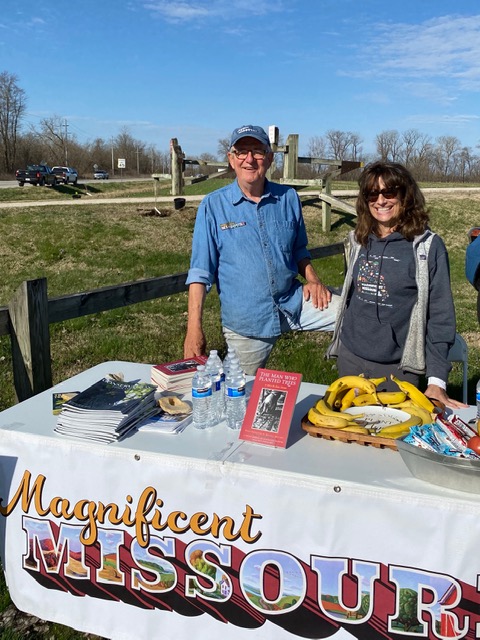
“The trees we are planting were grown in our Missouri River bottom nursery in Creve Coeur Park and will find permanent homes near the Missouri River,” said Meridith Perkins, executive director of Forest ReLeaf. She said the project covers the Katy Trail “between Hermann and St. Charles to provide habitat, erosion control and shade for generations of Katy Trail user.” To celebrate the launch of this effort, a special edition of the conservation book, “The Man Who Planted Trees,” has been printed. The celebrated fable captures how planting trees can transform a landscape. It has sold more than 250,000 copies.

The book is now available at Pedego Electric Bikes in Oakland near the north trailhead of Grant’s Trail. It also can be ordered at MagnificentMissouri.org.

“We hope that this project, and our special edition of ‘The Man Who Planted Trees,’ will inspire Katy Trail riders and others to become acquainted with the benefits of tree planting, especially Missouri native trees, and the many wonderful species that Forest ReLeaf grows,” said Dan Burkhardt of Magnificent Missouri.

Continue reading

Department of Natural Resources Annual Photo Contest Now Open

The Missouri Department of Natural Resources is now accepting entries for its annual photo contest. Winning entries will be featured on the department’s social media platforms. The deadline to submit photos is Oct. 1.

Entries can include images from anywhere in Missouri, featuring beautiful natural resources, unique  state parks and historic sites, natural phenomena, outdoor recreation, scenic landscapes, weather, wildlife and people enjoying the outdoors.

Contestants can submit entries in the following categories:

  • Natural Resources: Photographs of Missouri’s air, landscapes and waterways.
  • Unique Places: Photographs taken within one of Missouri’s state parks and historic sites. For a list of all parks and sites visit mostateparks.com.
  • People Enjoying Missouri’s Outdoors: Photographs of people enjoying and exploring Missouri’s great outdoors.

Judges will choose first, second, third and honorable mention winners for each category. For more information or to submit photos, visit dnr.mo.gov/photocontest. Questions about to the photo contest can be sent to socialmedia@dnr.mo.gov.

Imagination, Creativity and the Arts In Service Of The Environment

by Don Corrigan

We are in a time of rebirth, resurrection and the revival of the creation. It’s spring. It’s also a time for renewal and the new energy of MICA, which happens at the First Congregational Church UCC in Webster Groves, a suburb of St. Louis.

What is MICA?

MICA is the Ministry of Imagination, Creativity and the Arts, a concept developed by the Rev. Cliff Aerie. That concept has inspired “Journey through the Creation,” a year-long program with an environmental emphasis funded through a Lilly Grant from Calvin Institute of Worship.

“Our first program on earth, art and faith, featured environmentalist Jean Ponzi and storyteller Valerie Tutson, and was held last September,” said Aerie. “We’ve had to push things back due to the pandemic, but our final program will be on June 13 and will feature the Oikos Ensemble in an afternoon concert, Earth Walk 3.0.”

A program put together on March 20 featured community artist Tia Richardson and Michael Smyer, an expert on gerontology and CEO of Growing Greener: Climate Action for an Aging World.

“These webinars and worship services all coincide with the changing of the seasons,” noted Aerie. “The June program will be the capstone. If the pandemic continues to wane, we expect a concert to be held live.

“The concert may be outside,” added Aerie. “If not, we will bring outside inside, which we’ve done before through the generosity of Rolling Ridge Gardens. They have let us borrow trees to transform our sanctuary into a forest. Either way we will be blending jazz, stories, poetry, dance with video vignettes from our two previous webinars.”

Members of First Congregational Church UCC have been critical to the efforts of “Journey through the Creation.” Members of the planning team include Jan Barnes, Chris von Weise, Halley Kim, Debbie Tolstoi, John Paci, Phil Shoulberg, Ian Didriksen, Elston McCowen, Leon Burke III and Dave Denoon. Aerie serves as project director.

Continue reading

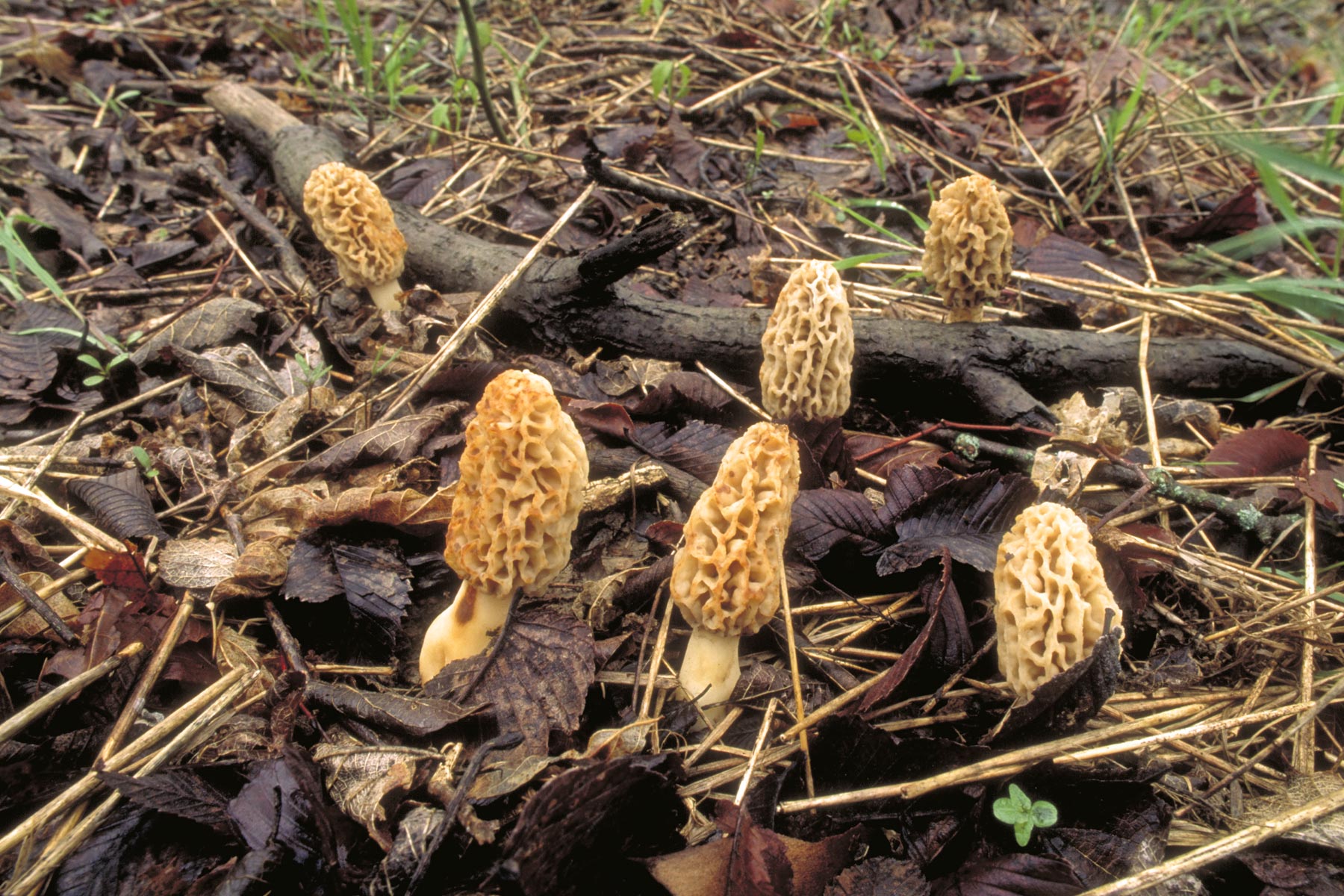
It’s Time For Morels!

common-morel

Photo by MDC Staff, courtesy Missouri Department of Conservation.

The Missouri Department of Conservation offers an abundance of information about Missouri’s nature wonderland. Early spring can offer a fun adventure in the form of mushroom hunting! Check out the MDC’s communication about all you need to know for finding those tasty golden shrooms – The Morel! 

To the uninitiated, a morel does not have the most appetizing appearance. Its brain-like form looks like something out of a campy horror movie, and a morel’s neutral, earthy color doesn’t command much attention. From about late March to early May, however, foraging for these small mushrooms is serious business—a business so serious that many folks refuse to reveal their morel spots even to their closest friends and family!

The question many people ask this time of year is, “How can I find morels?” Well, morels are finicky fungal organisms. The underground portion of the fungus only produces mushrooms in some years—mostly based on soil temperature and moisture availability (but other factors play a role, too). Ultimately, most of what we know about finding morels is anecdotal and widely variable, but here are a few tips to help you narrow down good places to look for morels:

  • Morels commonly appear after warm, moist spring weather with daytime temperatures in the low 70s and nighttime temperatures in the 50s.
  • South and west facing slopes are good sites to look for morels early in the season, with north and east slopes being better for later-season morel hunting.
  • Morels tend to favor tree species such as elms, ashes, cottonwoods, and even domesticated apples. Look around recently dead trees but beware of falling branches!
  • Areas disturbed by flooding, fire, or logging often produce loads of morels.
  • Morels peak when lilacs bloom!
  • Most public lands in Missouri allow the collecting of mushrooms for personal use, but always check the regulations before you collect to be sure.

Remember, these are just general guidelines – morels have been found growing in all sorts of locations and conditions!

Before setting off into the forest, make sure you know how to correctly identify morels. Misidentifying and consuming toxic mushrooms can cause anything from mild stomach issues to organ failure or even death! There are several mushroom species in Missouri, including the big red false morel, which are considered toxic and not recommended for consumption. Consult with field guides or a professional mycologist to be completely confident in species identification before consuming any mushrooms.

Browse MDC’s mushroom field guide for photos of the more common and noticeable fungal species in Missouri. Click here for tasty recipes using Missouri’s wild mushrooms!

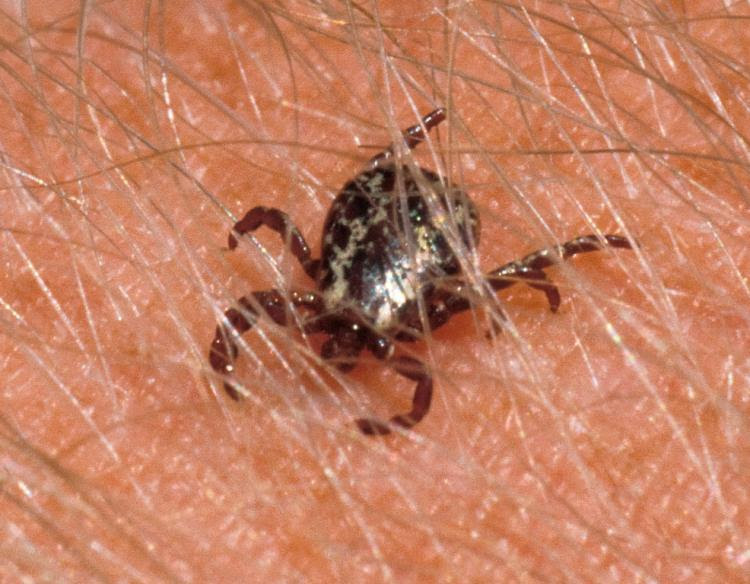
Missourians Asked To Save Ticks and Mail To A.T. Still University For Scientific Research

MDC Tick

Photo by MDC Staff, courtesy Missouri Department of Conservation.

MDC and A.T. Still University are asking Missourians to save ticks they find and send them to the University for scientific research to learn more about ticks and pathogens they may carry.

Most people who have ventured through Missouri woods, fields, yards, and other outdoor environments have encountered ticks. These small, creepy crawlers climb on and cling to clothes and skin in search of a blood meal. Some tick species and the bacterial pathogens they carry can also cause illnesses in people.

The Missouri Department of Conservation (MDC) and A.T. Still University in Kirksville are asking people to save ticks they encounter and mail them to the University. The ticks will be used for a new scientific research study to help better understand the statewide distribution of tick species and the human pathogens they carry.

Continue reading