Category Archives: Home

Image

Route 66 State Park: What A Bunch of Flowers!

by Don Corrigan

Nature often triumphs at environmental disaster sites, sometimes with the help of man – and sometimes not. There’s no
shortage of photos on the web of flora and fauna reclaiming damaged territory, such as at Chernobyl in Ukraine and Fukushima in Japan, sites where nuclear plant disasters occurred.

In Missouri, Times Beach is an environmental Superfund Site that cost upwards of a billion dollars to rescue from major dioxin contamination. In the 1980s, debates took place on whether to bury the dioxin or flush it down the Meramec River. The final solution was to scoop up and burn the dioxin-saturated ground to neutralize the contamination.

Today, the city of Times Beach is no more and the dioxin is mostly gone. In its place – on land between Fenton and Eureka, Missouri – is Route 66 State Park. A nearby visitors center is across the Meramec River from the land known for its terrible legacy of dioxin contamination.

Continue reading

Image

From Classroom to Bookshelf: Publishing a DIY Guide to Local Environmental Issues

By DON CORRIGAN

A popular ad slogan for city tourism is “St. Louis has it all from A to Z.” That’s certainly true when it comes to hazardous waste issues or land, air and water pollution. It’s not hard to find environmental tales from the St. Louis region that grab my students’ attention and elicit incredulity.

A journalism professor in St. Louis can talk about dioxin at Times Beach, lead smelters in Herculaneum, a creek on fire across the Mississippi River near the Sauget chemical works, or the dangerous radioactive waste pile near a smoldering landfill west of Lambert International Airport.

Soon students will be asking these kinds of questions:

– How can a waste oil hauler get away with spraying roads of an entire town with a dioxin concoction?
-What prompts a state legislature to pass laws to immunize a lead company from contamination lawsuits?
-When does a landfill operator get sanctioned for allowing a landfill fire to smolder for months near a site containing radiation?

These are questions that can inspire students to research and write their own investigative stories. The local aspect of the stories propels a personal interest in the environmental issues. Knowing that these stories can be located in the students’ own backyards – sometimes literally – gives them a special urgency.

Continue reading

Powder Valley Nature Center in Kirkwood Is Now Open With Trial Hours Extending To 8 p.m. On March 14

Photo by MDC Staff, courtesy Missouri Department of Conservation.

The Missouri Department of Conservation’s (MDC) Powder Valley Conservation Nature Center is now open for limited public access, following a COVID-19 closure. The building’s operating hours will be Tuesday through Saturday, 8 a.m.-5 p.m., with the gift shop closing at 4:30 p.m.

The nature center’s outdoor spaces, including all trails, remain open and fully accessible to the public. The trail hours will also be extended from 8 a.m. to 8 p.m. seven days a week with the beginning of Daylight Savings Time on Sunday, March 14.

Powder Valley’s front desk is available to the public for information or gift shop and permit sales. Due to ongoing public health and safety concerns, the rest of the building, including the exhibit galleries and classrooms, are currently not accessible.

“We are so excited to begin seeing people again,” said MDC Nature Center Manager Tamie Yegge. “Spring is almost here, the wildflowers will soon be blooming, and our staff is ready to welcome our visitors back.”

Continue reading

Image

Top Ten Environmental Issues In Missouri

Pictured: Rich Thoma of the Webster Groves Nature Study Society

by Don Corrigan

What are the Top Ten Environmental Issues that Missourians have coped with last century, from 1900 to 2000? Rich Thoma of the Webster Groves Nature Study Society (WGNSS) recently had a conversation about this. WGNSS members have been involved in a number of environmental battles. What quickly became apparent to me is that naming these Top Ten will depend in large part on what environmental groups you may have affiliation. St. Louis and Missouri have a number of such organizations that have been on the frontlines.

Here is one take on the Top Ten Environmental Issues in Missouri, but it is not definitive. Revisions and commentary on these are welcome. Additions and subtractions may be necessary to put an accurate list together.

1.)  Atomic City – radioactive waste issues in Weldon Spring, West Lake Landfill, Coldwater Creek.

2.) Lead Contamination – Lead smelter products poisoned people in urban center and the Leadbelt.

Continue reading

Image

Community Science Volunteers Needed For FrogWatch USA

Photo: Gray tree frog By Michael Dawson, Saint Louis Zoo.

Saint Louis Zoo virtual training sessions set for March 5, 13

Jump in and become a FrogWatch USA™ volunteer with the Saint Louis Zoo! Members of the St. Louis-area community are needed to monitor frogs and toads from their backyards, parks, fields, creeks or just about anywhere. The information gathered can lead to practical and workable ways to stop amphibian decline.
You do not have to be an expert to be help with frog conservation. All you need is an interest in frogs and toads and a willingness to participate at the level of commitment that works for you.
“We will train you to distinguish the croaks, peeps, and various calls of the 10 most common frog and toad species around the St. Louis area,” says Michael Dawson, Conservation Education Liaison at the Zoo, and coordinator of the St. Louis Chapter of FrogWatch USA. “Breeding calls vary greatly and are often mistaken for birds or insects. Their volume ranges from a soft musical trill to a deafening chorus.”

Continue reading

Video

Invasive Asian Carp Global Malnutrition Solution?

The University of Missouri published a news release entitled, “Asian carp could pulverize world hunger, MU researcher finds: Powdering Asian carp could address an environmental problem and a global malnutrition crisis.”

The article and video give valuable information about the ongoing fight against the invasive Asian carp and the destructive impact the species have on our rivers and lakes. Please take a few moments to read the article and watch the video to learn more about the efforts to reduce damage caused by the Asian carp and to also help the “global malnutrition crisis.”

Read the article HERE. See the video below.

“These fish are a delicacy in China, where they are native, but Americans tend to dislike them,” said Mark Morgan, an associate professor in the School of Natural Resources. “Why eat bony, ugly carp when we can have trout and salmon, instead? But taken as a nutritional supplement, these fish, which have high amounts of macro and micronutrients, could have an incredibly positive impact on society while we loosen their hold on our waterways at the same time.”

Image

February Polar Vortex Knocked Out Electricity in Texas; Utility Experts Say “Green New Deal” Is Not To Blame

Photo: Michal Dziekonski

By Don Corrigan

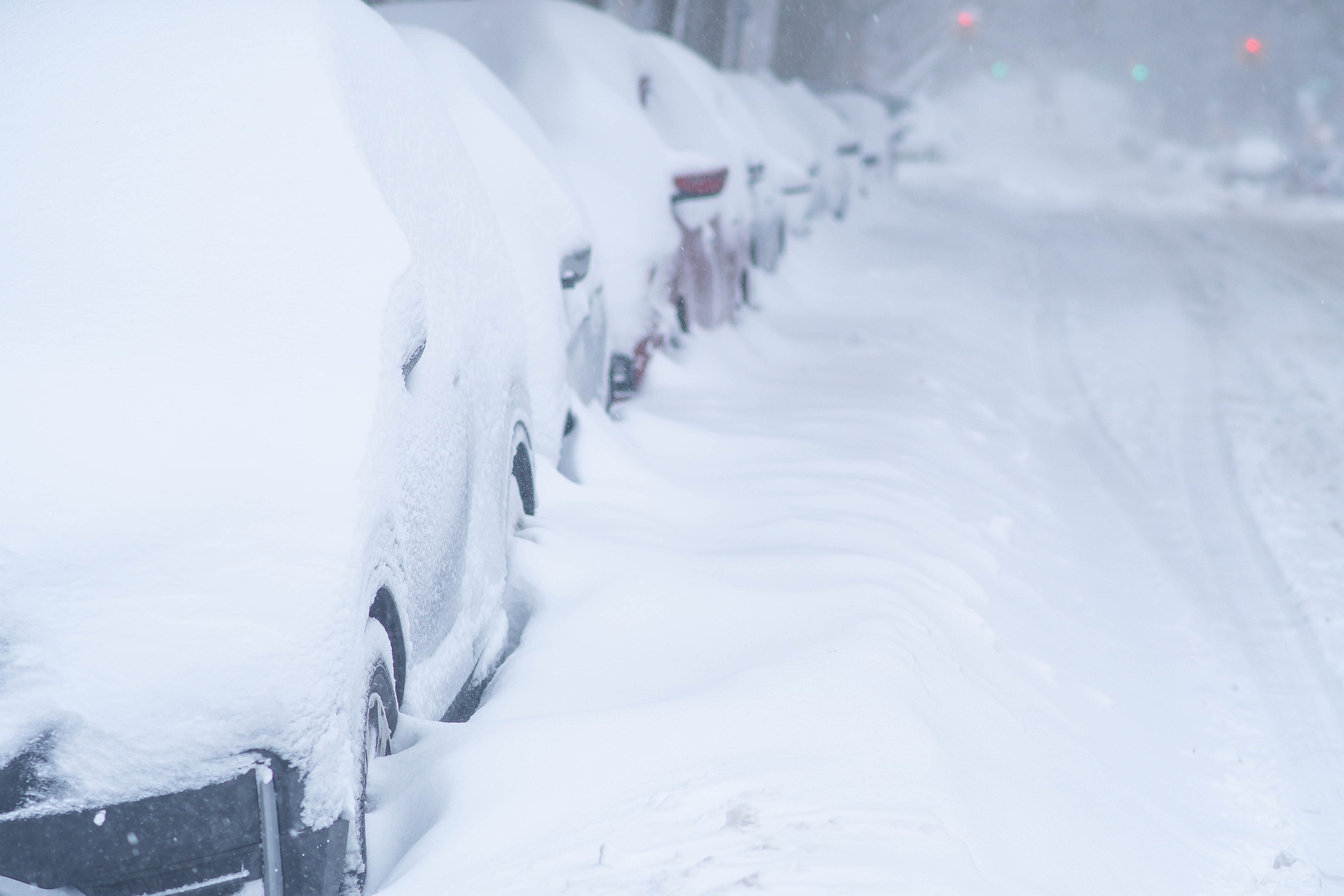
The worst polar vortex event of the winter has faded quickly for St. Louis residents. The memory of the bitter cold and snow storm have melted away. Not so in Texas, where electrical outages, burst pipes and critical equipment failures continue to plague the Lone Star State.

Texas towns suffered weather-related fatalities and millions of dollars in damage from one of the costliest weather disasters in U.S. history. Could the St. Louis area and Midwest suffer a similar fate in a brutal winter storm and extended cold snap?

Mark Petty, Kirkwood Electric Director, who said his job “is to keep the lights on,” does not foresee any such utility catastrophe for his suburban city. Kirkwood is the only municipality in the St. Louis region with its own electric department.

Continue reading

Image

Missouri Prairie Foundation Earns National Recognition

Missourians strongly support protecting the open spaces they love. Since 1966, the Missouri Prairie Foundation has been doing just that for the people of Missouri. With its 25 properties across the state, which are open to the public to enjoy, the Missouri Prairie Foundation is protecting extremely biologically diverse and rare original, unplowed prairie, which is one of the most imperiled ecosystems on the planet, as well as expanding prairie habitat with native grassland plantings.

Today, the Land Trust Alliance announced that the Missouri Prairie Foundation has achieved national accreditation—joining a network of accredited land trusts across the nation that have demonstrated their commitment to professional excellence and to maintaining the public’s trust in their work. There are currently 1,363 land trusts across the United States according to the Land Trust Alliance’s most recent National Land Trust Census, and more than 400 of them are accredited.

Continue reading

Freshman Rep. Cori Bush Takes On Equity, Environmental Issues

by Don Corrigan

In just a few short weeks in Congress, newly-elected U.S. Rep. Cori Bush, D-St. Louis, has given her city visibility on issues ranging from education equity, racial discrimination, environmental racism and the impeachment of a president.

Like it or not, the new freshman in Congress has a voice and it’s getting heard.

Bush’s 1st District includes parts of north Webster Groves and Rock Hill and extends north and east to take in St. Louis City and parts of the County. Ken Warren, a noted pollster and political science professor at St. Louis University, is a Webster Groves constituent of Bush and admits he has underestimated her.

“I was wrong in my prediction for the Bush-Clay primary race in 2020,” said Warren. “Incumbents in our political system have the huge advantage, and I did not really think she could bring about an upset of the seat held so long by Lacy Clay and his father, William Clay.

“Once she won the primary, she was a sure bet in November regardless of what happened with the Biden-Trump presidential election,” added Warren. “And she has attracted a lot of attention and media notice right out of the gate as a vocal member of Congress in 2021.”

Continue reading

Image

Cockroaches Are Getting A Makeover, But They Aren’t Incredible or Edible Yet!

by Don Corrigan

In any insect popularity contest, cockroaches always are near the bottom of the barrel. Cockroaches may rate more favorably than black widow spiders or tsetse flies, but they are generally loathed by most Americans.

All is not lost for the lowly cockroaches, however. Recently they have gained some cachet as lead characters in promotions, benefits and charitable causes. Celebrity cockroaches have arrived, like it or not.

Continue reading