Category Archives: Environment

Image

November Flash Floods – Storms Dump Rains: Closing Parks, Altering Ecosystems

by Don Corrigan

After an extended period of drought, historic downpours on Nov. 3 severely damaged state and local parks, closed highways and put cars underwater, and actually scoured away ecosystems crucial to fish species.

Horses enjoyed playing in high water near I-44 and Highway 141, but drivers in the area were not amused by traffic problems. Photo by Ursula Ruhl.

In the St. Louis area, drivers in the Valley Park-Fenton area were frustrated when roads closed at I-44 and Highway 141 due to the flooding Meramec River. Horses had to be moved to higher ground at riding stables near the southwest quadrant of the two highways.

Marshall Road in Valley Park went underwater as did trails along the Meramec in Eureka, Valley Park and Fenton. Minnie HaHa Park in Sunset Hills suffered severe damage to its shoreline with trails and facilities washed out.

The National Weather Service reported rain amounts in the 6 to 8-inch range in the southeast St. Louis County area on Nov. 3. However, rain amounts in the Current River watershed area exceeded one foot.

Bike and hiking trail was washed into the Meramec River at Minnie HaHa Park in Sunset Hills.

Missouri’s Department of Natural Resources reported the closure for days after the deluge of such parks as Onondoga Cave State Park near Leasburg, Meramec State Park near Sullivan and Route 66 State Park near Eureka.

Unprecedented river levels shut the Current River down to recreational activities for several days and severe damage occurred on river sites near Akers and Pulltite and Round Springs. Also shuttered were Montauk State Park near Salem and Current River State Park north of Eminence.


Damage was incurred at the trout hatchery at Montauk State Park. Fish and wildlife authorities also expressed concern over habitat destruction for Ozark hellbenders in the streams of the Ozark Scenic National Riverways.

Continue reading

Image

Tree City USA: Tradition Local Arbor Advocates Plant To Please With Street Trees

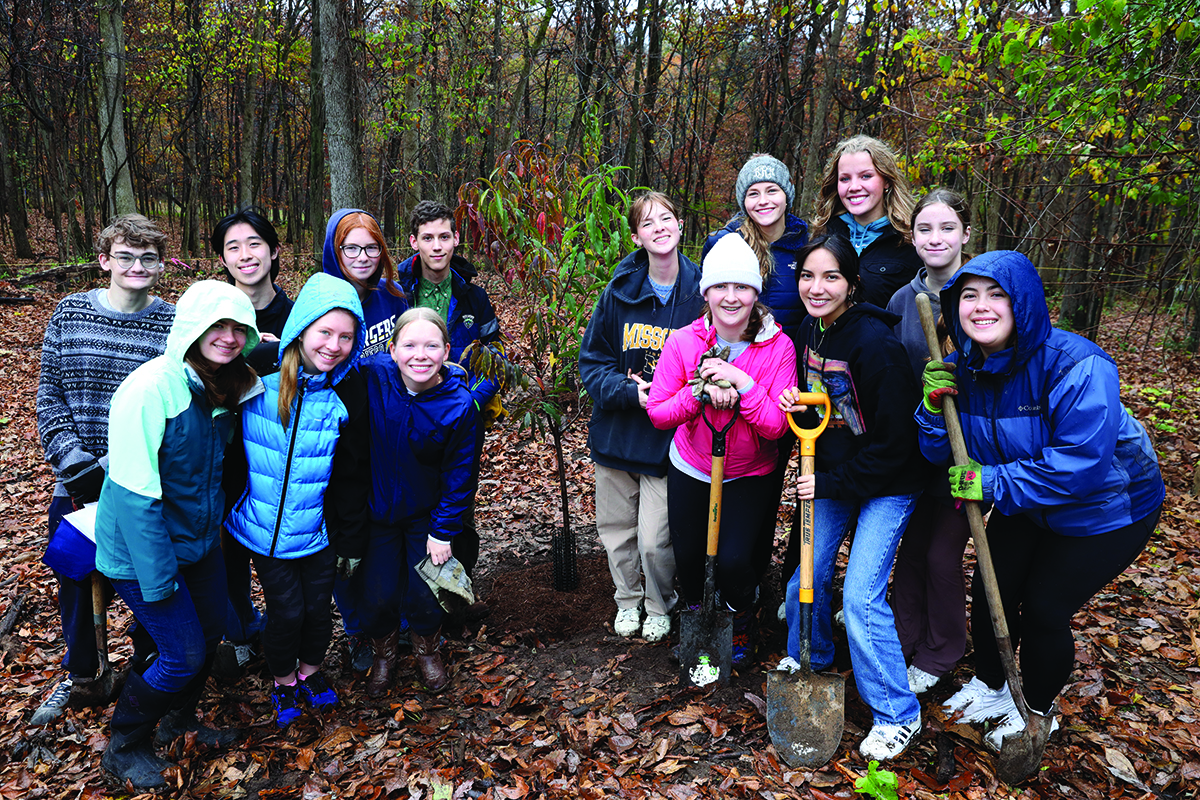
Students from Kirkwood High School’s Environmental Club pitched in for the 50 Trees
planting project.

by Don Corrigan

Soggy weather on Saturday, Nov. 9, didn’t dampen the enthusiasm of a self-styled tree-planting brigade. Tree partisans met at Kirkwood Park’s Campbell shelter at 9:30 a.m. and fanned out to plant 65 trees.

Delivery trucks arrived near the shelter early in the morning loaded with trees, mulch, and implements. The green cargo, dropped off at the maintenance yard, was then transferred to more than eight tree planting sites.

Seasoned tree planters were joined in their arbor efforts by a markedly younger work crew. The Kirkwood High School Environmental Awareness Club showed up in force. More than a dozen members arrived early for tree planting duty.

“It was great to have them helping us,” said Kirkwood’s Nancy Luetzow. “Any time I mingle with our high school students, my spirits are lifted by their energy, intellect, and enthusiasm. It’s always heartening.

“Our tree group is never deterred by a cool, cloudy, or clammy start to the day,” added Luetzow. “If anything, the recent 10 inches of rain and the additional showers Saturday, made our job easier and gave the new trees a good first drink.”

Continue reading

Image

Greenhouse Gas Study: Suburb’s Residents Get Preview of City Emissions Report On Their Town

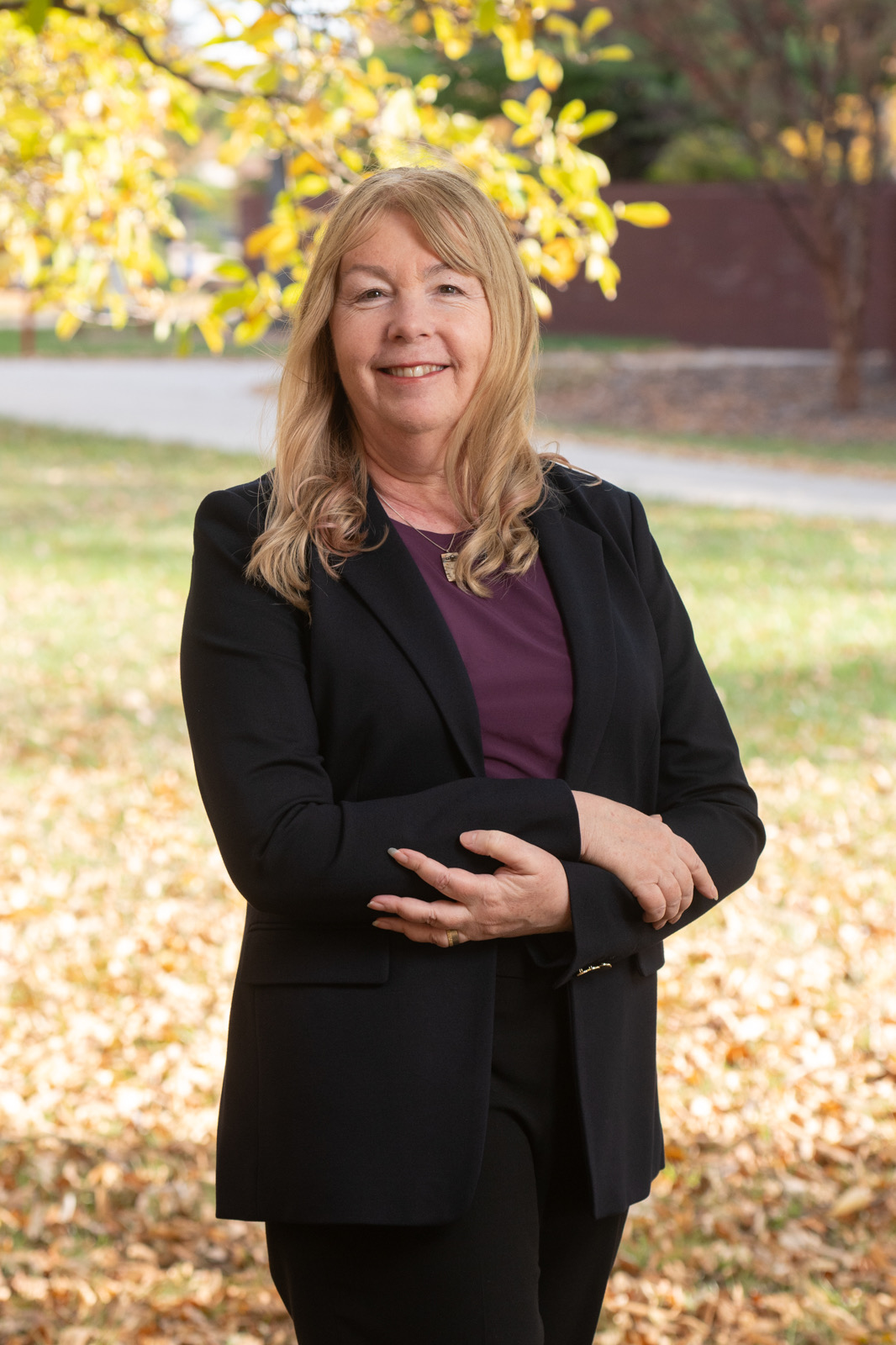
SIU-E Professor of Environmental Sciences Dr. Sharon Locke has been conducting GHG inventory studies throughout the St. Louis metro area. Inventory studies of greenhouse gas emissions provide cities with benchmarks to track and compare emissions for years to come.

by Don Corrigan

Webster Groves, Mo., might seem an unlikely candidate for a greenhouse gas emissions study. It lacks factory smokestacks or methane-belching landfills. Nevertheless, residents can learn about a city GGI study in September.

The Webster Greenhouse Gas Inventory (GGI) Report is preliminary. A full report goes to the city council in October. The GGI presentation at 7 p.m., Sept. 3, at Webster Groves Public Library will provide details on how and why the study was conducted.

Residents may be surprised to learn that quiet, idyllic, suburban Webster Groves is responsible for hundreds of tons of emissions sent into the atmosphere annually. Also of note: Something can actually be done about this situation.

The session on the inventory program will be presented by Sharon Locke, professor of environmental sciences at Southern Illinois University at Edwardsville; and by Shawn Finnegan, who serves as sustainability coordinator for Webster Groves.

“Webster Groves contracted Dr. Locke and a graduate student intern to conduct an inaugural inventory of greenhouse gas emissions,” said Finnegan. “The initiative identifies major sources of GHG emissions at, both, the community and government levels.

“By analyzing these emissions and their sources, our city can adopt ‘best practices’ to reduce its carbon footprint,” Finnegan explained. “And, by doing that, the city can contribute to regional and global sustainability goals.”

Continue reading

Image

Save Family Farms: Stronger Economies and Healthier Environments

by Jack Farish

The Missouri Rural Crisis Center (MRCC) is about fighting for rural people, according to Tim Gibbons. Motivated to fight injustice, Gibbons began working with MRCC in 2005, and now serves as director of communications.

“Our work is focused on farm and food justice,” said Gibbons. “We came out of the 1980s farm crisis as a collection of farmers who were already organizing in Missouri.”

The farm crisis Gibbons mentioned began in the late 1970s with an unprecedented economic and technological boom.

“Farmers were buying land and new technology,” Gibbons said. “But then we entered a rural recession. Farmers had loans they couldn’t pay for and the USDA, the dominant lender at the time, was foreclosing on farms.”

The Rise of Corporate Agriculture

By the 1980s, a new economic reality, in combination with new legal policy and industrialization of agriculture, began to discourage the family-farm model.

Continue reading

Image

The Audubon Center: Not Just For The Birds!

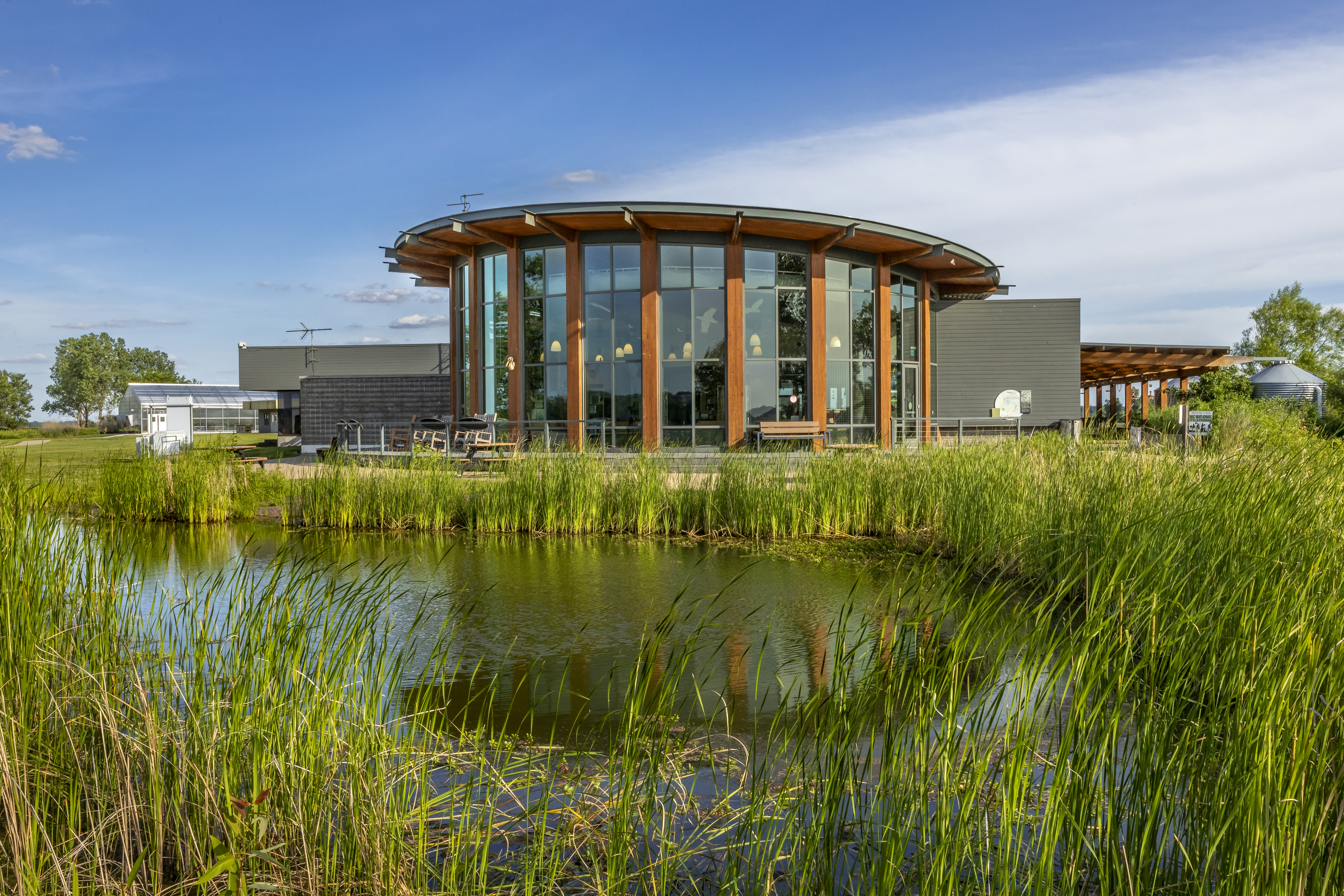
Photo by Rob Schultz. Provided by Ken Buchholz.

By Jess Holmes

Nestled away in an eastern tendril of St. Charles County is avian education center that isn’t just for the birds. The Audubon Center at the Riverlands’ floor-to-ceiling windows display the tall, grassy banks of the Mississippi—a large variety of birds fluttering and gliding throughout the expansive green space.

Visitors can meander the 8.5 miles of hiking trails and learn about the importance of a premier migratory bird sanctuary. Throughout the seasons, more than 300 bird species can be found where this crucial piece of land meets river. The center even provides guests with seasonal checklists, so they know which flying friends to look for.

Natural beauty aside, The Audubon Center, directed by Ken Buchholz for the last eight years, is doing wonders for surrounding communities, Florissant and Ferguson, in particular.

The Center’s mission is “to connect people to the beauty and significance of the Mississippi River and the Great Rivers confluence, to inspire conservation of the river’s rich diversity in birds, wildlife, and other natural resources, and to support healthy, vibrant communities.” They’re doing just that.

Continue reading

Image

U.S. Sustainability Award: Washington, D.C. Event To Recognize Nerinx Hall Initiatives 

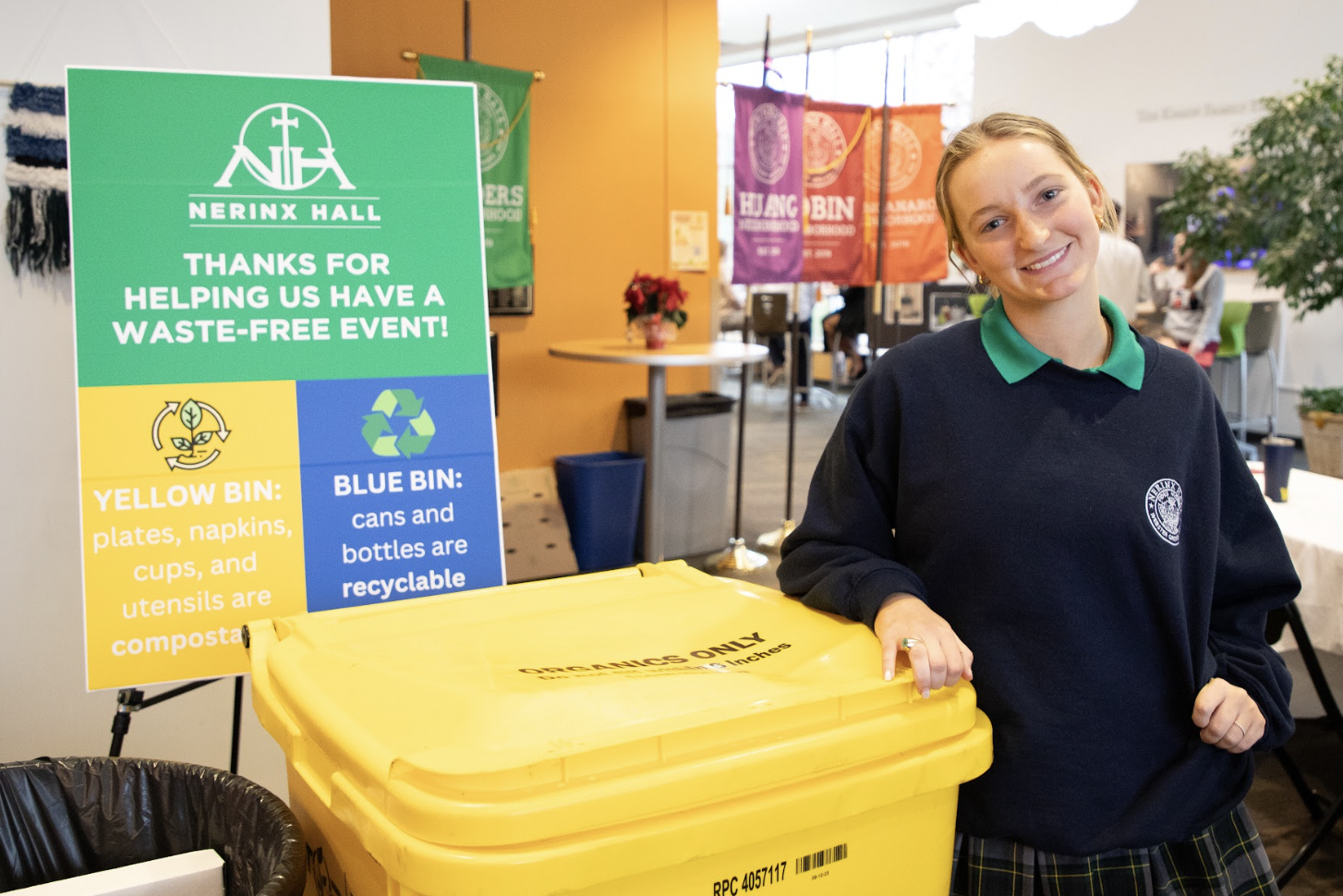
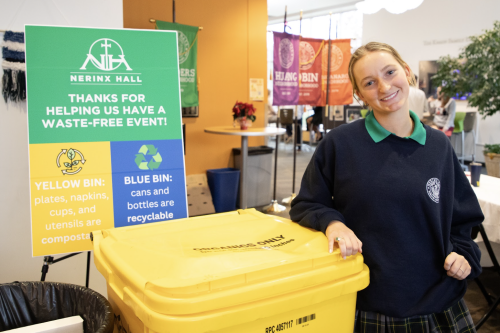
In 2019, Nerinx implemented a school-wide composting program. It extends beyond the cafeteria and includes parent events and rentals as well. Students volunteer to ensure all items are placed in appropriate containers as we strive for zero-waste events.

By Don Corrigan

Nerinx Hall High School in Webster Groves is now a 2024 U.S. Department of Education Green Ribbon School, which recognizes achievement in a school’s commitment to sustainability and environmental stewardship.

Principal Molly Grumich will travel to Washington, D.C., in July when Nerinx will be presented with the honor. Award selections for 41 schools across the nation were made in April in connection with a Summit for Healthy and Sustainable Schools at the White House.

“These awards represent thousands of students, and countless hours of hard work, ensuring equitable access to healthy, climate-resilient learning environments,” said U.S. Education Secretary Miguel Cardona.   “Students are prepared for the sustainability challenges of the present and future.”

Grumich expressed pride in the school’s achievement and attributed the school’s commitment to sustainability and holistic education to traditions of the Sisters of Loretto in Kentucky.

“Our institution prioritizes the empowerment of young women who are deeply engaged with their communities and the world around them,” said Grumich. “This recognition underscores our efforts to instill in our students a profound sense of environmental responsibility and stewardship.”

At their Nerinx, Kentucky headquarters, the Loretto Sisters operate the Loretto Motherhouse Farm. The 789-acre farm emphasizes a responsible relationship with the land with such conservation practices as intensive cover cropping, planting crops without soil tilling and rotational grazing.
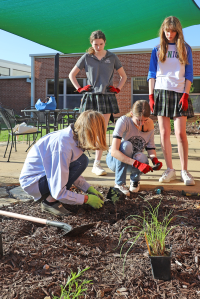
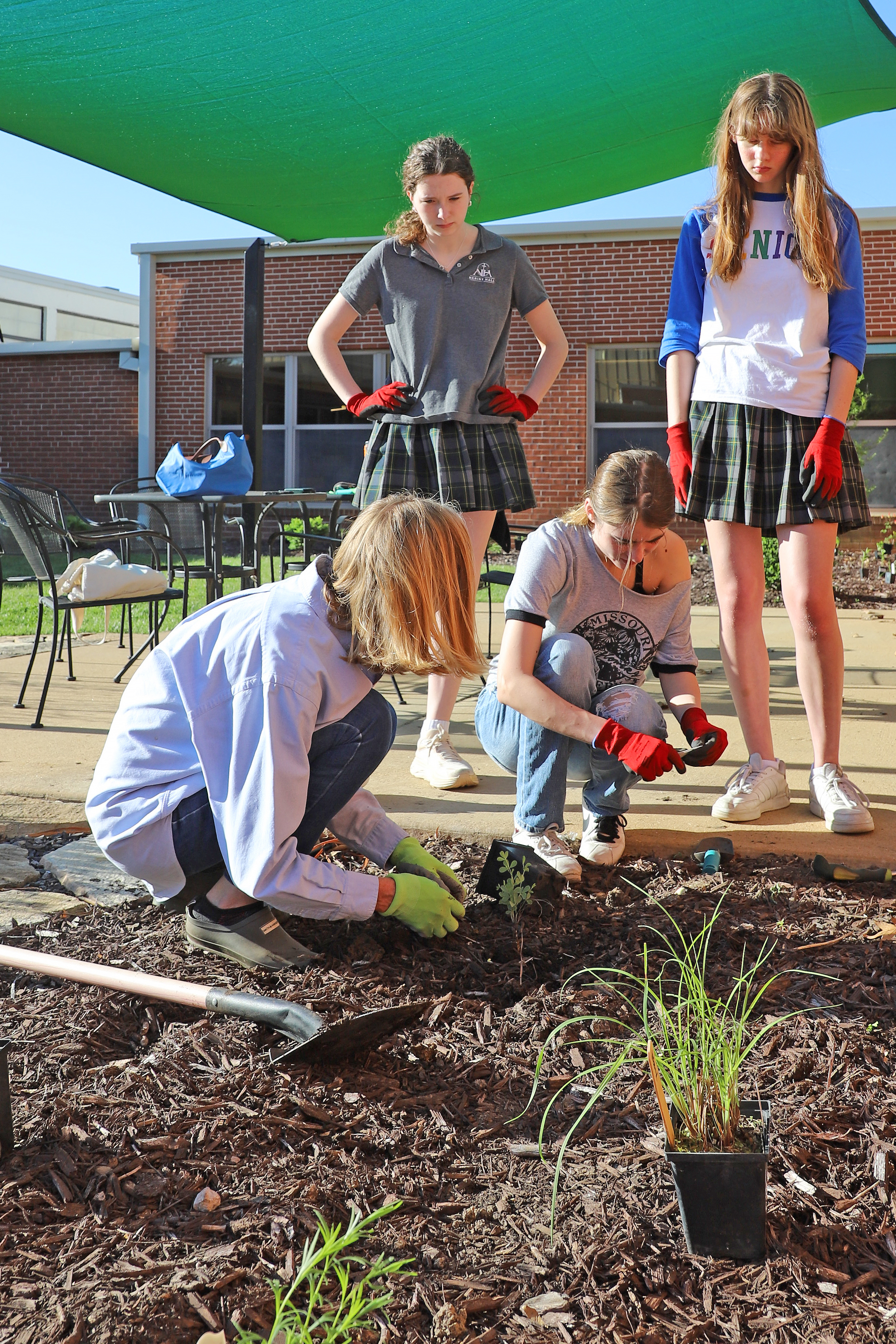
Students researched plants native to Missouri and then sourced a representative sample of the plants and planted them in the courtyard at Nerinx Hall.

Loretto Sisters’ Land Ethic affirms that “those responsible for the land at any particular time should regard it as a sacred trust, received with gratitude, tended with care for its integrity and long-term sustainability.”

The Loretto Community also emphasizes carbon reduction as a way to address climate change and its harmful effects. The Earth can be repaired by sequestering greenhouse gas and planting deep-rooted plants and grasses.

Migrant justice is another tenet of Loretto philosophy with a commitment to inclusivity, diversity and anti-discrimination. Part of learning about the Earth and its needs involves systematically listening to dispossessed people.

Nerinx Planet Patrol

Josie Fedele, president of the students’ Nerinx Planet Patrol, said her high school is excited about the Green Ribbon School Award and the school’s accomplishments. As the patrol president, she wants to redouble those efforts in the 2024-25 academic year.

“Of course, I am concerned about climate change,” said Fedele of Ballwin. “But I want to do things that are doable at the community level. I want to concentrate on composting, on recycling, on finding ways to reduce energy use at our school.”

Jody Patterson, who is director of student access at the school, said composting correctly is not as easy as it sounds. She said the school has found ways to compost everything that’s part of the cafeteria lunch program.

Beth Bucher, who teaches theology at Nerinx, said that religious beliefs commission us to be good stewards of the creation in a way that sustains, protects, and enhances all living things on the planet.

“I am not a real religious person myself, but I know that it’s right to consider the impact of our actions on others and not just for ourselves,” said Fedele of the planet patrol. “One thing I want to address is student stress.”
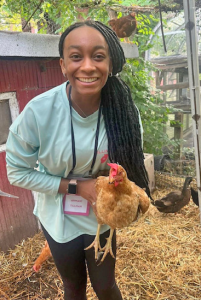
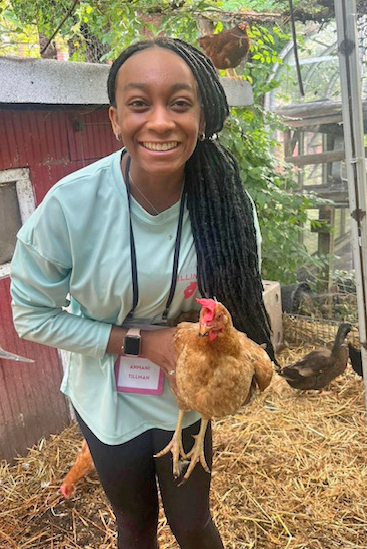
All 11th grade students take part in a program called Junior Experience to enhance connections among classmates, expose students to new programs and ideas through exploration and diversity training, and have fun! Students on this junior experience helped tend chickens on an urban farm.

According to Fedele, working in gardens and caring for native plants can be a stress reliever. She also said she was grateful that Nerinx, and Webster Groves generally, make for a “walkable community” – and she finds walking to be a great stress reliever.

Principal Grumich said the school will continue to look for ways to reduce energy use and has mare great strides by replacing traditional lighting with LED lights. Also, there will be more emphasis on reducing “event trash” that can be harmful aesthetically and environmentally.

Outside on the parking lot, Grumich said the school will work to reduce unnecessary idling by vehicles. Also, there will be organized efforts to encourage more carpooling by students to and from school.

Sustainability By Example

Grumich said sustainabile and environmental practices are best encouraged by example, rather than by scolding others about how their behavior is somehow unacceptable. That approach is consistent with the mission of the Green Schools Award program.
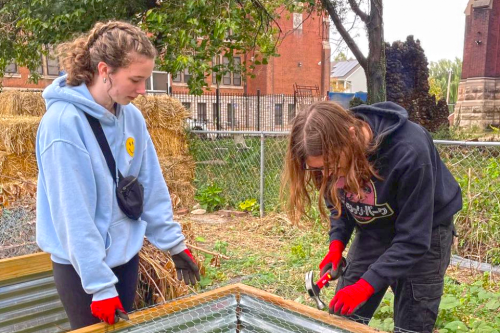
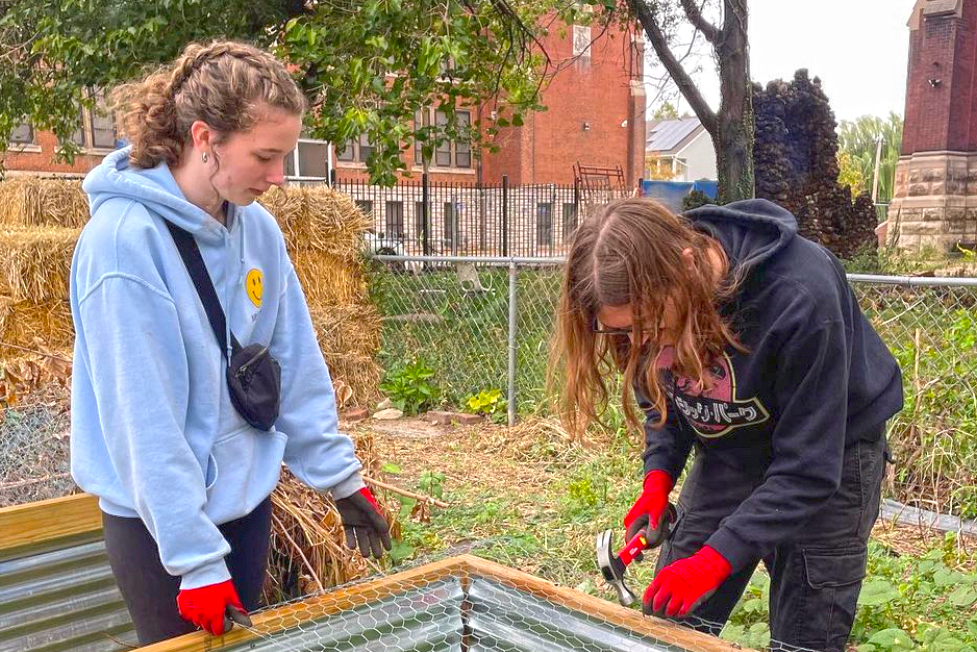
Students in the Eco-Act program regularly perform service at sites dedicated to sustainability efforts. Here, students helped cover raised beds at New Roots Urban Farm.

Nerinx Hall High School on East Lockwood Avenue is receiving the honor in July, not just for its efforts to minimize environmental impacts, but also for enhancing health and wellness initiatives.

“We are not doing sustainable things just to try to win awards,” said Grumich. “These things are all in line with the Loretto mission and in doing the best to empower our young women to make a better future.”

The U.S. Department of Education’s program established the federal recognition awards in 2012 as a platform for promoting sustainable practices in schools nationwide. Nerinx Hall is the first Catholic all-girls school in Missouri to achieve the green award recognition.

Image

“No Mow” Movement Benefits Pollinators and Lawn Mower Pushers

By Jess Holmes

While the “No Mow” trend may feel like a snowflake’s excuse to be a lazy homeowner, it’s proving to be quite the opposite. This initiative is extending beyond its initial purpose of protecting pollinators. It’s becoming a way for citizens to reconnect with the natural spaces in their literal backyards.

The “No Mow” initiative was brought to the United States after its success in the United Kingdom through the organization, Plantlife.

Plantlife’s mission is to connect people with nature, and secure a world rich in wild plants and fungi.

Clean-cut gardening styles have been symbols of wealth and prestige for centuries. Chateaus, chalets, and palaces have always maintained this high value of structured green spaces. And today, modern-day Midwestern towns sport homes with edged, bright green lawns with tight lines and trimmed bushes are still the rage for homeowners. But, at what cost?

Carrie Coyne is the Horticulture Program Facilitator at St. Louis Community College Maremac, as well as the Chair of the Green Space Advisory Commission in Webster Groves, MO. Alongside her team of environmentally-conscious commission members, she has helped popularize the “No Mow” movement in Webster Groves, including getting Mayor Laura Arnold to lift grass length maximums for the entire month of April.

“I see the benefit to the ‘No Mow’ initiative as two fold,” Coyne said. “First, there is a benefit to educating the general public. Having this initiative embraced by the city and being able to publicize through their website and social media platforms has helped the message get out into the community.

“I do feel like the initiative is sort of a gateway, like polar bears and monarch butterflies. They’re all cute things that can encourage people to think about larger environmental issues,” she said.

Continue reading

Image

Saint Louis Zoo’s Mike Dawson: Local Frogs’ Best Friend

Photo by Ursula Ruhl

By Jess Holmes

It’s thanks to the Saint Louis Zoo’s Michael Dawson that spring peepers, chorus frogs, and cricket frogs are still on the map ­— literally. Dawson’s creation and maintenance of the FrogWatch chapter known as the Spring Peeper Program in St. Louis has put these small, but noisy creatures back on conservation radar.

Statewide, these critters are not near extinction, but Dawson explores the effects urbanization has had on their significant population loss in the St. Louis area, while also encouraging the community to get involved in reversing their decline.

“I started looking at data collected by citizen scientists, species by species. One of the patterns I recognized is that certain species were almost completely absent inside of I-270. Whereas you go three minutes outside of I-270, they show back up on the observation maps,” Dawson said. “Some frog species are unaffected by urbanization, but the spring peepers, chorus frogs, and cricket frogs all seemed to be.

“I wanted to see if the citizen-collected data was true, and the Zoo encouraged me to put a project together. So, I did. After getting it approved and funded, I started setting up acoustic surveying devices around the St. Louis area,” Dawson explained. “Over the last three years, I found that the citizen scientists were right.”

The Saint Louis Zoo FrogWatch program stems from an even larger effort, FrogWatch USA. The Akron Zoo manages the national program. The mission is to build a community to help the frog and toad populations across the United States. Thanks to smartphones, this has become even easier.

“If you’re out in the field and have a phone, you can record a frog’s call,” Dawson said. “Recording calls is even better than using photos because I can download it, put it through my software, and can determine what species it’s from. Plus, it’s timestamped and GPS coded. It’s no different than the recording devices I leave out on trees.”

Continue reading

Image

Battle Against Invasive Asian Carp Continues

Photo by MDC Staff, courtesy Missouri Department of Conservation.

By: Zoe DeYoung

A billion dollar project to prevent invasive Asian carp from entering the Great Lakes is set to begin construction this year, but don’t feel too bad for the nuisance fish.

The species has been wreaking havoc throughout the Mississippi River Basin, out-competing native fish for living space and resources since the 1980s.

Pictured: Jill Moon

Longtime Alton Telegraph reporter Jill Moon first heard of the invasive carp issue at a 2009 city council meeting in Grafton, a river town where the Illinois River acts as a perfect feeder for breeding carp.

Three entrepreneurs presented a plan at the meeting to capitalize on the carp. “They thought they had a good money making venture,” Moon said.

The plan involved an Asian carp processing plant. It got the green light. Moon was on the story from there: if you have lemons, make lemonade; if you have carp, put them on the menu.

“When I went to these city council meetings, they would have the boring stuff like, ‘The Street Department fixed Oak Avenue.’ A factory to make Asian carp byproducts stood out to me. And I already knew that the Asian carp was a problem,” Moon said.

A problem not only for native aquatic life, but for boaters. Asian carp tend to feed at the water’s surface and are very easily disturbed. When agitated by a boat propeller or even a sculler’s oar, they can jump up to 10 feet in the air. Think popcorn, but instead it is hundreds of soaring fish.

“Certain times of year when they are spawning, the Asian carp will jump out of the Illinois River. They’ve jumped in boats before, and they’ve accidentally given bloody noses,” Moon explained. “They’re a nuisance species,” Moon added. “So that just struck a nerve in me to find out more.”

The Grafton-based American Heartland Fish Products plant was the brainchild of those entrepreneurs at the meeting Their plan came to fruition, soon processing as much as 60,000 pounds of carp a day, as well as fish oil, fish meal and a funky smell.

The odor began to bother residents, so much so that the plant was given 30 days to address the stink. Ultimately, the plant went kaput.

Continue reading

Image

Environmentalist Says: “We All Live In A Watershed”

Environmentalist David Wilson, an expert on watersheds and wetlands, surveys Shady Creekin suburban St. Louis. Photo by  Ursula Ruhl.

by Jack Farish

The creeks and streams of St. Louis play crucial ecological roles and can provide social and economic benefits to the communities on their banks. Unfortunately, due to intervention, watersheds can be damaged and their natural beauty destroyed. Local watershed expert David Wilson can teach us a lot about watersheds, how they should function, and how we can change our ways to encourage their survival.

Wilson began his academic career as a student of history. As a graduate student, Wilson studied Chinese history at Washington University in St. Louis and had an opportunity to spend two years abroad in Hong Kong.

“It’s a very crowded city,” said Wilson. “When I was there in the 1970s, there were 4 million people living in Hong Kong”

Due to a combination of drought and political tensions in China, Hong Kong was neither able to collect nor trade for the water needed by its growing population.

“They limited the water to four hours a day,” Wilson recounted. “Then they limited it to four hours every two days – that’s all the tap would run. Then it was four hours every four days. If you live in an environment like that, you become very aware of your environment and where your water comes from.”

That awareness grew into a concern for environmental issues. When Wilson returned to St. Louis, he began volunteering, and eventually working for, the Missouri Coalition for the Environment, taking on a variety of different issues. For the last fifteen years, Wilson has worked as a water quality and watersheds specialist with the East-West Gateway Council of Governments – the metropolitan planning organization of greater St. Louis.

In addition to working to address environmental issues directly through these organizations, Wilson has strived to get the word out on issues he is passionate about. He has taught sustainability at Webster University and organized tours of local watersheds.

The first lesson of watersheds is that everyone lives in one, according to Wilson. “A watershed is not the river,” Wilson said. “It’s not the river and the river banks or the floodplains around it. The watershed is everything that drains into the river. Everybody’s in a watershed.”

This means that the responsibility to manage watersheds in an effective and sustainable way falls not only on the communities right along river banks but on all of us. Unfortunately, human-managed watersheds are often far from naturalistic.

Continue reading