Blog Archives

Image

Saint Louis Zoo Welcomes Arrival of Kayin, a Western Lowland Gorilla

All Photos: Kayin, Western Lowland Gorilla, courtesy of Buffalo Zoo.

Male western lowland gorilla Kayin (Kay’-in) arrived safely at the Saint Louis Zoo recently, completing a move that was based on a recommendation by the Association of Zoos and Aquariums (AZA). This move was made through the AZA Species Survival Plan (SSP) for western lowland gorillas, a conservation program that manages a genetically healthy population of this species in North American zoos.

Kayin is a 7-year-old male gorilla that was previously living in a family troop at the Buffalo Zoo in New York. He was born at the Buffalo Zoo in 2016 and has lived with his parents, aunts, and siblings. At 7 years old, Kayin is reaching the age when free-living male gorillas will typically leave their family group in the wild in search of a new bachelor group or mating partner.

“Having the chance to work with Kayin’s keepers in Buffalo and St. Louis has really allowed the Primate Care Team to learn and adjust with Kayin. Everyone has Kayin’s best interests at heart, and seeing the hard work and collaboration behind his smooth transfer from Buffalo Zoo to the Saint Louis Zoo was inspiring. Both communities share in the excitement of Kayin’s arrival,” said Shannon Santangelo, Primate Keeper, Saint Louis Zoo.
Continue reading

Image

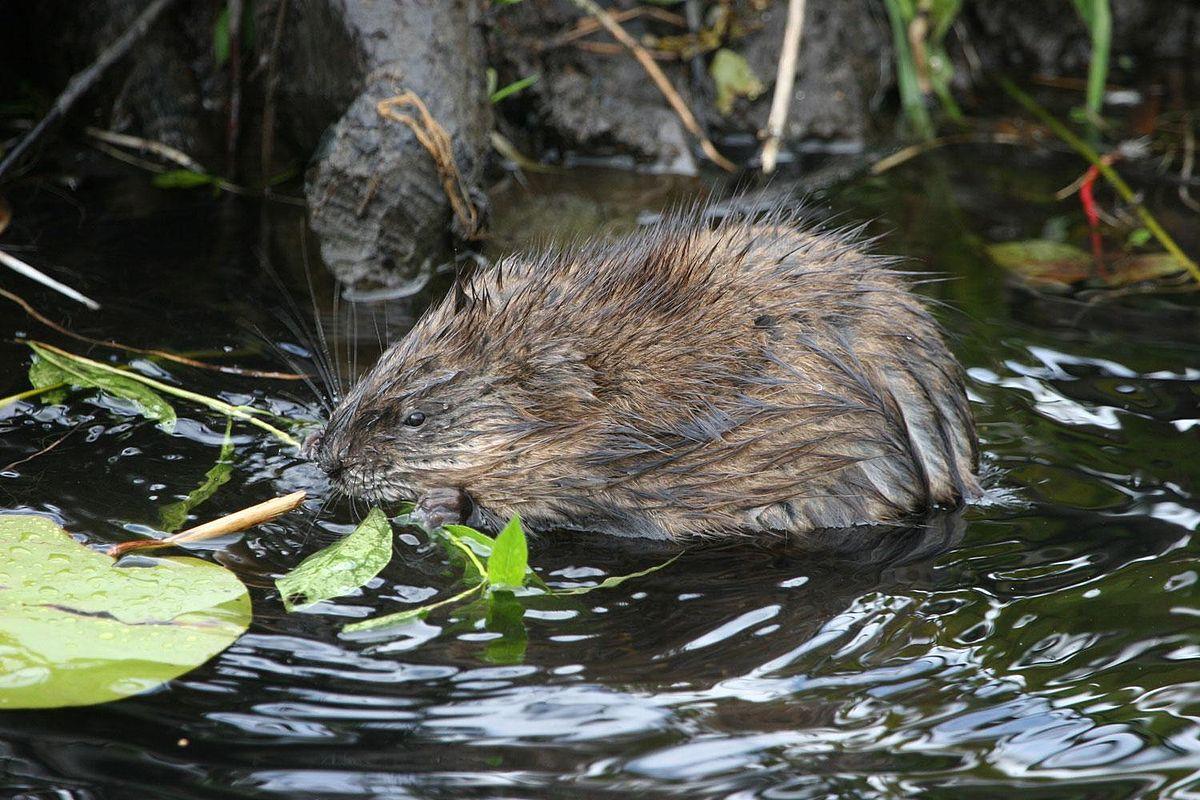
Chowing Down On Muskrat: “Muskrat Love” Is Not Just About A 1970s’ Wildlife Love Song

The tradition of eating muskrat during Lent began in the 1780s, when French Catholics from Detroit moved south to establish homesteads in what now is known as Michigan’s Downriver region. To survive the harsh winters, trappers and hunters ate muskrat, a tradition that continues with Michigan’s annual muskrat dinners in February.

by Don Corrigan

“Muskrat Love” is a romantic rock hit by Captain & Tennille from the 1970s. But muskrat love can also be about firing up the old taste buds with a savory muskrat steak or a garlic-seasoned muskrat smothered in onions.

An American tradition of chowing on muskrat began in the 1780s. That’s when French Catholics from Detroit moved south to establish homesteads in what’s known as the “Downriver Region.” To survive the harsh winters, trappers and hunters ate muskrat.

The downriver dining tradition was carried to other parts of the United States, including Missouri with its many rivers and its fur trappers. Fur trappers sometimes survived on the little critters as they headed west in pursuit of pelts.

Today, a muskrat meal is not considered a culinary delight in Missouri, but the eating tradition continues in parts of Michigan. In Missouri, you will not find Missouri Conservation Department officials offering muskrat recipes in their MDC literature.

Continue reading

Image

MDC Reminds St. Louis Regional Residents To Take Precautions After Recent Bear Incident

Photo courtesy MDC.

On May 23, a bear was struck and killed on I-55 near Festus—a reminder that bears are especially active this time of year, and that bear-human encounters are more likely.

The Missouri Department of Conservation (MDC) reminds St. Louis region residents black bears are becoming a growing part of the St. Louis area landscape, even at times in highly populated areas.

MDC’s ongoing bear research indicates the Show-Me-State is currently home to around 900 black bears, and that population is growing by 9% each year.   Only one species can be found in this state—the American black bear (Ursus americanus)—though multiple color phases can occur in Missouri other than black, such that a bear’s fur can be brown, red, or cinnamon in color.

Most of our bears are found in the southern part Missouri, according to MDC wildlife biologists, which is where the largest tracts of forested habitat are.   Despite their primary concentration in the Ozarks, sightings and potential encounters with bears are likely to increase in the St. Louis region as the population continues to grow.

Find helpful tips below to avoid issues if a bear has been reported near your area.

Continue reading

Image

Saint Louis Zoo Unveils Plans for the Henry A. Jubel Foundation Destination Discovery

Tasmanian devils and babydoll sheep are ambassadors for shrinking forest habitat and how human activity interacts with the sustainability of wild animal populations. The immersive Tasmanian devil exhibit, one of only three devil exhibits in the U.S., features a climb-through tree trunk with a wildlife underpass, allowing the devils to reach both sides of the habitat. This area offers guests a great opportunity to learn about wild animals living in communities with people. Artist renderings courtesy Saint Louis Zoo.

The new experience for children and families will have animal adventures at every turn. The target public opening is planned for 2026.

The Saint Louis Zoo recently shared plans for the new experience for children and families on site of the current Emerson Dinoroarus, formerly Emerson Children’s Zoo.

“Thanks to an incredibly generous $15 million lead gift from the Henry A. Jubel Foundation, we are able to carry forward the goal of the previous Children’s Zoo by providing dynamic experiences for children and families that will inspire a love of animals and learning, but in new and innovative ways,” said Dwight Scott, Dana Brown President & CEO, Saint Louis Zoo. “Destination Discovery will have animal adventures at every turn. You will be able to explore and play side by side with animals, building connections to the natural world.”

Development of the 2.8-acre Henry A. Jubel Foundation Destination Discovery is estimated to cost $40 million with funding coming from a variety of sources, including philanthropy. With a target public opening slated for 2026, construction will begin in 2024. The temporary exhibit Dinoroarus will close Nov. 5, 2023.
Continue reading

Image

Forest ReLeaf of Missouri: Concert in the Trees!

You are cordially invited to our seventh annual Concert in the Trees! Join Forest ReLeaf of Missouri from 6 to 8 p.m. on Thursday, June 1, at CommuniTree Gardens Nursery (2194 Creve Coeur Mill Road, South Maryland Heights, MO, 63146).

Your ticket includes a 90-minute performance by the internationally acclaimed duo Rogers and Nienhaus, a tour of Forest ReLeaf’s nursery and arboretum, and a sneak peek at our new Nursery Pavilion – plus delicious heavy hors d’oeuvres along with wine, beer, and other refreshments.

Come mingle with other folks dedicated to a healthy and equitable tree canopy, and meet some of the influential leaders who have helped us along the way.

We look forward to seeing you on June 1!

Ticket Information, HERE.

Image

Seed St. Louis Partners with One Tree Planted

Seed St. Louis (formerly Gateway Greening), has partnered with One Tree Planted to double the capacity of the Giving Grove program, allowing it to grow from the current 70-100 trees planted per year in the St. Louis region, to 200 trees in 2023.

“With this grant I’m excited to be able to build upon the orchards already in our network as well as add new orchards. These funds will help our Giving Grove program be more accessible to communities in the region by greatly reducing the costs for the trees.” Said Dean Gunderson, Director of Education, Seed St. Louis.

Pollution is a significant factor in St. Louis; the American Lung Association has ranked St. Louis one of the 25 most polluted cities in the U.S.

According to a study of EPA data released in 2020, St. Louis has the 12th worst ranking for air quality in the U.S., with an average Air Quality Index (AQI) of 54, a Max AQI of 182 and 206 days per year of unhealthy air quality.

Continue reading

Image

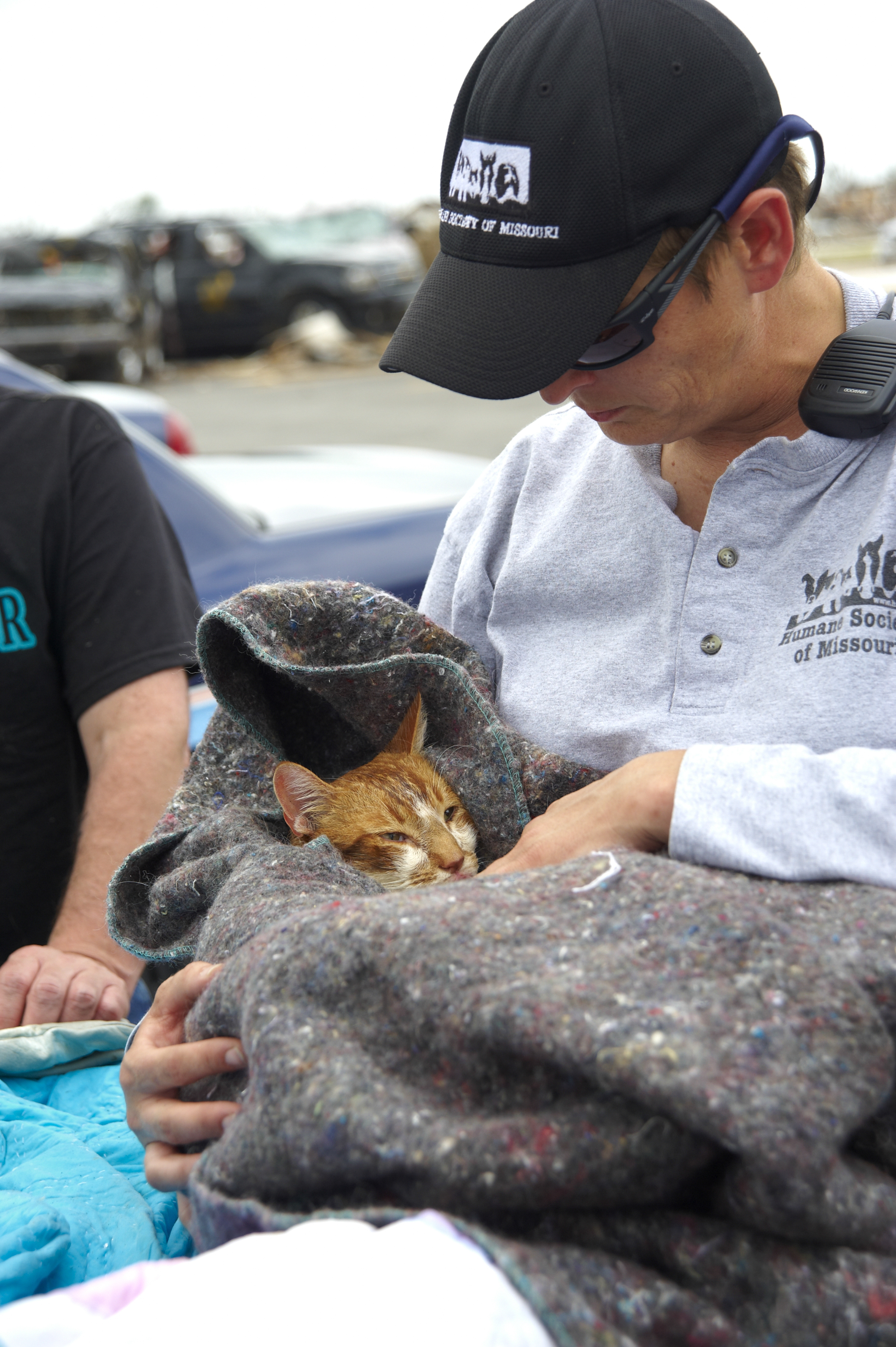
Tornado Season Tips: Have A Plan For “Toto” When Storms Bring High Winds

Photos curtesy the Humane Society.

by Don Corrigan

Aunt Em and Uncle Henry could have done a much better job protecting Dorothy and her little dog, Toto, when that terrible Kansas tornado hit in 1939. The infamous storm launched the beloved twosome to the Land of Oz.

Your little Toto could fare much better in 2023. That’s because today’s weather experts excel at predicting and tracking tornadic storms. Also, animal care experts now offer plenty of tips for protecting pets when storms hit.

A severe storm in April dropped several tornados in the St. Louis area, including one in Fenton that was briefly headed toward Kirkwood. The recent outbreak prompted the Humane Society of Missouri to issue a tip sheet on storms and pets.

“With the recent tornado warnings across the state, the Humane Society decided to take time to remind pet owners of several essential tips to ensure the safety of their furry friends, and all their pets, said veterinarian Nicole Fulcher, director of the Animal Medical Center of the Missouri Humane Society.

“Weather in Missouri can be frightening, but by taking steps for proper preparation, we can ensure our pets remain protected during tornadoes and extreme weather events,” said Fulcher.

Fulcher said a good first step would be to make sure your pet is microchipped and a visit to AMCMA.org to schedule an appointment can help get that accomplished.

“One thing we learned from the 2011 tornado in Joplin is that many, many pets will run away and be lost for days and even weeks after such a horrific event,” said veterinarian Jennifer Pearl of the Humane Society’s Animal Medical Center.

Continue reading

Image

Class On Environmental Issues Debuts At University College In St. Louis

Pictured: John Hickey

Tornadic storms, periodic droughts, flash floods, erratic temperature shifts and unprecedented windy conditions have left many Americans wondering whether climate change is to blame.

The scientific consensus is that human beings must cut carbon pollution in order to avoid even worse impacts from climate change.  The good news is that there is broad public support for climate action now and policies to address climate change.


What might those policies look like? Among the possibilities:

– Protecting more forests and prairies to sequester carbon from the air.

– Updating state policies in order to encourage solar panels on commercial rooftops.

– Adopting building codes that require the use of modern energy efficiency standards.

– Building an extensive charging network to support transition to electric vehicles.

– Restoring the tree canopy in urban parks and neighborhoods.

The practical measures required to address climate change are available to be implemented now. According to John Hickey, the missing ingredient is trained activists who can lead these policy efforts.

Continue reading

Image

Bridge Demolition Leads To Pollution Of Deer Creek, River Des Peres, And More Downstream

In early March, a contractor demolishing a bridge over Deer Creek released polystyrene (Styrofoam) into the waterway. | photo by Roy Lohmann

Webster Groves resident documents debris being released into creek following the demolition of bridge located in Brentwood

By Colin Suchland (Story courtesy of the Webster-Kirkwood Times)

Demolition of a bridge spanning Deer Creek has incited the ire of watchful Webster Groves residents and resulted in violations from state authorities over foam-plastic pollution in the waterway.

Beginning in early March, a contractor working for the city of Brentwood, KCI Construction, began removing the bridge on Breckenridge Industrial Court, immediately south of Manchester Road and west of South Hanley Road. Deer Creek runs along the borders of Brentwood, Maplewood and Webster Groves where it abuts residential, commercial and recreational areas.

Deer Creek forms a natural corridor that includes parks and pedestrian greenways serving several communities as it flows toward the River Des Peres. The bridge replacement is part of a larger “Brentwood Bound” project that promises both commercial and recreational improvements. Flood mitigation along Deer Creek is also a goal of the project.

The large, scattered mass of polystyrene pollution, commonly known as Styrofoam, released into the waterway by the bridge demolition immediately drew the attention of Webster Groves resident Roy Lohmann.

Continue reading

Image

Musical Artist John Nilsen Returns to Powder Valley Nature Center On May 5

Pictured: musical artist John Nilsen. Photo: MDC

The Missouri Department of Conservation (MDC) will once again welcome popular northwest musical artist John Nilsen to a live performance, The Magic of Music with John Nilsen, at Powder Valley Conservation Nature Center Friday, May 5 at 7 p.m.  The concert is free and open to the public.  Nilsen’s stop at Powder Valley is part of a statewide tour, including performances at multiple MDC nature centers.

For this multi-media engagement, Nilsen will compliment his nature-inspired music with the spectacular nature and wildlife images of award-winning MDC Photographer Noppadol Paothong.  Paothong’s photography can be seen regularly in MDC’s Missouri Conservationist magazine, as well as many other MDC publications.

Paothong’s stunning photography will be displayed on Powder Valley’s giant video screen, accompanied by Nilsen’s live performance in the nature center’s auditorium.

Nilsen is a noted pianist and acoustic musician who comes from Portland, Oregon.  As a sought-after entertainer throughout the U.S., Nilsen has performed in all 50 states and on four continents.  A Yamaha signature artist, Nilsen travels internationally playing over 225 performances a year.

Reservations required – see more below.

Continue reading