
Kevin Renick is a music teacher, songwriter, nature lover, and it all comes together in his performance work. He credits his interest in birding walks for many of his music successes.
“Wandering around in remote woodlands, vast fields, marshlands and river edges looking for birds gave me a very early appreciation for the diversity of the natural world and the notion of landscapes,” said Renick. “My interest as a youngster shaped my aesthetic in profound ways.
“When I turned 12, my interest in birds became so intense that my mom started looking for an organization I could join. She found the Webster Groves Nature Study Society,” said Renick. “I was the youngest kid to participate and I started going on their regular birding trips, an activity that changed the way I viewed the world, nature as a whole, and yes, music.
Renick said he loves walking in the woods and his birding expeditions. All of this gets sprinkled into his music, and it inspired his most famous song, “Up In The Air,” which was used for the 2009 George Clooney movie by the same name. It spells out a key influence for him:
“I’m out in the woods
Something here does my heart so good
I breathe the air and I know that I’m alive
And I stare at all the birds as they fly by
I guess it all comes down to them
Cause they’re up in the air.”
To Learn More About Kevin Renick, check out this story that appeared recently in the Webster-Kirkwood Times:
*****
Fulfilling Their Dream
Songwriters at Meramec Produce Their Greatest Hits Album
 by Don Corrigan
Okay. So what if it hasn’t taken off like the “Eagles’ Greatest Hits” – a group of Meramec students are still flying high with their CD entitled, “Time To Write A Song.” It’s billed as a music album about love, death, bad drivers and existential issues.
The CD is the brainchild of Kevin Renick. His continuing education class at St. Louis Community College at Meramec in Kirkwood is titled: “Songwriting: The Art and Discipline.” Students learn that songwriting is an art, but it only happens with a little discipline.
“I start by telling my classes that to write songs you have to have something to say,” declared Renick. “Tell us lyrically and musically, why we should care. Don’t tell us you just found a new girlfriend.
Continue reading →


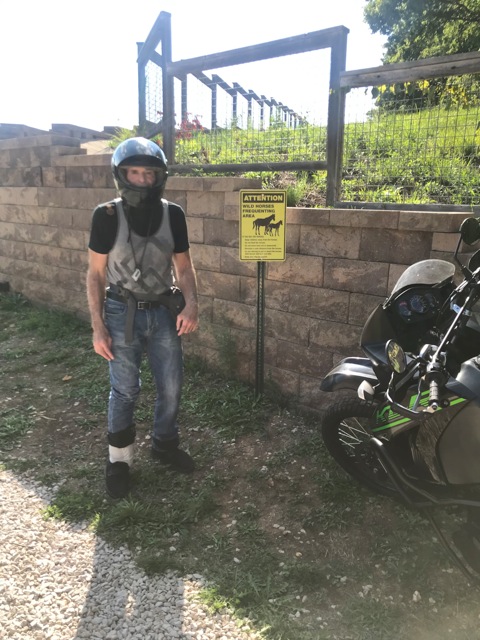 “I was so surprised that I could drive less than two hours from Kirkwood and find these amazing animals roaming freely – no fences, no tags, no nothin,’” said Noonan. “They seem to have no boundaries.








 Environmental Echo