
Karen Goellner holding a wriggling endangered Hellbender. Photos by Jeffrey Briggler.
By Don Corrigan
Fans of Missouri hellbenders recently gathered at the Saint Louis Zoo to honor the life and work of Kirkwood’s Karen Goellner. If working with hellbenders can get you into heaven, she is in a good place.
“She put in the hard work to help save the endangered Ozark hellbenders,” said Charlie Hoessle, a renowned herpetologist and director emeritus of the Saint Louis Zoo. “She traveled down to the Ozark streams with many of us who were interested in this species.
“Her late husband, Ron, also was keenly interested in amphibians and fish and snakes,” added Hoessle. “Before I went to the Zoo, he used to come in to my pet shop in Affton and look at all the creatures. Ron and Karen were great for each other and for the hellbenders.”
Hellbenders, sometimes known as “snot otters,” are large, aquatic amphibians. The hellbender has a flat head, wrinkly body and paddle-shaped tail. Its body is dark gray or brown with irregular dark spots along its back.
Like so many animal species whose survival is under threat, hellbenders have problems because of habitat degradation. This includes declines in water quality, erosion issues, silt covering their rocky living places and difficulties producing young in a damaged environment.
Even before humans defiled their favorite living spots, fishermen proved hostile to hellbenders. They viewed them as small monsters hurting trout and bass fishing, so they captured hellbenders and drove stakes through them.
Saint Louis Zoo experts and volunteers have intervened on behalf of hellbenders. They built a nurturing, artificial environment at the Zoo. These tank “streams” allowed them to thrive and reproduce.
The first successful breeding of hellbenders at the Zoo only took place after tender, loving care. They were destined to be reintroduced to their native habitat in waterways like the Current, Jacks Fork and Eleven Point rivers.
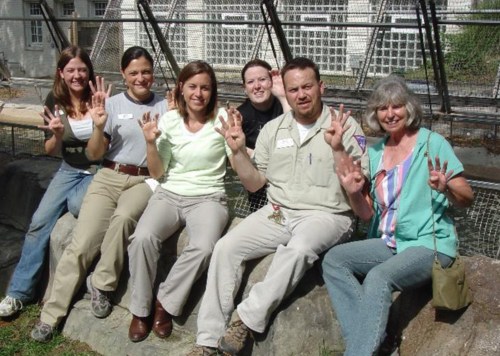
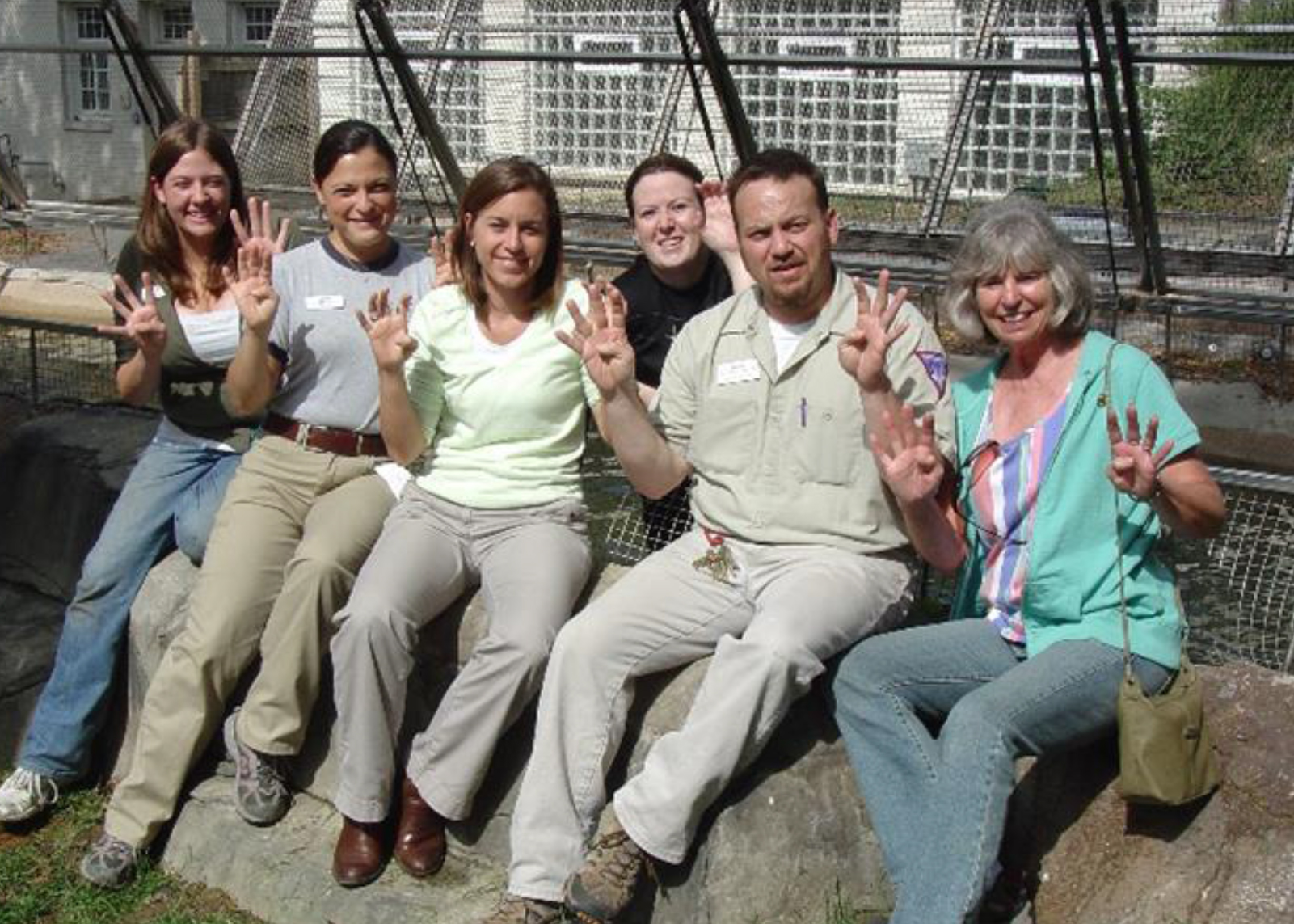
Group photo of the Saint Louis Zoo staff, USFWS, and Karen Goellner assisting with augmenting wild collected Ozark Hellbenders in the outdoor streams for captive-breeding. This was completed in the summer of 2011 and the first successful captive breeding occurred in the fall of 2011.
Continue reading →







 Environmental Echo