Category Archives: Home

Image

Frogwatch USA Looking For Citizen Scientists

photo courtesy of Saint Louis FrogWatch Chapter

Saint Louis Zoo online training sessions set for  April 3

The information in this post has been updated with the most recent changes. All in-person training workshops have been canceled.

Jump in and become a FrogWatch USA volunteer with the Saint Louis Zoo! St. Louis-area “citizen scientists” are needed to monitor frogs and toads from their backyards, parks, fields, creeks or just about anywhere. The information gathered can ultimately lead to practical and workable ways to stop amphibian decline.
You do not have to be a frog or toad expert to join FrogWatch. You won’t even need to see or touch these amazing amphibians to participate. All you need is an interest in frogs and toads and the time to attend a training session. You’ll be asked to make a commitment to monitor a site of your choosing for at least three minutes twice a week throughout the frogs’ breeding season, which ranges from about February to August.

Please read below for webinar dates, times and registration.

Continue reading

Image

Solving Climate Change With A Trillion Trees

Mark Grueber of the Missouri Department of Conservation surveys trees at the Powder Valley Nature Center, which serves as his work location for the MDC. Photo by Diana Linsley (WKT)

By Don Corrigan (Webster-Kirkwood Times)

With wildfires raging globally and 2019 being the second hottest year on record, even climate change skeptics are starting to look for answers. Could planting a trillion trees reduce carbon pollution and spur a needed cool down?

The trillion trees idea got a big boost last month at the World Economic Forum. Planting trees does present an easier solution than reducing fossil fuel use. Even President Donald Trump said the U.S. would sign onto a tree campaign.

Local tree and horticultural experts are pleased that some movement on the climate change issue seems to be in the works, but they argue that planting trees is no panacea for a problem that is taking a toll on Planet Earth.

“There are many facets to this discussion about trees and climate change, and most of them do have some merit,” said Jerald Pence, coordinator for the horticulture program at St. Louis Community College at Meramec in Kirkwood. His responsibilities include managing an 11-acre garden on the Meramec campus.

“I do think that it’s important to understand that there is rarely a ‘silver bullet’ solution that will fix a big problem so easily,” added Pence.  “I think it’s great that something is happening to at least begin a needed discussion.”

Continue reading

Image

A Billion Animals Crying Out Loud

by Don Corrigan (Webster-Kirkwood Times)

I like a good bumper sticker and, “Fur Crying Out Loud,” is very effective. It is a statement against cruelty to animals and the message stays with you.

It especially stayed with me in 1981 after I wrote a feature story for our paper about the “Kirkwood Trapper.” People for the Ethical Treatment of Animals came up to my office, while I was at lunch, and plastered my desk with “Fur Crying Out Loud” bumper stickers.

What kind of adhesive was on those stickers? It took me months to scrape the suckers off my desk. In the meantime, I read the articles the PETA folks left behind about steel-jawed traps and the suffering of raccoons, beavers and rabbits – and a few family pets –  that all had their legs stuck in jagged traps.

The PETA articles were reasonable enough, but the group’s guerrilla tactics seemed a little extreme. I continued to think along those lines, and was no more sympathetic, even when nude female models paraded the streets proclaiming: “We’d rather go naked than  wear fur.”

Is this really necessary?

Continue reading

Lawmakers Vow To Stop Green Energy Line in Missouri

by Don Corrigan (WKT)

Kirkwood’s quest to obtain greener and cheaper electricity looked brighter after judges and state regulators gave the Grain Belt Express power line the okay. Now, state legislators are trying to turn lights out on the power line.

“The legislature is trying to stop this transmission line with bills that are now getting fast-tracked in the statehouse,” said Mark Petty, director of Kirkwood Electric Department. “We urge our residents to contact legislators and express their concern over this.”

Kirkwood is part of a coalition of city utilities, which includes Hannibal and Columbia, that have agreed to buy 500 megawatts of the cheaper power. That agreement persuaded utility regulators in the state that the transmission project bringing Kansas wind energy into Missouri and Illinois is in the public interest.

Legislators want to block the project at the behest of farmers and rural landowners who object to eminent domain being used for the project. The line would stretch 200 miles through counties in northern Missouri.

Continue reading

Image

The Missouri Department of Conservation Announces Eagle Days Event Schedule

Photo courtesy MDC.

From December through February, Missouri’s winter eagle watching is spectacular. Discover nature with the Missouri Department of Conservation (MDC) through Eagle Days events around the state or enjoy watching bald eagles on your own.

Because of Missouri’s big rivers, many lakes, and abundant wetlands, the Show-Me state is one of the leading lower 48 states for bald eagle viewing. Each fall, thousands of these great birds migrate south from their nesting range in Canada and the Great Lakes states to hunt in Missouri. Eagles take up residence wherever they find open water and plentiful food. More than 2,000 bald eagles are typically reported in Missouri during winter.

MDC Eagle Days Events

MDC Eagle Days events are listed below. They include live captive-eagle programs, exhibits, activities, videos, and guides with spotting scopes. Watch for eagles perched in large trees along the water’s edge. View them early in the morning to see eagles flying and fishing. Be sure to dress for winter weather and don’t forget cameras and binoculars.

Continue reading

Image

Time To Capture Loose Squirrels For Thanksgiving Dinners

As Thanksgiving approaches, a popular St. Louis Restaurant is advising its employees in the restrooms to wash their hands before returning to work and to catch any loose squirrels in the neighborhood. Will any of those squirrels end up in the eateries’ frying pans or the crock pots? Probably not, but they should!
Squirrels are sustainable food and quality protein sources. They belong in the stuffing and the Brunswick stews that are often on the Thanksgiving table. Ted Nugent provides dozens of squirrel dish suggestions in his book, “Kill It, And Grill It.”

Squirrels provided essential sustenance in early America and deserve far more credit for keeping Colonial settlements nourished. Squirrels certainly merit more accolades as early American culinary offerings than do turkeys, which have received undue attention thanks to the mythology that surrounds the first Thanksgiving dinner of the Pilgrims. Squirrel meat was, in fact, the real meal deal in North America both before and after the Declaration of Independence in 1776.

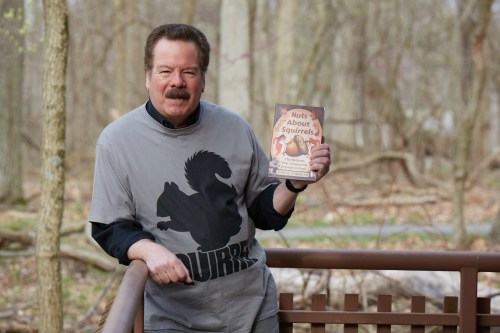
The author of the popular squirrel treatment, “Nuts About Squirrels: The Rodent That Captured Popular Culture,” will talk about every aspect of the furry animals at a number of venues in December and in the new year of 2020. Author Don Corrigan’s next squirrel talk and squirrel squib signing will be at Eden Seminary in Webster Groves from 10-11 a.m. on Wednesday, Dec. 4th, courtesy of OASIS.

Image

Tree Killing Invasive Emerald Ash Borer Now Found In 75 Missouri Counties


Emerald Ash Borer has been detected in 75 Missouri counties since 2008. All photos courtesy MDC.

Since the Emerald Ash Borer (EAB) was first detected in Missouri in July 2008, this tree-killing pest has spread to a total of 75 Missouri counties and the City of St. Louis.


The Missouri Department of Conservation (MDC) reports the presence of EAB in 16 new counties across Missouri. Collaborative efforts by MDC staff, Missouri Department of Agriculture inspectors, and USDA Animal and Plant Health Inspection Service officers, EAB has been detected in Benton, Boone, Cooper, Douglas, Holt, Howard, Howell, Linn, Montgomery, Morgan, Nodaway, Osage, Ozark, Pettis, Putnam, and Randolph counties this year.

EAB is a small, metallic green beetle native to Asia that attacks all species of ash trees, including Missouri’s native green ash and white ash. In its larval stage, the insect kills ash trees by feeding on the vascular tissues just under the bark, slowly cutting off the trees’ flow of water and nutrients. Unfortunately, EAB kills more than 99 percent of the ash trees it attacks.

EAB will likely be found statewide within the next few years, prompting MDC Forest Entomologist Robbie Doerhoff to urge Missourians with ash trees in their yard to make a plan now to either remove those trees or treat them with an insecticide.

Read more from the MDC release below about the invasive EAB and information about how to determine if  trees are infected and preventive measures to help save trees from the EAB.

Continue reading

Image

Corrigan Addresses Eco-Anxiety of Young People in College Paper

Eco-anxiety is intense anxiety about ecological disasters and threats to the natural environment. These threats include increasing pollution and climate change disasters, ranging from floods to storms to wildfires. Variations to the definition exist such as the broader description explaining it as the worry caused by concerns about the present and future state of the environment. and planet earth.

EE’s Don Corrigan, author of  the book, “Environmental Missouri,” recently wrote about the eco-anxiety of students in a guest editorial he was invited to write for the Webster University Journal. The link to his response to eco-anxiety is provide below:

Heres a link to his timely op-ed: http://websterjournal.com/2019/11/19/in-praise-of-brave-students-and-teachers-who-love-our-planet/

Image

Last Call To Enter The Powder Valley Nature Center 2019 photo contest

Kate Sprague’s photo of a whitetail buck won first place in the Wildlife category in last year’s 2018 Powder Valley Nature Center Amateur Photography contest.

Nature photographers will have until Dec. 1 to enter images taken at the nature center and nearby MDC areas.

The Missouri Department of Conservation’s (MDC) Powder Valley Conservation Nature Center wants to see how its visitors connect to nature with their cameras. The nature center is issuing the last call for entries in its 2019 Amateur Photography contest. Deadline for all entries will be Dec. 1.

This photo contest is free to enter for amateur photographers of all ages and includes separate categories for youth and adult photographers. To qualify, photographs must have been taken at Powder Valley Conservation Nature Center, or nearby Emmenegger Nature Park and Possum Woods Conservation Area, or Claire Gempp Davidson Memorial Wildlife Area.

Continue reading

Image

Trout Fishing Opportunities Just Got Bigger This Winter For St. Louis Area Residents

Photo by MDC Staff, courtesy Missouri Department of Conservation.

The Missouri Department of Conservation celebrates 50 years of urban fishing by stocking 10 pound rainbow trout in select St. Louis lakes.

The Missouri Department of Conservation (MDC) is celebrating the 50th Anniversary of its Urban Fishing Program (UFP) this year. Since 1969, the UFP has grown from a limited experiment to an expanded and robust program providing close-to-home fishing for St. Louis area citizens.  These opportunities include pursuing rainbow trout during the winter in select UFP lakes.

In that same theme of making things bigger, MDC will stock an increased number of extra-large lunker rainbow trout this season at its UFP lakes in honor of the 50th anniversary. Some of these giants could tip the scales at 10lbs.

“St. Louis-area trout anglers might need to buy some heavier tackle,” said Fisheries Management Biologist Kevin Meneau.

Continue reading