Category Archives: Home

Image

Registration Is Open for 2023 Callery Pear “Buyback”

Photo: MDC, David Stonner.

The Missouri Invasive Plant Council (MoIP), in partnership with Forest ReLeaf of Missouri, Forrest Keeling Nursery, and the Missouri Department of Conservation, will host a Callery pear “buyback” program in locations around the state on April 18.

Registration is open March 15 – April 13 for participants to choose their location, register with EventBrite, select a native tree, and upload a photo of the cut-down Callery pear tree. One free, non-invasive, native tree is provided to registered participants at the selected location on the day of the event, April 18, from 3–6 p.m. (Note: Kansas City has different dates and times.)

Invasive Tree Causes Ecological Concern: Native to China, Callery pear trees (Pyrus calleryana) include 26 cultivars that present significant ecological concerns in Missouri. Some of the most common cultivars offered commercially include Aristocrat, Autumn Blaze, Bradford, Capital, Cleveland, Chanticleer, Red-spire, and Whitehouse.

Continue reading

Image

Pallottine Officially Opens Low Ropes Challenge Course

Information from the Pallottine Renewal Center about a new learning opportunity in the local St. Louis area.

A multi-year dream finally becomes a reality this month as the Low Ropes Challenge Course opens at the Pallottine Renewal Center in Florissant. PRC Executive Director Marillyn Baner and team have worked to bring this vision to life over the past several years, made even more critical by the 2020 Covid Shutdown and people’s inability to get together publicly. With those fears and restrictions now behind us, it is the perfect time to open the course to the public.

“I am beyond thrilled that we are finally able to provide this amazing experiential learning opportunity to the communities in and around North County and St. Louis,” Baner said. “Starting this month, we are taking reservations for groups of all shapes and sizes, from 10 to 100. Call us to schedule a tour and see everything Pallottine has to offer from ropes to retreats.”

Continue reading

Forest Park Replaces Trees Along “allée” Walk

After researching replacement options, Forest Park Forever’s horticultural team selected the “yellow bird” flowering magnolia.

Out with the Callery pear and in with the “yellow bird” magnolia!

Our friends at Forest Park Forever are always moving forward for the good of nature and the park!

Recent information released by Forest Park Forever:

Forest Park Forever, in partnership with St. Louis City’s Forestry team is removing the Callery pear trees along the “allée” walk that bisects the twin parking lots between the Dennis & Judith Jones Visitor and Education Center and Pagoda Circle.

In keeping with the original design intent of the allée, we will replace these trees with 60 ornamental “yellow bird” flowering magnolias sourced from a nursery in Kansas City. The project team plans to begin removal of trees on Tuesday, February 28, so the site is ready for installation of the new trees some time over the next month.

Read more about the project and the invasive Callery pear tree HERE.

4,500 Serious Crashes in Missouri: Costs For Roadkill Collisions In U.S. Approach $10 Billion

Taking animal safety into consideration when building roads and highways doesn’t have to cost taxpayers’ money. In fact, preventative measures can reduce costly road accidents and save human lives

In a new study by the Federal Highway Administration, reported animal crashes are now estimated to cost Americans over $10 billion annually with a total of more that 200 crashes which prove to be fatal for humans.

Regional figures show that crashes with animals in the Midwest cause damages upwards of $3.8 billion with collisions mounting to well over 160,000 annually.

Missouri has about 4,500 animal crashes, with anywhere from 6-12 human fatal animal crashes yearly. Michigan had the greatest number of reported animal-vehicle crashes, with an average of over 54,000 each year.

The new study titled, “The Strategic Integration of Wildlife Mitigation into Transportation Procedures,” recommends use of a collision prevention manual for transportation professionals and their partners.

Continue reading

See Ozark music duo Shortleaf perform live March 3 at MDC’s Powder Valley Conservation Nature Center

Mike and Tenley Fraser of the band Shortleaf will perform at Powder Valley Conservation Nature Center Friday, March 3 at 7 p.m. The musicians play traditional Ozark folk music and weave stories of Ozark culture and natural resources into their concerts. Photo: MDC

The Missouri Department of Conservation’s (MDC) Powder Valley Conservation Nature Center invites you to discover nature through music.  The nature center will present a special concert by the band Shortleaf, featuring Mike and Tenley Fraser on Friday, March 3 at 7 p.m.  The performance promises an enjoyable mix of entertainment and education suitable for the whole family.

Fraser, an accomplished Ozark fiddler, and wife, Tenley, specialize in performing traditional music of the Ozarks.  Honoring a long-time heritage of music and storytelling, the duo uses tales of Ozark history and Scots-Irish culture to create an engaging blend of songs and spoken word.  The Scots-Irish people settled in the hardscrabble Ozarks after migrating west from the Appalachian country, and gave the region much of its unique character.

(Registration required to attend)

Continue reading

Image

Time To Give A Hoot: When Owls Attack – These Birds Are Not Always Just Wise And Old

Pictured: Great Horned Owl. All photo courtesy the World Bird Sanctuary. By Stu Goz.

By Don Corrigan

Owls sport reputations for being wise and old. However, sensational internet stories and tabloid TV are portraying these feathered fellows as dangerous. Wise, old owls appear to be in attack mode.

A hiker in Alaska was recently dive bombed by a great-horned owl armed with sharp talons. Last year, attacks took place from Washington state to Georgia. Incidents in Texas prompted a “When Owls Attack” advisory.

“Owls can and do attack,” said Shelly Colatskie of Powder Valley Conservation Nature Center in Kirkwood. “If you get too close to their nests, especially when they have young, they will swoop down on you.

“An owl coming at you with their talons can be scary,” added Colatskie. “But the truth is we have not had calls here about problem owls. We get more calls about problem skunks and deer, and bats for sure.”

In Midland, Texas, humans were advised to wear protective gear when passing by nesting adult owls and their owlets. Leather jackets and baseball helmets were suggested as items for owl-proofing.

Do Webster-Kirkwood residents need to owl-proof? After all, owl nests have been spotted in forested stretches at Emmenegger, Blackburn, Powder Valley and other park areas.

Continue reading

Image

Environment At Fault? Hey, Valentine, Statistics Show Loss Of Courting, Romance

Happy Valentine’s Day!

By Don Corrigan

Do couples go courting anymore? Is dating an obsolete art? Is real romance dead on arrival? Do we now just “Do It In The Road,” if at all, as Beatle John Lennon used to sing?

Some alarming national statistics show that fewer Americans are courting, dating and marrying. Romancing is just something that old people talk about when recalling their favorite “make-out sites” or their necking at drive-in movies.

Census data shows extremely low marriage rates among millennials and Gen Z-ers ­– only 29 percent of 18-to-34-year-olds were married in 2018, compared to 59 percent of young people of comparable age in 1978.

Dour statistics on courting and marriage have beget screaming headlines about the “marriage crisis,” “rudderless young men” and “the end of marriage” in national magazines.

Liberals blame the demise of love on social media and Tinder. Young people use Apps to hook up for one-night stands with no end-game. They are looking for love in all the wrong places. Actually, they aren’t looking for love at all.

Conservatives blame a liberal culture that promotes same-sex relationships rather than traditional marriage; and, a culture that conditions young men to avoid responsibility and steady jobs that could support marriage and family.

Conservative U.S. Senator Josh Hawley of Missouri says young men are taught in school that the male gender is toxic, so they are demoralized. Hawley has vowed to address the situation with a new book, slated to come out in May, to be titled, “Manhood: The Masculine Virtues America Needs.”

In fact, the decline in courting, dating and marriage may not have much to do with politics at all, so hold off on the blame games and political finger-pointing. Some experts advise looking at science for an explanation.

Continue reading

St. Louis LWV Boasts 100 Years Work For Women And Environment

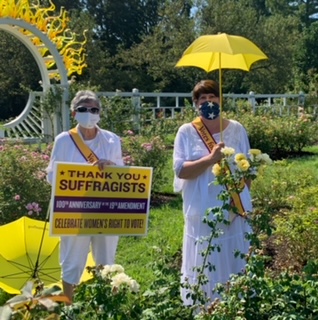
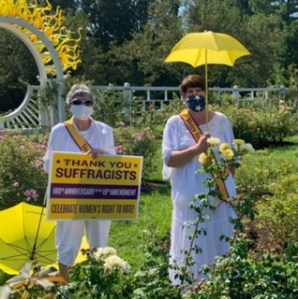
Agnes Garino and Jean Dugan thank suffragists for the women’s
right to vote on the 100th Anniversary of the 19th Amendment.

By Don Corrigan

Missouri has many organizations with a mission to protect the environment. One group that has been around for 100 years, but isn’t often cited for its environmental chops, is the League of Women Voters of Metro St. Louis.

The St. Louis League was founded on Nov. 13, 1919, almost a year before passage of the 19th Amendment providing women the right to vote. The group’s goal was to protect the right to vote and to educate voters.

A new history of the League, Raising Our Voices, covers the past six decades of local and national upheaval, but it also chronicles decade-by-decade the everyday work of the League to protect the outdoors and environment.

Beginning with the decade of the 1960s, author Nicole Evelina zeroes in on the League’s concerns over air pollution. A familiar term at the time was “St. Louis throat,” coined to describe damage done to membranes of the nose, sinus and lungs.

St. Louis suffered from dense black and gray smoke primarily from the burning of coal. The city was put on notice with the 1964 Cleaner Air Act passed by the U.S. Congress. This led to the passage of the Missouri Air Conservation Act.
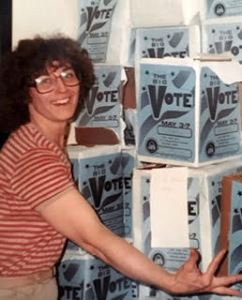
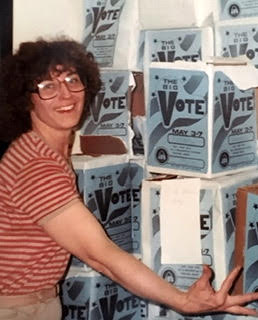
Brendan Banjak stacks the League’s “Big Vote” ballot boxes in
a get-out-the vote campaign in 1983.

The League got behind recommendations to restrict the amount of coal burned, to  outlaw open burning of refuse and to require anti-pollution devices on automobiles. The legislature passed a new set of air standards for the state.

In the 1970s, the League continued its efforts on air pollution issues, but also worked on improved management of parks. Proper land use also put the spotlight on landfills, which became more than just places to dump trash and forget about it.

Missouri was drowning in its own trash with 4.2 million tons of waste per year, or an average of 5 pounds per person per day. Roadsides, watersheds and floodplains were becoming dumps. The League advocated for responsible land use policy.

Continue reading

Columbia (COMO): Great Place For Nature Sites & More

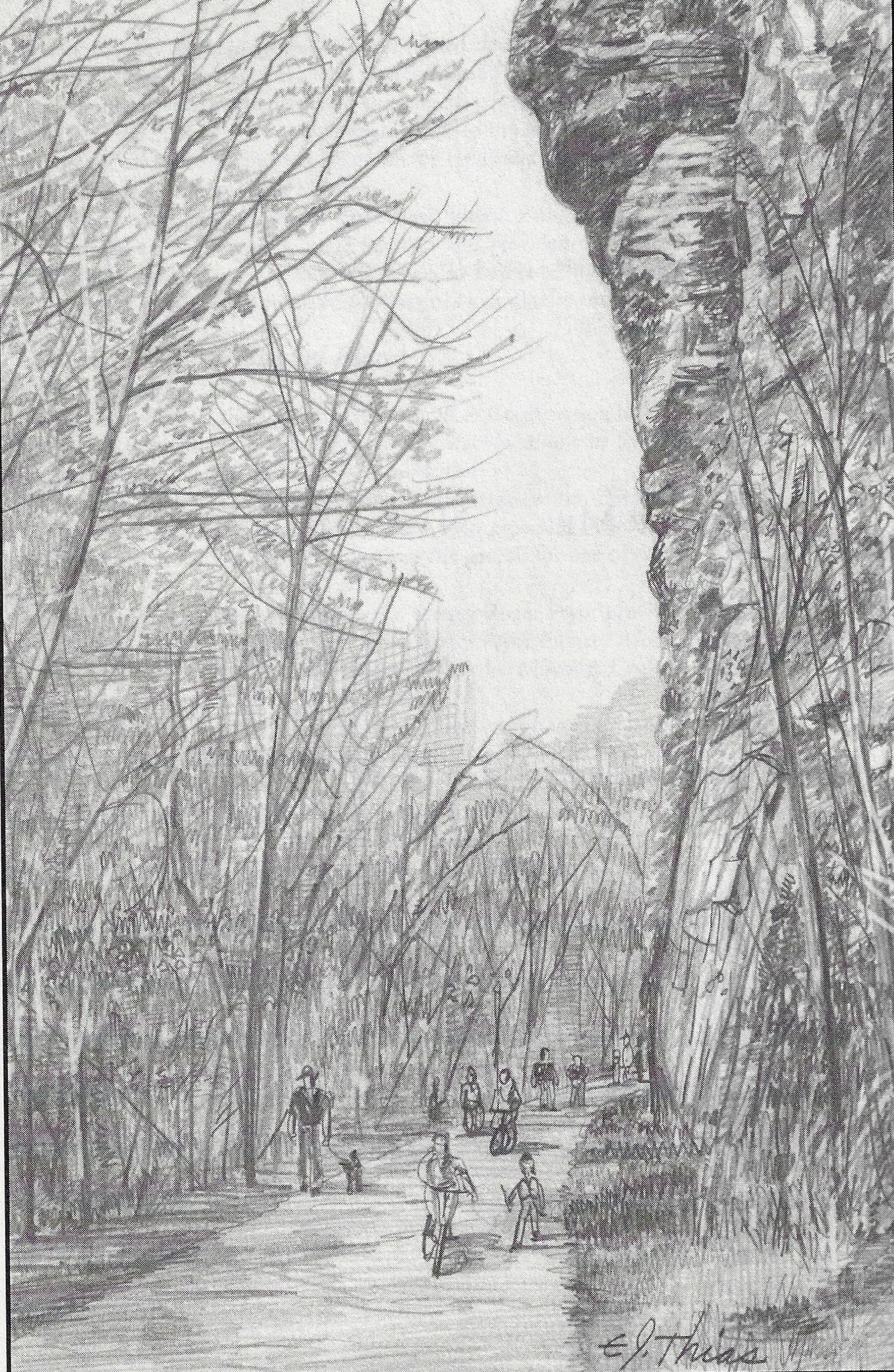
Images: E.J. Thias / Show Me … Natural Wonders

By Don Corrigan

If you’ve spent any time in Columbia, Mo., you know it can be a base for visiting nature sites and more. Like many J-school grads, this writer took advantage of many opportunities while living in COMO.

Stephen Paul Sayers, a Mizzou research professor, recently authored, 100 Things To Do In Columbia Before You Die, by Reedy Press.

No doubt, many Mizzou grads thank their lucky stars that they can already check off some of his bucket list items. However, Sayers also has “to-do” ideas that alumni may have missed on their COMO stays.

Sayers’ book will undoubtedly inspire some return trips for the former residents of Missouri’s premier university town.

Among the Sayers’ outdoor/nature sites that this writer also would heartily recommend:

Eagle Bluffs – a perfect spot for hiking and bird watching. You can watch bald eagles gliding on the breezes below you.

Three Creeks – there’s so much to take in here. Don’t be shy about getting off the trail and examining sinkholes, caves, and rocky bluffs.

Continue reading

Image

MDC Announces Opening of Howard Wood Urban Outreach Office in the City of St. Louis

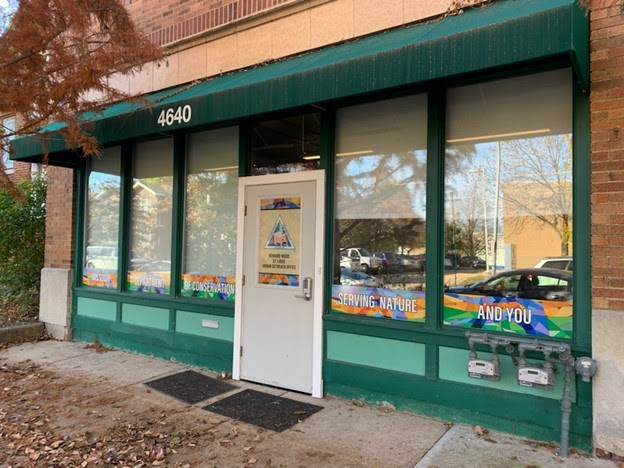
The new Howard Wood Urban Outreach office will be available for walk-in service and connect urban residents directly with conservation resources.

The Missouri Department of Conservation (MDC) has opened a public outreach office in the City of St. Louis.  The MDC Howard Wood Urban Outreach Office at 4640 Shenandoah Ave, St. Louis MO 63110, just east of the Vandeventer Ave./South Kingshighway Blvd. intersection, is now open to the public. The office can be reached by phone at: 314-301-1504. The new facility is in the Brightside-St. Louis Building.

“The Howard Wood Urban Outreach Office is a collaboration space that will serve as a central hub for MDC staff with expertise in urban wildlife, fish, forestry, and conservation education. We want to provide opportunities for urban residents to enjoy and conserve nature close to where they live, including access to new communities who may not have a lot of conservation exposure or a connection to nature,” said MDC Director Sara Parker Pauley.

The new MDC Howard Wood Urban Outreach Office will provide a staffed facility and walk-in service for the public, along with conservation-related information and free publications.  The office will also offer hunting and fishing permits for sale, as well as MDC Natural Events Calendars.  It will not carry other MDC Nature Shop items.

The new facility will be open to the public ­­­­­­­­­­­­­­Tuesday, Wednesday, and Friday from 10 a.m.-4 p.m., Thursday 4 p.m.-6 p.m., and Saturday 9 a.m.-2 p.m., and closed Sunday and Monday.

“We are very excited to be returning to the City of St. Louis after eight years.  The new office will make it easier to bring urban community conservation best practices, resources, and information to City and inner-ring St. Louis County residents, schools, and partner organizations,” said Julianne Stone, MDC St. Louis Regional Administrator.

Continue reading