Category Archives: Environment

Image

Missouri Wine Country: Beauty Worth Protecting

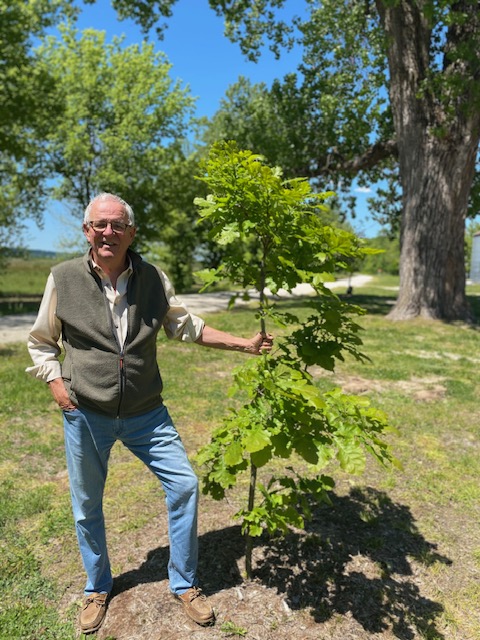
Pictured: Dan Burkhardt

by Dan Burkhardt

Missouri Wine Country is getting noticed. Its grapes and wineries have made more news in the past two years than when a state wine was named “best red wine of all nations” in Vienna in the late1800s. With growing prestige, it may be time for Missouri Wine Country to learn a thing or two from Napa Valley.

America’s, and probably the world’s, best known wine destination is Napa Valley. Napa’s Mediterranean climate, scattered small towns, and location just a short drive from San Francisco make for a grape-growing mecca.

However as they looked at their future way back in the 1960s, Napa County leaders saw this list of remarkable advantages as something that also held the potential to destroy the natural beauty and rural ambience that was the area’s greatest asset. They realized the need to develop a plan to protect what people came to Napa for — the rustic and open feel of the valley itself. They established the Napa Valley Agricultural Preserve.

A recent article about Napa asked, “What really draws people to the Napa Valley?”

Continue reading

Image

Rock Island Trail State Park: Missourians Get Their 93rd State Park That’s 47.5 Miles Long

All photos courtesy Bruce Sassmann.

By Don Corrigan

Missourians got their 93rd State Park, which is a total of 47.5 miles long, when mayors, state officials and citizen supporters had an unveiling and a little speech-making on June 30 in Windsor, Mo.

Among those in attendance was Rep. Bruce Sassmann, R-Belle, who has been
advocating for the park to extend 144 miles across the state. It would rival the Katy Trail State Park as a wonderful route for hikers, bikers, sight-seers and outdoor enthusiasts.

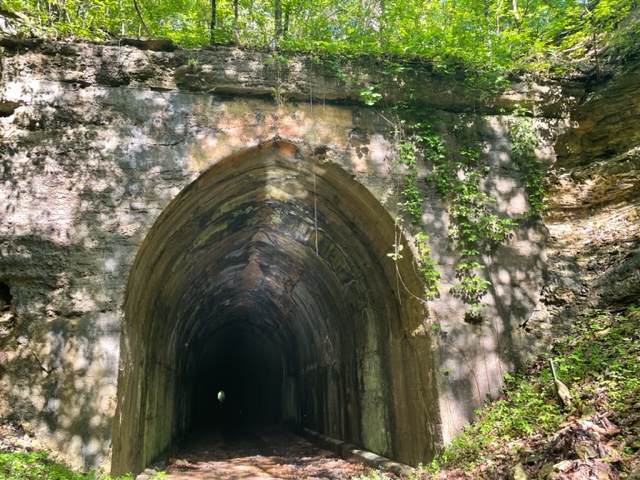
Sassmann advocates for the completion of the Rock Island Trail State Park and will frequently show photos of the corridor and the amazing sights and scenes that will be available when funding becomes available to complete the corridor’s entire length. Some of those visuals are posted with this article.

With completion of the Rock Island Trail State Park, the corridor will likely have
trailheads at Windsor, Ionia, Cole Camp, Stover, Versailles, Barnett, Eldon, Eugene Meta Argyle Freeburg Belle Bland Owensville Rosebud Gerald Beaufort and Union.

The open section now runs 47.5 miles from Pleasant Hill to Windsor. There are five trailheads, including the trailhead at Windsor that the park shares with Katy Trail State Park.

This developed section was originally considered the Rock Island Spur of Katy Trail State Park. With the acquisition of the Rock Island Railroad corridor, the developed spur became part of Rock Island Trail State Park.

Rock Island Trail State Park is part of a larger rail-to-trail system within Missouri State Parks. At Windsor, Rock Island Trail State Park connects to Katy Trail State Park, the nation’s longest developed rail-trail stretching 240 miles between Clinton and Machens in St. Charles County.

Katy is built on the former corridor of the Missouri-Kansas-Texas Railroad (MKT or Katy) and features 26 trailheads and four fully restored depots along the way. The trail is open to walkers, hikers and bicyclists with sections also open for equestrian use. Katy Trail State Park annually attracts more than 400,000 visitors.

Rock Island Trail State Park will connect to Jackson County’s Rock Island Trail and will become part of a trail network spanning the entire state of Missouri, linking Kansas City to St. Louis.

At the recent unveiling of Missouri’s 93rd State Park, the Missouri Department of Natural Resources released some fascinating factoids about the corridor:

Did you know…

Continue reading

Image

Seed St. Louis Receives $60,000 Grant From The Bayer Fund To Help Improve Food Access and Community Health

Seed St. Louis announced today it received a grant for $60,000 from Bayer Fund, a philanthropic arm of Bayer in the U.S. In line with Bayer’s vision of health for all, hunger for none, this grant will be used towards building a better future by providing community groups in St. Louis City and St. Louis County with the education, resources, and a network to grow their own food. Having access to healthy, safe, and affordable food is crucial; the lack of access to foods that support healthy diets has a direct link to negative health outcomes.

“Seed St. Louis greatly appreciates the support from Bayer Fund through this grant. For years, Bayer has brought volunteers to community gardens and provided financial support for new and expanding community gardens. We look forward to growing this partnership into the future,” said Matt Schindler, CEO.

Continue reading

Image

Bangert Island Update: St. Charles’ Riverpointe Site Tour Reveals “Desolation Row”

Bangert Slough. Emergent wetland with narrow water channel.

by Don Corrigan

A tour of the site for the multi-million dollar Riverpointe Development in St. Charles over the Memorial Day weekend had some Sierra Club members singing Bob Dylan’s “Desolation Row.”

Nature is being decimated to make room for another entertainment and retail district, south of the St. Charles Historic District and along the Missouri River. The project has stirred up opposition from a number of environmental and outdoor groups

Scott George, a naturalist and biologist with Environmental Science Consulting, led the tour. He took pains to document the carnage in the floodplain area, destruction which elicited much head-shaking.

Complaints also came from bicyclists and hikers along nearby Katy Trail. They said the trail has been stripped of trees from the I-70 bridge onward to the St. Charles Arena, which has made for extremely hot travel.

Continue reading

Image

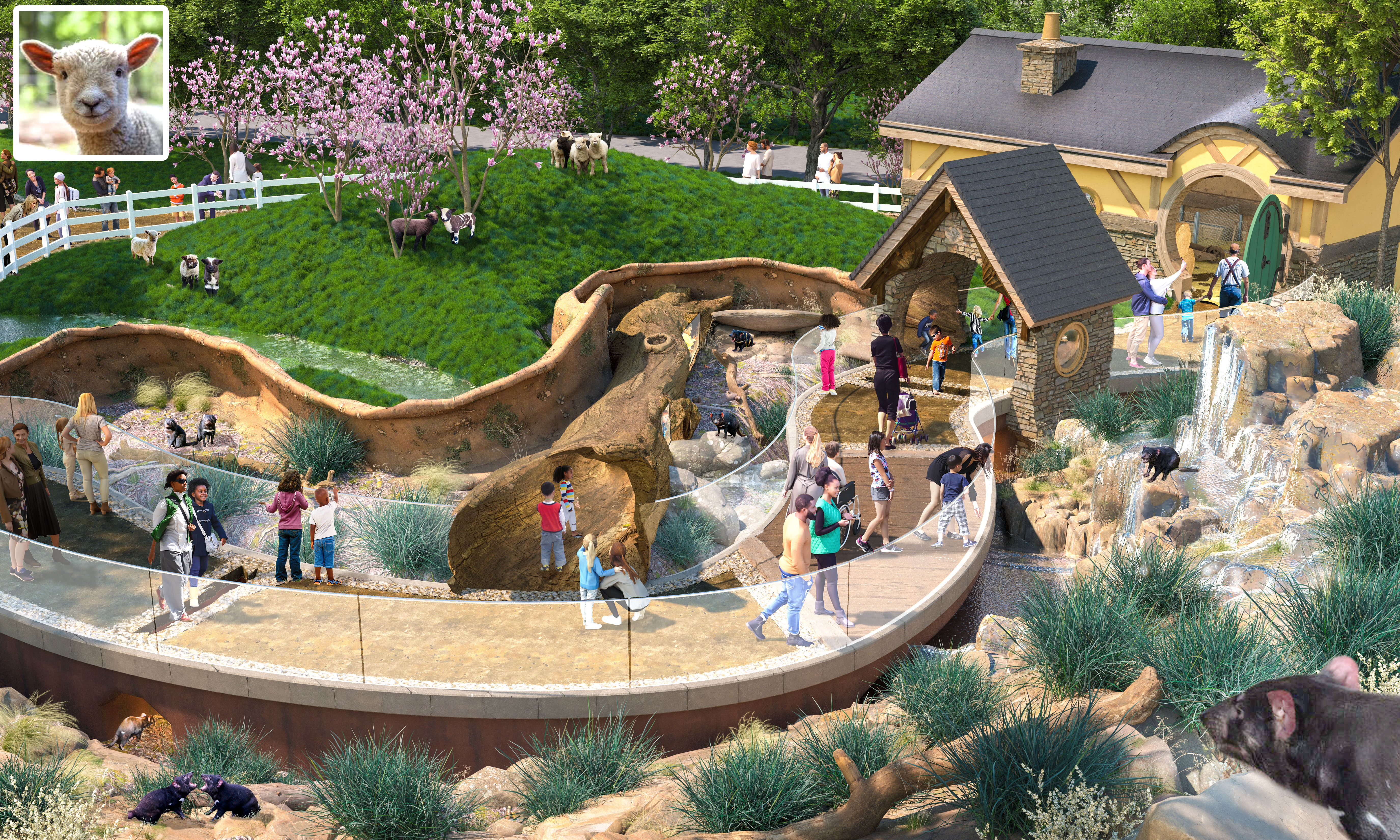
Saint Louis Zoo Unveils Plans for the Henry A. Jubel Foundation Destination Discovery

Tasmanian devils and babydoll sheep are ambassadors for shrinking forest habitat and how human activity interacts with the sustainability of wild animal populations. The immersive Tasmanian devil exhibit, one of only three devil exhibits in the U.S., features a climb-through tree trunk with a wildlife underpass, allowing the devils to reach both sides of the habitat. This area offers guests a great opportunity to learn about wild animals living in communities with people. Artist renderings courtesy Saint Louis Zoo.

The new experience for children and families will have animal adventures at every turn. The target public opening is planned for 2026.

The Saint Louis Zoo recently shared plans for the new experience for children and families on site of the current Emerson Dinoroarus, formerly Emerson Children’s Zoo.

“Thanks to an incredibly generous $15 million lead gift from the Henry A. Jubel Foundation, we are able to carry forward the goal of the previous Children’s Zoo by providing dynamic experiences for children and families that will inspire a love of animals and learning, but in new and innovative ways,” said Dwight Scott, Dana Brown President & CEO, Saint Louis Zoo. “Destination Discovery will have animal adventures at every turn. You will be able to explore and play side by side with animals, building connections to the natural world.”

Development of the 2.8-acre Henry A. Jubel Foundation Destination Discovery is estimated to cost $40 million with funding coming from a variety of sources, including philanthropy. With a target public opening slated for 2026, construction will begin in 2024. The temporary exhibit Dinoroarus will close Nov. 5, 2023.
Continue reading

Image

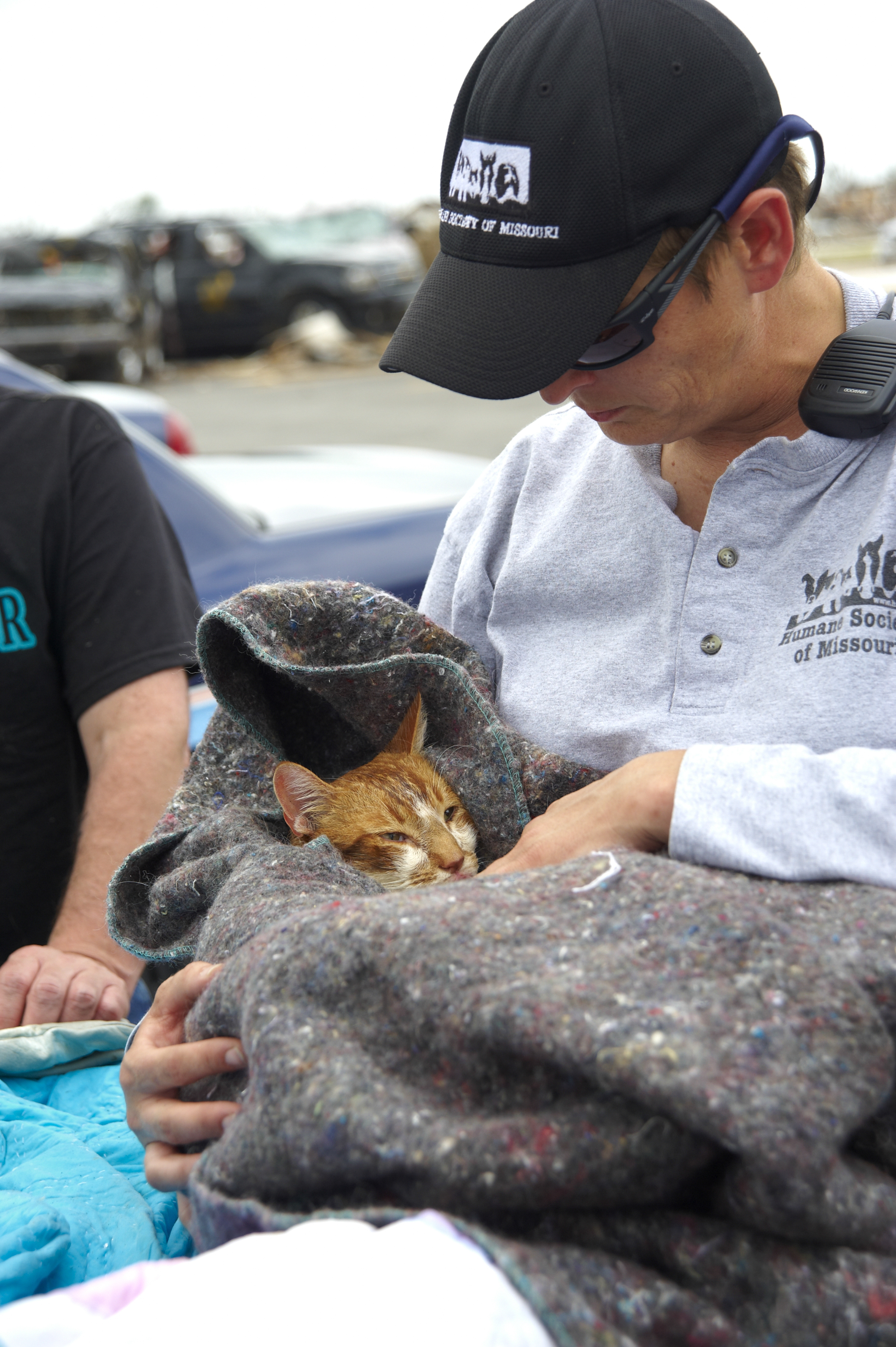
Tornado Season Tips: Have A Plan For “Toto” When Storms Bring High Winds

Photos curtesy the Humane Society.

by Don Corrigan

Aunt Em and Uncle Henry could have done a much better job protecting Dorothy and her little dog, Toto, when that terrible Kansas tornado hit in 1939. The infamous storm launched the beloved twosome to the Land of Oz.

Your little Toto could fare much better in 2023. That’s because today’s weather experts excel at predicting and tracking tornadic storms. Also, animal care experts now offer plenty of tips for protecting pets when storms hit.

A severe storm in April dropped several tornados in the St. Louis area, including one in Fenton that was briefly headed toward Kirkwood. The recent outbreak prompted the Humane Society of Missouri to issue a tip sheet on storms and pets.

“With the recent tornado warnings across the state, the Humane Society decided to take time to remind pet owners of several essential tips to ensure the safety of their furry friends, and all their pets, said veterinarian Nicole Fulcher, director of the Animal Medical Center of the Missouri Humane Society.

“Weather in Missouri can be frightening, but by taking steps for proper preparation, we can ensure our pets remain protected during tornadoes and extreme weather events,” said Fulcher.

Fulcher said a good first step would be to make sure your pet is microchipped and a visit to AMCMA.org to schedule an appointment can help get that accomplished.

“One thing we learned from the 2011 tornado in Joplin is that many, many pets will run away and be lost for days and even weeks after such a horrific event,” said veterinarian Jennifer Pearl of the Humane Society’s Animal Medical Center.

Continue reading

Image

Class On Environmental Issues Debuts At University College In St. Louis

Pictured: John Hickey

Tornadic storms, periodic droughts, flash floods, erratic temperature shifts and unprecedented windy conditions have left many Americans wondering whether climate change is to blame.

The scientific consensus is that human beings must cut carbon pollution in order to avoid even worse impacts from climate change.  The good news is that there is broad public support for climate action now and policies to address climate change.


What might those policies look like? Among the possibilities:

– Protecting more forests and prairies to sequester carbon from the air.

– Updating state policies in order to encourage solar panels on commercial rooftops.

– Adopting building codes that require the use of modern energy efficiency standards.

– Building an extensive charging network to support transition to electric vehicles.

– Restoring the tree canopy in urban parks and neighborhoods.

The practical measures required to address climate change are available to be implemented now. According to John Hickey, the missing ingredient is trained activists who can lead these policy efforts.

Continue reading

Image

Bridge Demolition Leads To Pollution Of Deer Creek, River Des Peres, And More Downstream

In early March, a contractor demolishing a bridge over Deer Creek released polystyrene (Styrofoam) into the waterway. | photo by Roy Lohmann

Webster Groves resident documents debris being released into creek following the demolition of bridge located in Brentwood

By Colin Suchland (Story courtesy of the Webster-Kirkwood Times)

Demolition of a bridge spanning Deer Creek has incited the ire of watchful Webster Groves residents and resulted in violations from state authorities over foam-plastic pollution in the waterway.

Beginning in early March, a contractor working for the city of Brentwood, KCI Construction, began removing the bridge on Breckenridge Industrial Court, immediately south of Manchester Road and west of South Hanley Road. Deer Creek runs along the borders of Brentwood, Maplewood and Webster Groves where it abuts residential, commercial and recreational areas.

Deer Creek forms a natural corridor that includes parks and pedestrian greenways serving several communities as it flows toward the River Des Peres. The bridge replacement is part of a larger “Brentwood Bound” project that promises both commercial and recreational improvements. Flood mitigation along Deer Creek is also a goal of the project.

The large, scattered mass of polystyrene pollution, commonly known as Styrofoam, released into the waterway by the bridge demolition immediately drew the attention of Webster Groves resident Roy Lohmann.

Continue reading

Image

Save Bangert Island! Criticism Grows Over St. Charles’ Riverpointe Development

Photos provided by Scott George,
Environmental Science Consulting.

by Don Corrigan

A multi-million dollar plan for an entertainment and retail district, south of the St. Charles Historic District and along the Missouri River, has stirred up opposition from a number of key constituencies.

Many of the objections come from plans to alter the wooded Missouri River wildlife area known as Bangert Island. Developers hope to make the island more attractive for visitors and to elevate adjacent ground out of the floodplain.

Among the concerns of the U.S. Army Corps of Engineers are the impacts to the forested wetland. A natural wetland system would be replaced by an engineered system, likely requiring high maintenance.

Missouri River floods have previously deposited huge volumes of sediment and woody debris, which require removal and dredging maintenance, according to the Corps.
Scott George, a naturalist and biologist with Environmental Science Consulting, said floodplain loss will inevitably result in increased damage to property when the Missouri River floods. Taxpayers will be on the hook.

“Any additional floodplain filling and removal of native vegetation is going to increase local flooding,” said George. “The forested wetlands, which slow flood velocities and transpire tons of water, will be filled. It’s death by a thousand cuts.”

Continue reading

Image

Battling Light Pollution: IDA Group Says Everyone Suffers When Stars Don’t Twinkle

Pictured: Jake Ronecker at Powder Valley Conservation Area.

By Don Corrigan

Jake Ronecker of Webster Groves recalls a night sky full of twinkling stars when he was a youngster. Much of that twinkling has disappeared. The dedicated naturalist is working to bring some celestial beauty back for kids of the future.

Ronecker and other members of the Missouri chapter of International Dark-Sky Association (IDA) will tell you that working to reduce light pollution can bring back twinkling stars, but it’s also all about bringing back a healthier planet.

“It’s sad that more than 80% of Americans can no longer look up and see the Milky Way where they live,” said Ronecker. “What’s even more worrying, though, is what light pollution is doing to our health, and the well-being of other creatures on the planet.”

Consider the birds of the air, as a prophet of old once told us. Birds are having a tough time migrating and surviving. They no longer can see the stars that might guide them to where they need to fly, but they do see plenty of lights.

According to Ronecker, the Mississippi River Flyway is an important sky-high highway for birds. The lights of St. Louis and those on the Gateway Arch have disrupted the flight patterns and bird migrations for years.

Continue reading