Category Archives: Environment

Image

Missouri Legislation Filed to Halt the Sale of Five Invasive Plants

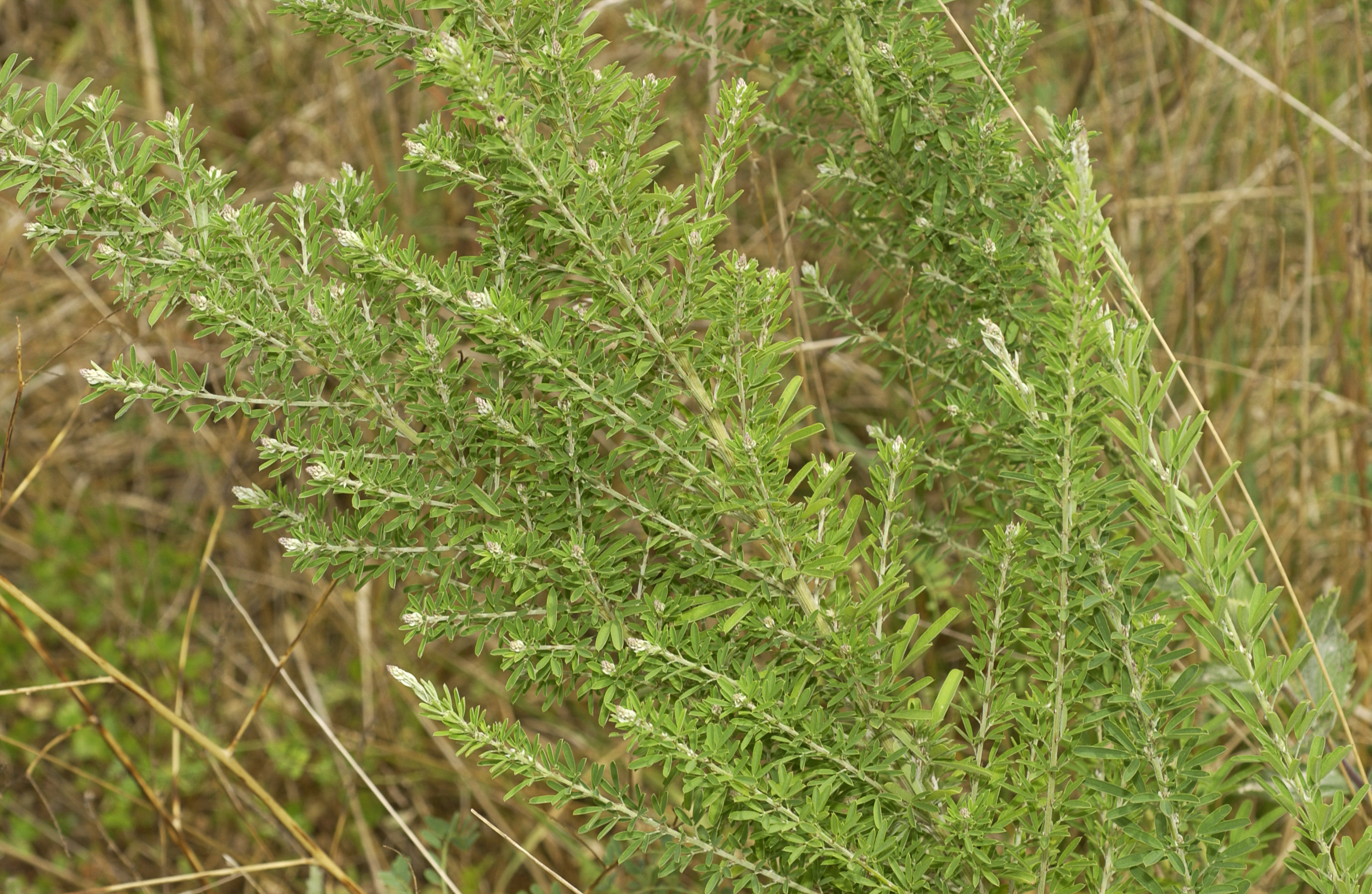
Sericea lespedeza, a highly invasive plant that can infest grasslands, pastures, rights-of-way, and other areas, is one of five species whose sale would be halted with the passage of Representative Sassmann’s legislation filed on December 1, 2023.

Locally and globally, invasive plants and animals are the second leading cause of native biodiversity decline and also threaten the economic stability of the forest product, livestock, and outdoor industries. In addition, Bradford pear, sericea lespedeza, and other non-native, invasive plants are costly and time-consuming for Missouri landowners and suburban and urban homeowners to control.

Of the state’s 142 invasive plants, as assessed by the Missouri Invasive Plant Council (MoIP), many continue to be sold in Missouri, contributing to their future, unintended spread across the landscape.

On December 1, 2023, Representative Bruce Sassmann (District 061), took action to help protect the state from invasive plants by filing HB 1555 to halt the sale and intentional distribution of five invasive plant species: burning bush (Euonymus alatus), Callery pear (Pyrus calleryana and its cultivars, including Bradford and Chanticleer), climbing euonymus (Euonymus fortunei; also commonly known as wintercreeper); Japanese honeysuckle (Lonicera japonica), and sericea lespedeza (Lespedeza cuneata).

Once passed, the Missouri Department of Agriculture is expected to be the agency tasked with enforcement of the legislation, issuing violations if any of the five plants listed above are found to be sold or intentionally distributed. Because of the investment that nursery owners and other plant sellers must make before many shrubs and trees are large enough to sell, two species on the list of five—burning bush and Callery pear plants—acquired by a licensed Missouri wholesale or retail plant nursery before January 1, 2025, shall be exempt from enforcement until January 1, 2028.

Continue reading

EE’s Top Ten Environmental Stories for 2023

By Don Corrigan

These are Environmental Echo’s Top Ten Environmental Stories for 2023. Readers are invited to submit their own ideas or amendments to this list. The radioactive waste disaster in North St. Louis County remains a major and continuing story. The remedies and the compensation issues for the damaged land and its resident victims can seem as far away as ever. Other topics are familiar as well: dirty air, local warming, plastics pollution, manure reservoirs, and pollution from CAFOs.

Another candidate for the Top Ten Environmental Stories might be “climate depression.” Studies show that more and more young people are suffering from anxiety and depression over the accelerating effects of climate change and environmental degradation on their future. It is important to take note of the positive, to provide a glimmer of hope, when discussing all the serious environmental issues. Depression and anxiety impede finding solutions to environmental problems.

1.   Neighborhood Hopes Nuked — Once again in 2023, there was plenty of political posturing, crocodile politician tears, and plenty of nothing getting done on the radioactive contamination of North County from America’s atomic bomb program. The nation’s leaders have used much of North St. Louis as a guinea pig, and a sacrificial lamb, for its atomic weapons programs dating back to World War II. Senators, St. Louis’ Congressional delegations, state and regional leaders — all seem powerless to solve the problem. On a positive note, thanks to the work of Just Moms STL, they all are aware of the problem now  — and if they cannot get the job, these elected officials can be replaced.

2.   Smoke Gets In Your Eyes  — Throughout June, St. Louisans dealt with an irritating smoky haze from faraway Canadian wildfires that affected much of the Midwest. St. Louisans also were alerted in 2023 that their region ranked in the Top 10 worst areas for particulate pollution in the United States. St. Louisans seem to be at the mercy of state and federal regulators for action against the worst polluters. There are many, good environmental organizations in St. Louis that concerned residents can join to try to get some remedial action on contaminated air.


3.   Pig Crap in Your Streams — Rural Missourians are sometimes accused of putting up with anything in the interest of agriculture and commerce. That ended in 2023 when Missourians finally had had enough of the governor and the legislature allowing CAFO operations to create reservoirs of animal waste almost literally in their backyards. They also protested the waste materials being dumped in their rivers and streams. The fight will go on in 2024. Those opposed to defiling Missouri natural areas with meat processing waste are gaining momentum.

4.   When It Rains, It Pours — It doesn’t rain so much in Missouri anymore partly because of climate change. The ground in much of the state is bone dry and parched. Counties are declared drought-stricken, but when it does rain in Missouri, it pours. The run-off is excessive. Cars wash away and homes go underwater. In July, St. Louis was drenched and homeowners got clobbered. The battles over flood aid and home buyouts in the flood-prone areas will continue in 2024. All of this serves to make people more aware of climate change and the need to address the issue nationally and globally.

5.   When It Shines, We Bake — Rain in July and plenty of scorching sunshine in August was the weather story for Missouri in 2023. Meteorologists and TV weather reporters marveled at the heat. The heat indexes in St. Louis and Missouri in August that were in the triple digits for days. Heat indexes exceeded 116 degrees in areas of the Midwest like St. Louis. Poor Phoenix in the Southwest saw temps in the triple digits for weeks. More of that kind of heat is headed our way. Scientists from two global climate authorities said temperatures in 2023 in America were the warmest the planet has seen in centuries. All of this serves to make people more aware of climate change and the need to address the issue nationally and globally.

6.   Plastics Pollution Piles Up — Plastics pollution in Missouri can be found any time of year, but it’s especially apparent on windy days in spring when plastic bags cover farm field fences. It’s also apparent after summer flash flooding when lakes are full of empty soda bottles and milk jugs. They also litter the shorelines of streams where water has receded. Local citizens have tried to limit the plastic pollution by outlawing use of the bags in their communities. The state legislature has banned local citizens from taking such action, because they are in the bag for industrial and agricultural interests that favor the economics of using of plastic bags and containers. However, more and more consumers are turning away from plastics use, and the marketplace may begin to make the difference on this issue.

7.   Maladroit Mining In Missouri —  Missouri has always been a mining state, but new demands for minerals threaten to contaminate ground water, the soils, and the air. Is the legislature and the governor’s office up to the job of protecting state residents? Certainly not based on past performance. Cobalt has become increasingly important for high-tech devices such as cell phones and laptops and for electric vehicle batteries. Cobalt can be a dangerous pollutant. Silica sand, also known as “fracking sand,” is predominantly used in the hydraulic fracturing, or “fracking,” of natural gas. It is in demand. Silica sand mining is a Missouri specialty. Its impacts on our health and environment can be devastating. The Missouri Coalition for the Environment is at work on addressing mining issues and increasing awareness.

8.   Wait! There’s Good News! — There is some very good news in the St. Louis region and Missouri, but it’s news that cannot overshadow concerns over air, water pollution, or climate change problems. A bright spot is the Dark Skies Movement. More and more Missourians are joining the effort of reduce light pollution in our cities. The problem with light pollution is that migrating birds and insects get disoriented, lost and perish because of all the light in cities. In St. Louis, residents have successfully talked their towns into using softer light to address the problem. Lights illuminating the Gateway Arch in St. Louis are adjusted at migration times.

9.  Rock Island Rails To Trails  — The Rock Island Trail is a proposed 144 miles long corridor stretching across Missouri from Kansas City to the Ozarks, using a former rail bed obtained by the state in 2021. In 2023, Governor Mike Parson included $77 million in the budget for fiscal year 2023 to begin construction on over 70 miles of the trail, from Eugene to Beaufort. The funding was ultimately cut from the final budget by the Senate, but the pressure is building for the legislature to act on this valuable resource that can enhance state tourism and improve the health and welfare of its citizens with more recreation. There are strong indications that Missouri citizens, who so enjoy their Katy Trail, will succeed in being heard in 2024 on the Rock Island Trail proposal.                                          

10.  Atomic Age Teeth — A new film, “Silent Fallout: Baby Teeth Speak,” covers the 1950s’ and 1960s’ study of atomic bomb radiation in 320,000 baby teeth by St. Louis scientists. It came to St. Louis International Film Festival in November. The survey took in more than 300,000 teeth. Analysis showed increasing levels of Strontium-90, a cause of bone tumors and cancer. The findings convinced President John F. Kennedy to urge Congress to pass the Partial Test Ban Treaty limiting nuclear tests. The good news is the growing awareness of radioactive dangers and the need to address them. Also, there is good news that scientists are tracking down those same teeth now to learn more about the impact of the atomic age on our health.

Continue reading

Image

Alan Hopefl – “Honeysuckle Slayer” To Be Honored By Kirkwood Park Board

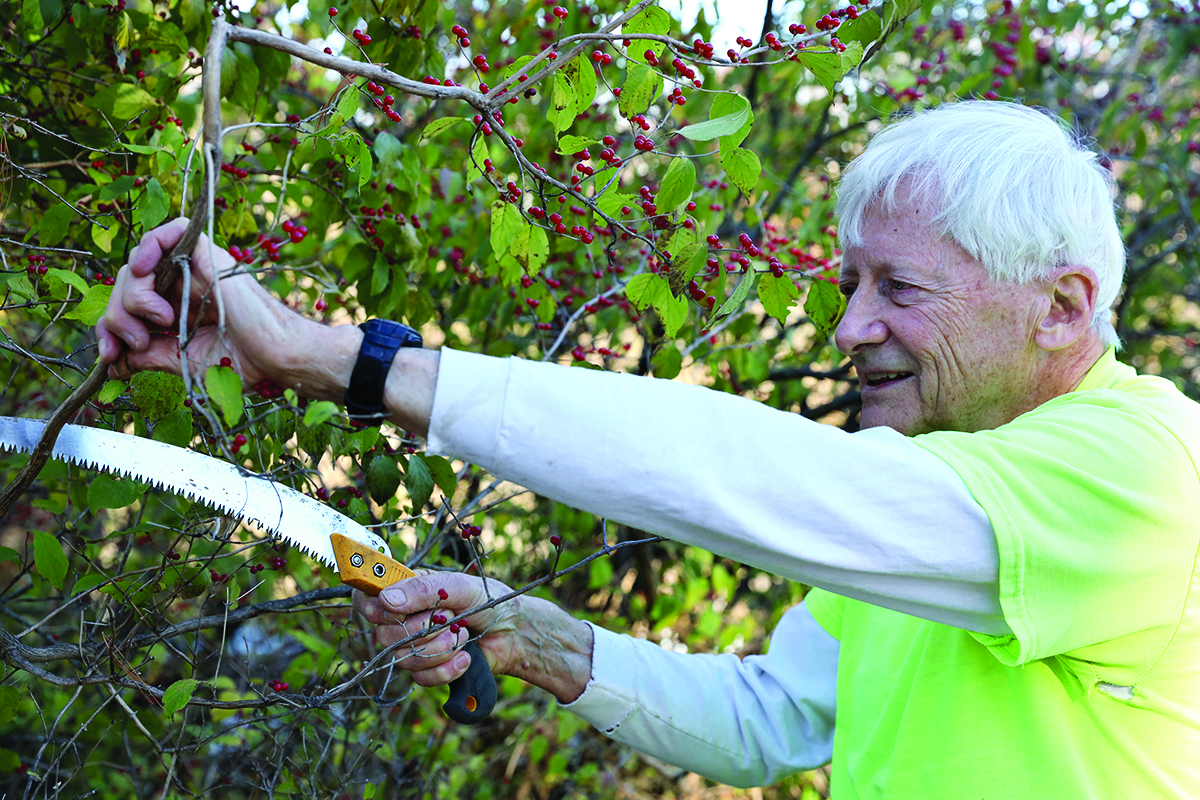
Above: Alan Hopefl clears the invasive honeysuckle bush. Photo courtesy Ursula Ruhl/Webster-Kirkwood Times.

by Don Corrigan

Some people see a bit of Christmas this time of year in the red berries and
fading green leaves of honeysuckle. Alan Hopefl only sees an enemy. He
sees it as an invasive that deserves no quarter.

“I’ve probably done 3,000 hours of honeysuckle cutting just in Emmenegger
Park in the past decade,” said Kirkwood resident Hopefl. “Emmenegger is
close for me. I can get to it walking from my backyard.

“Sometimes when I cut plants down close to a neighborhood, residents will
come out and ask if they can hire me to cut them down in their yard,”
laughed Hopefl. “I am not for hire. I have enough to cut in the park areas.”

Hopefl has been a Kirkwood Park Volunteer since 2010. At that time, he
was involved in all kinds of park work, not just removing honeysuckle. But
since the pandemic, he’s been a one-man team focused on honeysuckle.

“I don’t mind being called ‘the honeysuckle slayer.’ I’m sure I’ve been called
worse things,” said Hopefl. “I have a master naturalist ticket and I’ve
studied the plant enough to know all its bad effects.”

Continue reading

Image

Twinkling Thru Jan.6: Garden Glow Adds New Items To Holiday Celebration

Photos courtesy MOBOT.

by Don Corrigan

St. Louis area residents are once again getting into the holiday spirit at Garden Glow at Missouri Botanical Garden. The show runs through New Year’s Eve and beyond.

Two-million lights await visitors, but these are not ordinary twinkling bulbs. Displays are extraordinarily high-tech and environmentally responsible.

According to the Garden’s Elves:

• All displays are LED and use minimal electrical energy.

• Glow is an immersive walking experience, rather than drive-thru.

• As an on-foot exhibit, the walkable displays reduce emissions.

• Food vendors use almost exclusively compostable containers.

• Trees used in displays are used to maximum sustainable advantage.

“Sustainability is at the heart of all we do at the Missouri Botanical Garden,“ said Catherine Martin, senior public information officer for MoBot.
“We continue to adapt Glow each year in sustainable ways

“Energy conservation is among the criteria for selection as we add new displays,” added Martin. “Garden Glow is carefully designed in coordination with our Horticulture staff to protect our living collection of trees and plants.”

Continue reading

Image

LEDs For Rudolph’s Nose: Eco-Friendly Christmas Lights Spread Season’s Cheer

By Don Corrigan

The bright lights and colors of Christmas were once a sure way to spread good cheer. Concerns about light pollution may have dimmed the holiday happiness a bit, but those concerns can be addressed.

There are plenty of ways to have a bright, eco-friendly Christmas, and it can start by replacing Rudolph’s red-hot, glowing nose with more energy efficient LED lights.

Santa Claus would approve! That’s because Santa swore off spreading light pollution on his annual sleigh ride journeys years ago. He’s sworn off naughty incandescent lights, and travels now with the nicer LED lamps.

Researchers find that in many major U.S. cities, nighttime lights shine 20 to 50 percent brighter during Christmas and New Year’s when compared to light output during the rest of the year. Energy consumption also increases.

LED Christmas lights are the best substitutes for regular Christmas lighting. They require 90 percent less energy than that needed for regular Christmas bulbs on trees and the exteriors of homes.

Continue reading

Atomic Age Fallout: Nov. 18 Film Covers Local Baby Teeth Survey’s Global Impact

by Don Corrigan

A new film, “Silent Fallout: Baby Teeth Speak,” covers the Cold War era study of atomic bomb radiation in 320,000 baby teeth by St. Louis scientists. It’s a St. Louis International Film Festival offering at 1 p.m., Nov. 18, at the Hi Pointe Theatre, 1005 McCausland Ave.

Liz McCane of Kirkwood remembers her parents’ concern over atomic testing and the release of radiation. When she was young, Congress was in heated debate over whether U.S. atomic testing should be stopped.

“My parents sent in my baby teeth, as well as those of my 3 siblings,” recalled McCane. “My parents were both scientists, and they had some inkling of what the results would be.

“It was probably a difficult time to be a parent,” said McCane. Some friends built an underground fallout shelter in their back yard, and at school we regularly experienced drills to instruct us in case of nuclear war.”

McCane likened the school nuclear war drills to the active-shooter drills that are going on at schools today.

“I have experienced an active shooter drill with a preschool class,” said McCane. “It’s sad that teachers need to explain the reasons for such drills to children. I can imagine what my parents’ generation felt when nuclear bombs were the classroom threat for children.

The baby teeth nuclear test study was coordinated by volunteers such as the late Yvonnne Logan of Webster Groves. Initially a St. Louis project, Logan served as director of collections.

Logan’s job with the survey was to persuade parents to send in baby teeth to be analyzed at Washington University for Strontium 90, a radiation by-product of atomic testing by the U.S. and the Soviet Union.

The survey took in more than 300,000 teeth. Analysis showed increasing levels of Strontium-90, a cause of bone tumors and cancer. The findings convinced President John F. Kennedy to urge Congress to pass the Partial Test Ban Treaty limiting nuclear tests.

Logan led and participated in marches in St. Louis and Washington, D.C., to ban the bomb. She demonstrated against the draft and the war in Vietnam. She attended vigils outside the offices of General Dynamics to protest its Trident submarines and their nuclear missiles.

Continue reading

Image

They’re Still Cool! Roof Gardens Got A Work Out In Summer 2023

All photos provided by SWT Design.

By Don Corrigan

Roof gardens, designed to increase green space and energy efficiency, got a work out in our red hot summer of 2023. Summer temperatures soared above 100 degrees in St. Louis and beyond. So, how did these roofs do?

“They did well. They did what they are supposed to do,” declared Ted Spaid, the green force behind SWT Design near the northeast corner of the intersection of Big Bend and Laclede Station roads.

Spaid knows what he is talking about. He’s been designing the green, environmental-friendly roofs for several decades. He puts his money where his mouth. The Shrewsbury company has built its own green roof.

Spaid loves it. He hits the roof whenever he can. He and his SWT Design team use it to show off their work to clients. They use it for lunch and coffee breaks. They take pride in how it keeps down energy costs on site.

“This was an exceptionally hot summer around the country, and with climate change, it’s going to get worse,” said Spaid. “This presents a challenge in looking at new materials and new plants for roof designs.

Continue reading

Image

St. Louis: Atomic City: Radioactive Legacy Continues To Haunt North County Moms Group

By Don Corrigan

There’s a scene in “Oppenheimer,” a recent movie about the making of the atomic bomb, when a woman hanging up laundry outside is warned to take in the sheets. The laundry outside might get contaminated with the impending explosion of the first atomic bomb.

Karen Nichol of North St. Louis County notes that the mothers and residents downwind of the Nevada atomic test site at least got warned about dangerous radioactivity from the atomic bomb development. Not so in St. Louis.

“St. Louis moms did not get any kind of warning about uranium waste processing for the bomb,” said Karen Nichol of Just Moms St. Louis.   “They knew nothing about the careless, reckless, disregard to human life from the federal government that went into the making of the bomb here.

“So many moms to this day still aren’t getting the warning,” added Nichol. “There are people that have gone to great lengths to make sure St. Louis had no warning. There are also still no signs warning kids to stay out of the radioactive Coldwater Creek.”

Continue reading

Image

2023 MoIP Invasive Plant Action Awards Winners Announced

The Missouri Invasive Plant Council (MoIP) is pleased to announce the winners of the 2023 Invasive Plant Action Awards. MoIP established the Invasive Plant Action Award program to recognize the outstanding work being done in Missouri to control invasive plant species, which threaten many aspects of Missouri’s natural habitats and economy.

The MoIP Invasive Plant Action Awards recognize exceptional effort and leadership in the field, and also serve as a way to demonstrate to the broader community how controlling the spread of invasive plants on Missouri farms, forests, woodlands, prairies, gardens, parks, neighborhoods, roadsides, and along waterways is attainable and very important land stewardship. Members of MoIP evaluate nominations and select winners annually. For more information about the Invasive Plant Action Awards program, visit the MoIP website, moinvasives.org.

The 2023 MoIP Award Winners …

Continue reading

Image

Fall Colors Are Coming! – Hit the Water and Kick Back for Fun at Creve Coeur Lake

Plenty of canoes and kayaks are available for use at the Creve Coeur Lake Rentals.

By Don Corrigan

Popular venues for major outdoor activities in the St. Louis area include Forest Park, the Gateway Arch grounds and Jefferson Barracks. But Cheryl Beckmann wants you to know you’re missing out if you don’t include Creve Coeur Lake.

Beckmann touts the miles of hiking and biking trails, plus a recreational lake for kayaking, canoeing and boating. There’s also a sandy beach for sunning, sand castle building or casting to catch the big one.

Of course, Beckmann readily admits  she has a vested interest in promoting fun times at the 2,125-acre park that includes a 320-acre lake. She and her husband, Rick, have operated Creve Coeur Lake Rentals for the past 13 years.

A staff member at Creve Coeur Lake Rentals prepares a kayaker for a trip on the lake located east of the Missouri River.

If you need a mobile surrey for the loop trail, or a single or tandem kayak, canoe or paddle board for the lake, the Beckmanns have you covered with rentals on the shoreline  just northwest of the park’s famous waterfall.

“We were out on the lake 15 years ago in our canoes, and some people on the shore asked if they could rent them from us,” said Cheryl Beckmann. “So I said to myself, that sounds like a great idea. We should start a rental business.

That’s exactly what they did.

“We started with five canoes and two quad bikes, and it just took off from there,” she explained.

Continue reading