
Category Archives: Environment

Don Corrigan’s Top 10 Earth Day Songs!

By Don Corrigan

This is pitiful. It’s Earth Day Week. It’s Earth Day Month. And it’s dangerous to be outside and too dangerous to be too close to each other. A lot of us are sad and angry. We are angry because we are too smart for this. We were warned. We had time to prepare. We knew this could happen. We could have staved off the worst of this. We are sad, because we know this can and will happen again. Or will it? Maybe we will learn something. Or maybe we will point fingers and tear each other apart. So, it will be worse next time.

These songs are about degradation of the Earth. They are songs about losing our planet, because we did not take care of it. I think we need to face the music. I know there are those who will say that these songs are all too depressing. Why not, “The Sun Will Come Out Tomorrow” at a time of despondency and pandemic. Well, I don’t like Annie and her little dog, Toto, even after the witches have melted and there’s cotton candy at the baseball game. There’s not going to be cotton candy at a Cardinals’ game for a good while, so I am putting together my Top 10 songs about saving our planet. Some of them I listened to 50 years ago. I am not sure we are any closer to saving our earth, or ourselves, then in 1970. Isn’t that when  the first Earth Day began?

See the top 10 list of songs below.

Continue reading

Invasive Emerald Ash Borer Now In 78 Missouri Counties

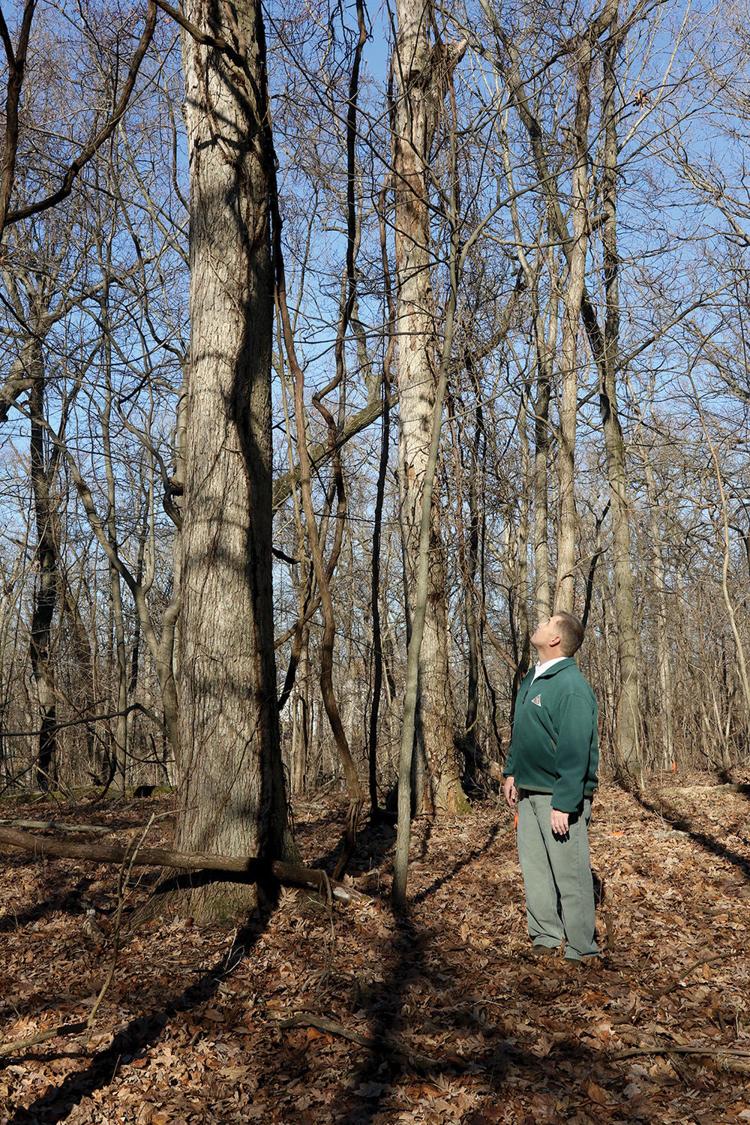
The Missouri Department of Conservation (MDC) has confirmed the presence of emerald ash borer (EAB) in Chariton, Lafayette, and Moniteau counties, bringing the statewide total to 78 counties known to have the pest. EAB is a small, metallic green beetle native to Asia that attacks all species of ash trees, killing more than 99 percent of the trees it attacks.

According to MDC Forest Entomologist Robbie Doerhoff, one of the best ways to keep track of EAB and its march across Missouri is to look for bark blonding, a term that refers to woodpecker damage on ash trees.

STAY INFORMED: Listing Of Coronavirus Resources

We want our community and readers to stay safe and healthy during this COVID-19 pandemic. This virus has caused hardships and pain on every level of our social, economic and well-being around the globe. An important part of protecting ourselves, our families, our friends, our front line and emergency workers and our community members who are at risk is to make sure we stay informed.

Below find a compiled list of resources relating to COVID-19 information.

Continue reading

MDC TRIM Grant Removes Invasive Trees At St. Louis Community College

Certified arborist David Slane removes an invasive white poplar tree at St. Louis Community College’s Meramec campus. Photo by MDC Staff, courtesy MDC.

16 down, one to go. That was the count on a gray and rainy Thursday in early March when students from the horticulture class at St. Louis Community College’s (StLCC) Meramec Campus gathered to watch a dentist take down a tree. It was being funded by a grant from the Missouri Department of Conservation (MDC).

For David Slane, DMD, this was merely a routine extraction, just one more dendro than dental. Dr. Slane is also an arborist, certified by the International Society of Arboriculture. In fact, Slane’s self-appointed nickname is “Arbor Dave”. When he’s not working at his Kirkwood practice on teeth that have roots under the gum, he’s at work on trees with roots underground.

“They have things in common,” Slane said. “In both cases you diagnose and treat problems.”

Image

#BringTheStlZooToYou

Saint Louis Zoo ads-2Connecting people to animals is the core of the Saint Louis Zoo’s mission, and that doesn’t stop when its doors are closed. Stay connected with the Zoo’s #BringTheStlZooToYou  online resource providing access to stories, videos and photos of the animals and animal care, educational activities, conservation programs and more to help you stay connected to the Zoo during the temporary ​public closure because of COVID-19. You can find the fun and informative resources on the zoo’s social media and website.

“We know how important the Zoo is to the St. Louis area community,” says Jeffrey P. Bonner, Dana Brown President and CEO, Saint Louis Zoo. “We are happy to continue to provide everyone with opportunities to view our animals and see firsthand how well our zookeepers and other critical staff are working.  Likewise, we hope all those parents who are teaching their children at home can take advantage of some of this information.”


Image

Wildlife Not To Blame For Coronavirus

Sharon Deem, DVM, Ph.D., Dipl ACZM, Director of the Saint Louis Zoo Institute for Conservation Medicine

By Don  Corrigan

Bats and snakes are taking the blame for transmitting the coronavirus which is taking such a toll on human health and economic well-being. Experts at the Saint Louis Zoo worry that such explanations for the pandemic will cause a backlash against wildlife.

“Bats are not to blame. Snakes are not to blame. Wildlife is not to blame,” said Dr. Sharon Deem, director of the Saint Louis Zoo Institute for Conservation Medicine. “Humans created the avenue for a snake to be near a bat to be near a human. We humans have created the environments that allow the spillover of these pathogens.

Deem is referring to one theory that coronavirus was contracted from bats by snakes, then the snakes were purchased for consumption by humans  in a market in Wuhan, China. The virus has spread from China to more than 150 nations, with the United States now having the most infections of all countries.

“We humans have created the environments that allow the spillover of these disease pathogens,” said Deem. “In fact, one of the greatest impacts on human public health, beyond emerging infectious diseases and climate change, is the loss of biodiversity.

Continue reading

Image

Painful Shutdown of Environmental Meetings in St. Louis

By Don Corrigan

It’s painful for Environmental Echo to receive the notices of closings and cancellations of nature outings, green activities and environmental meetings due to the coronavirus pandemic that now affects the St. Louis area and more than 140 countries.

This spreading disease is deadly serious, environmentally destructive and totally global in consequence. Obviously, it was mistake for the administration to fire the Centers for Disease Control and Prevention’s Pandemic Response Team two years ago.

It might be time to reconsider the firing of that unit, as well as the quashing of the annual reports out of the U.S. Defense Department on “Preparing the United States for Impacts of Climate Change,” which were started in 2013. Those reports include information on pandemics.

Continue reading

Image

Solving Climate Change With A Trillion Trees

Mark Grueber of the Missouri Department of Conservation surveys trees at the Powder Valley Nature Center, which serves as his work location for the MDC. Photo by Diana Linsley (WKT)

By Don Corrigan (Webster-Kirkwood Times)

With wildfires raging globally and 2019 being the second hottest year on record, even climate change skeptics are starting to look for answers. Could planting a trillion trees reduce carbon pollution and spur a needed cool down?

The trillion trees idea got a big boost last month at the World Economic Forum. Planting trees does present an easier solution than reducing fossil fuel use. Even President Donald Trump said the U.S. would sign onto a tree campaign.

Local tree and horticultural experts are pleased that some movement on the climate change issue seems to be in the works, but they argue that planting trees is no panacea for a problem that is taking a toll on Planet Earth.

“There are many facets to this discussion about trees and climate change, and most of them do have some merit,” said Jerald Pence, coordinator for the horticulture program at St. Louis Community College at Meramec in Kirkwood. His responsibilities include managing an 11-acre garden on the Meramec campus.

“I do think that it’s important to understand that there is rarely a ‘silver bullet’ solution that will fix a big problem so easily,” added Pence.  “I think it’s great that something is happening to at least begin a needed discussion.”

Continue reading

Image

Society of Environmental Journalists Celebrates 30 Years

Front row, left to right: Kevin Carmody, Sarah Thurin Rollin, Bruce Ritchie, Beth Parke, Marla Cone, JoAnn Valenti Center row, left to right: Mike Mansur, Don Corrigan, David Ropeik, Peter Fairley, Kathy Sagan, ID missing, Tom Meersman, ID missing, ID missing, Julie Edelman, Angela Swafford Back row, left to right: ID missing, Jay Letto, Chris Bowman, George Homsey, Russ Clemings, Gary Lee, Emilia Askari, Chris Rigel (now Bruggers), Gary Polakovic, Jim Bruggers, Noel Grove (Photo: SEJ)

Environmental Echo applauds the Society of Environmental Journalists (SEJ) on the organization’s 30 years of advocating for nature, ecology and the environment.

EE’s Don Corrigan was in Boulder, Colorado, with SEJ when the organization debated its vision, mission and objectives. He has attended its annual conventions, which always are highlighted by field trips and a week-long intensive foray into nature to explore vital issues. He has been active with SEJ’s college teaching committees on environmental teaching and coursework. (Corrigan is pictured in the middle row – second from left.)

Continue reading

Image

New Missouri State Parks Director Named

The Missouri Department of Natural Resources today named Mike Sutherland as director of its Division of State Parks.

Sutherland has served as acting division director since Nov. 15, when former Division Director Ben Ellis retired. Prior to that, Sutherland served as deputy division director since joining the department in June 2017.

Before joining the Department of Natural Resources, Sutherland served as policy director for a nonprofit organization focused on budget and tax policy. His additional previous experiences include serving as the executive director of the Boonslick Regional Planning Commission, a state representative and the Warren County assessor.

Continue reading