Category Archives: Environment

Image

Missouri Convenes Environmental Crimes Task Force

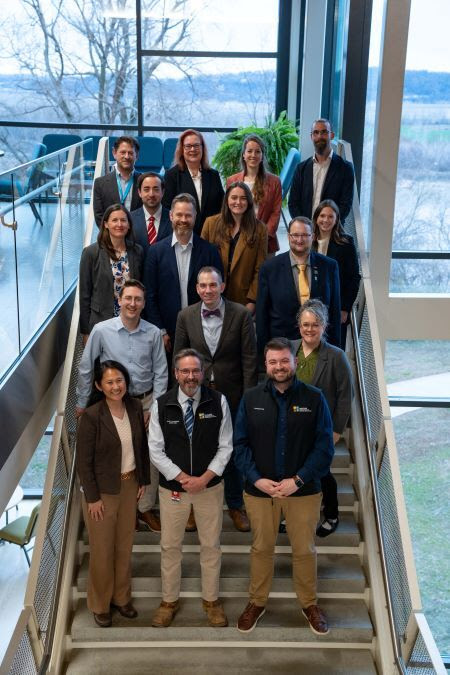
After a roughly 25-year hiatus, Missouri has reconvened an Environmental Crimes Task Force to investigate and prosecute violations of state and federal environmental laws. Missouri’s task force combines local, state and federal law enforcement, prosecutors and environmental regulators who will focus on crimes like illegal dumping, hazardous waste disposal, illegal discharges into waterways and more.

While a similar task force existed several years ago, the Missouri Department of Natural Resources is leading the effort to activate a new team responsible for ensuring that prosecution of environmental violations and crimes is efficiently and effectively coordinated between the different enforcement partner entities.

“Missouri has effectively prosecuted environmental crimes for decades, but we felt it was time to convene a new task force that will be even more focused, collaborative and effective,” said Kurt Schaefer, director of the Missouri Department of Natural Resources. “Ultimately, our goal is to protect public health and the environment.”

“Protecting Missouri’s communities and environmental resources is a top priority,” said Attorney General Catherine Hanaway. “Those who violate environmental laws and jeopardize public health will be held accountable. We appreciate Director Schaefer’s leadership in convening this task force and look forward to working together to enforce our laws.”

Continue reading

Image

Creve Coeur Lake: It Can Be Your Winter Wonderland

Story and photos by Don Corrigan

After Snowmaggedon 2026, it’s important to focus on nature  – and not just icy roads, snowplows and schools closing. Missouri has some key locations for winter scenery, although it is important to bundle up before trekking off to sample magnificent icy eye candy.

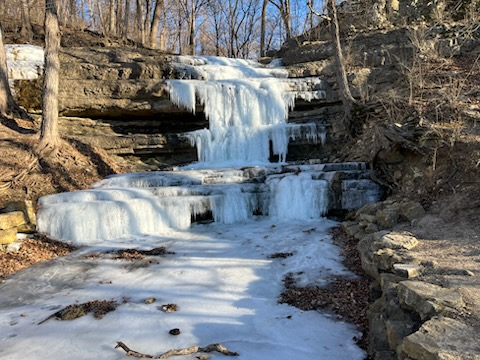
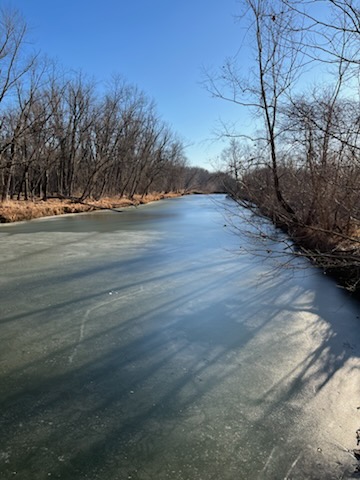
Creve Coeur Lake in West St. Louis County offers snow-packed bluffs, craggy waterfalls with icicles, frozen creeks and shimmering lakes, and wildlife that somehow finds a way to survive and thrive despite intense cold.

Creve Coeur means “broken heart” in French. A legend holds that the lake was split in two when a young Native American woman threw herself to her death after being heartbroken in love. A waterfall at the lake, known as “Dripping Springs,” is said to be the site of the tragic death of a lovelorn girl.

Pictured: Don Corrigan

The “Dripping Springs” are destined to be frozen for days in the wake of the giant snowstorm that blanketed the nation this January 2026. It’s a wonder to behold this time of year. The silvery site precedes us and will captivate observers long after we are gone.

Area residents may be surprised to learn that Creve Coeur Lake is the largest naturally-formed lake in Missouri. It covers 320 acres and was formed thousands of years ago when the Missouri River to the west shifted and created the lake as an oxbow.

Located in Maryland Heights Creve Coeur Lake sits in the largest park in St. Louis County, the Creve Coeur Lake Memorial Park. In warmer weather, bicyclists love to circle the lake or head across the Missouri River to St. Charles on the Katy Trail

Every kind of recreation is available in the park. Hikers and bicyclists love the trails. A trail spur can take them over the Page Avenue Extension Bridge for a meet-up with the beloved Katy Trail, which allows travel literally across the state.

The lake itself also supports multi-modal transportation. Kayakers and canoeists love to explore the many nooks and crannies of the lake. A sailing club and a sculling club are located here. Their boats add to the ambiance of the area.
(Watch for the spring release of Don Corrigan and Diana Linsley’s Scenic Natural Wonders of Missouri. Pre-orders are available at reedypress.com)

Image

Alarm Raised Over Toxic Waste in Berger, Mo. Warehouse

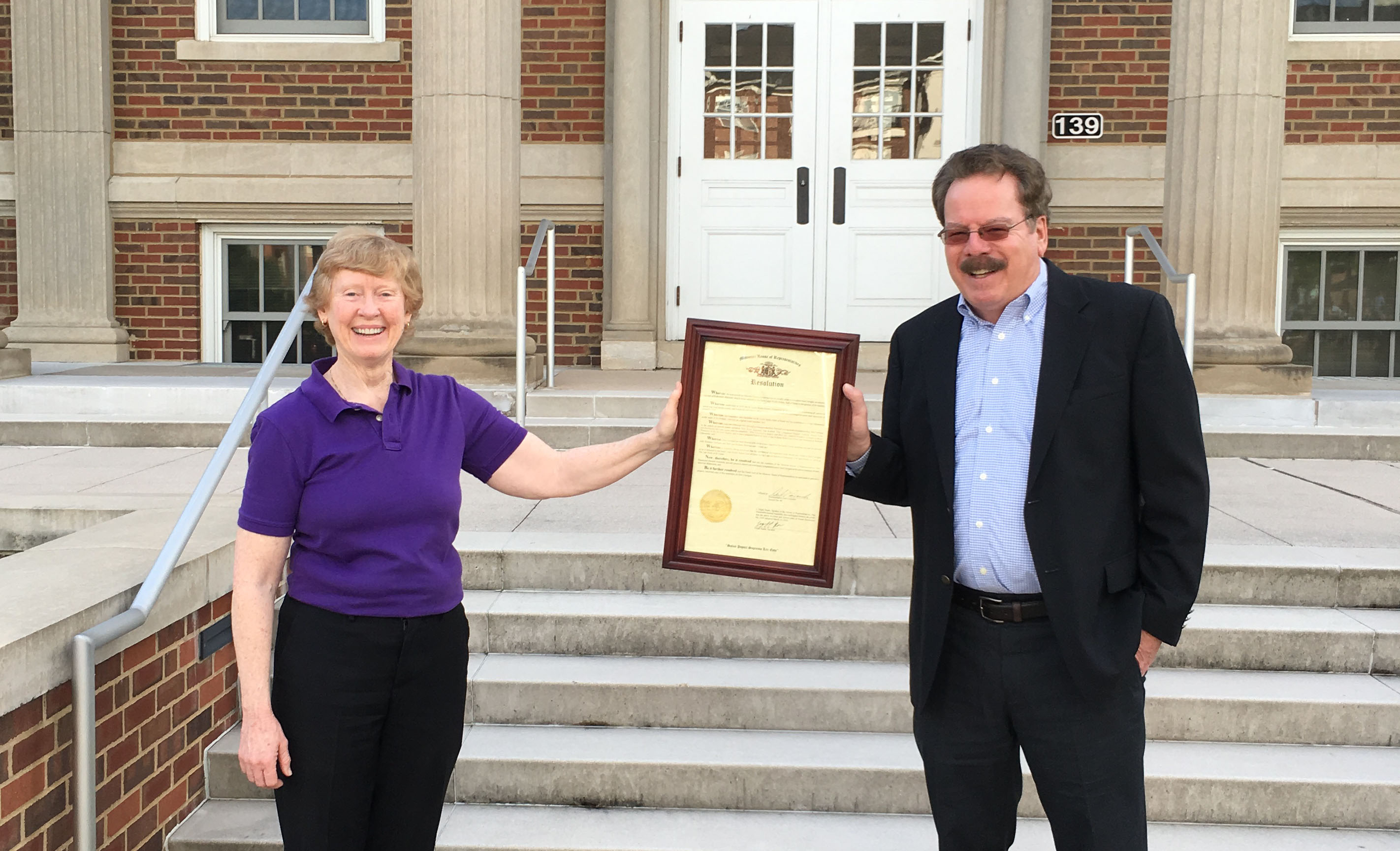
Former Missouri State Rep. Deb Lavender, D-Kirkwood and Don Corrigan in 2020.

By Don Corrigan

Missouri has acquired a national reputation as a toxic waste dump for many of the nation’s most toxic waste materials. Witness the ongoing fight over decades of radioactive materials dumped in North St. Louis County.


Alarms have also been raised over toxic waste deliveries to a warehouse in Berger, Mo., a Missouri River bottoms town located between Washington and Hermann.

By early 2014, roughly 13 million pounds of hazardous sandblasting waste had been shipped to a warehouse near Berger, creating yet another major environmental contamination site. The waste, stored in sacks and drums, consists of plastic powder contaminated with heavy metals including lead, cadmium, and chromium.

The waste originated from U.S. Technology facilities across the country, and was moved to Berger after recycling plans in Mississippi collapsed.

Continue reading

Image

MEEA Eyes 2026 Projects: Environmental Educators Celebrate Three Decades Of Projects


by Don Corrigan

Environmental educators in Missouri have been organized for 30 years to promote nature and outdoor education for children. They also have worked to be protectors and caretakers of the environment.

They’ve started many environmental initiatives in their three decades. They’ve seen good times and bad times. These are challenging times, and they concede 2026 may be just a year for holding their ground.

“As caretakers of Missouri’s environment, we have many challenges ahead of us – funding is limited, environmental protection policies and support for education are on shaky ground, and many Missourians are just struggling to make ends meet,” said Jamin Bray.

Bray of Salem, Mo., is co-director of the Missouri Environmental Education Association (MEEA), along with co-director Lesli Moylan of Kirkwood, Mo. in suburban St. Louis

“So, we intend to be even more strategic, focused and efficient moving forward into 2026,” said Bray. “MEEA will soon have a new 3-year Strategic Plan that will continue to  provide the very best environmental education services possible.”

Continue reading

Image

Rush Island Conversion? Ameren Eyes Power Plant Project To Serve ‘Large Load Customers’

by Don Corrigan

Ameren, the energy utility that serves much of eastern Missouri, says it plans to add another gas plant to its electric production portfolio. The announcement is drawing fire from consumer and environmental groups.

The generating facility is planned for the former Rush Island coal plant in Jefferson County. The gas plant would generate approximately 800 MW of fossil-fuel fired electricity.

Ameren has not made the project’s costs available to the public at this point. The company but has stated that it wants the plant for serving “large load customers,” which industry experts say translates into artificial intelligence (AI) data centers.

The Missouri Coalition for the Environment (MCE) insists that if the plant is approved by the Public Service Commission, it will lock Missouri into decades of more “dirty” fossil fuel use.

MCE argues that if Ameren wants to serve data centers, the utility must do so with clean, cheap renewable energy, “not asthma-inducing, planet-warming, expensive methane gas or natural gas.”

Environmentalists point out that renewable energy sources would include solar and wind, both of which are cheaper than ever before. Solar and wind are also more reliable when combined with innovations in battery storage techniques.

Continue reading

Image

GRG’s 25th Anniversary: St. Louis Hikers & Bikers To Celebrate Great Rivers Greenway Birthday

by Don Corrigan

A 1,500-foot long dinner table would normally suffice for most birthday parties, but revelers may want to show up early to get a place at the table got GRG’s 25th anniversary shindig.

The table will be set for Monday, Sept. 15 from 4:30 to 7 p.m. in the circle drive at the Missouri History Museum in Forest Park. The Great Gather Round Table event will feature local DJs, free cupcakes, sweet art for everyone and local food trucks.

Webster-Kirkwood hikers and bikers have benefitted from trails close to home, including the River des Peres Greenway, Gravois Greenway (Grant’s Trail), and the Meramec Greenway with a major tailhead at Kirkwood’s Greentree Park along the river.

GRG’s  system of trails features 140 miles of paved pathways that bring neighborhoods together and give people safe places to walk, bike, run, and roll – on skates. They’re available for exercise, to commute or for making memories.

“This anniversary reminds us of how much we can accomplish when we work together across the region,” said Mark Perkins, incoming CEO at GRG. “The greenways we’ve built are only the beginning. We’re excited for what the next 25 years will bring.”

Continue reading

Image

Religious Groups React: Christian Environmentalists Alarmed Over EPA Attacking Solar

by Don Corrigan

Christian environmentalist groups are becoming increasingly vocal about their alarm over the current administration’s policies on ecology, the environment, and conservation.

The U.S. Environmental Protection Agency (EPA) is implementing a plan to terminate $7 billion in federal grants allocated to help an estimated 900,000 low- and middle-income households install rooftop solar panels.

These grants, known as the “Solar for All” program, were awarded and set to be distributed to 60 state agencies, tribes, and nonprofit organizations across the country. Proponents of the solar program say it had the potential to significantly lower monthly energy costs for families through rooftop and community solar.

In response to the draconian EPA cuts, the Evangelical Environmental Network’s president and CEO, the Rev. Jessica Moerman, said the decision to end the “Solar for All” program was a step backwards on green power and affordable clean energy in America.

“When energy bills soar, many struggling families turn to their local church for help,” said Moerman. “Canceling the Solar for All program will take away an opportunity for 900,000 low-income households to find financial relief and greater self-sufficiency through home-grown solar energy.

“As evangelicals, we’re called to care for the ‘least of those’ among us and to be good stewards of God’s creation and our resources, Moerman added.

Continue reading

Image

Road Rage Incidents Partisan Warfare Now Seems To Be Erupting Over Bicycling

Michael Morales at the American Crit Cup race at Downer in Milwaukee, Wisconsin.

by Don Corrigan

Partisan fights in America can be triggered by such issues as climate change, immigration, school choice, taxation, and more. Now, add a new one to the mix: rights of bicyclists and pedestrians.

Forbes Magazine recently reported on “street fights” between bicyclists and pedestrians vs. automobile partisans. Obviously, bicyclists and pedestrians are destined to lose most battles with motorized vehicle drivers on roadways.

Some drivers view cyclists as impediments because they travel slower. They also are viewed as obstacles because they take up road space, especially in areas where bike lanes have been created for their benefit.

Drivers may not understand that cyclists have the same legal rights on the road as vehicles in most jurisdictions. Also, pedestrians have cross walks and of the right-of-way that many drivers are prone to ignore.

Vehicle-related rage directed at cyclists is often called “bike rage” and is classified as traffic violence. Bike rage in Missouri is often linked to the state’s broader road rage problem. In any case, road rage can be deadly.

Continue reading

Image

Green Energy For Kirkwood? Feds Pull Plug, But State Electric Utilities Remain Optimistic

By Don Corrigan

Missouri Sen. Josh Hawley and Attorney General Andrew Bailey took victory laps last week when the Department of Energy defunded a long-awaited Grain Belt Express electric transmission line through the state.

The $4.9 billion loan guarantee given to the developers of the Grain Belt Express has been canceled, but cities such as Kirkwood, Farmington, Hannibal and Rolla continue to look forward to receiving the line‘s cleaner energy at some point in the future.

Kirkwood Electric Director Mark Petty has long predicted that cheaper, green energy would be in Kirkwood’s future once the utility line delivering Kansas wind turbine energy got past some political and landowner objections. That future may now be delayed.

Both Hawley and Bailey claimed they were major players in tripping up the future of the transmission line. Hawley has referred to the Grain Belt Express project as a “green scam,” a “boondoggle loan,” and as an “elitist land grab.”

Bailey said the project was sold to the people of Missouri as some kind of “Green New Deal,” but that he had forced “a positive first step” in ending the project altogether. He blasted eminent domain use in securing farm property for transmission lines.

Continue reading

Image

Clean Power Option: Missouri A.G. Bailey Throws Wrench Into Green Energy Plans For Cities From Hannibal, to Kirkwood, to Springfield

By Don Corrigan

Kirkwood Electric Director Mark Petty has long been a supporter of the green energy that could be supplied by the Grain Belt Express transmission line proposed to come through Missouri.

In 2022, Petty optimistically predicted that cheaper, green energy would be in Kirkwood’s future once the utility line delivering Kansas wind turbine energy got past some political and landowner objections.

Those obstacles continue. Now Missouri Attorney General Andrew Bailey has thrown up additional roadblocks with his accusations that the Grain Belt line developer through the state may be supplying fraudulent energy information. Bailey wants an investigation.

A Grain Belt Express spokesperson for the Invenergy Company has responded to Bailey’s charges with obvious indignation.

“We should be building energy infrastructure in America, but the Missouri Attorney General is instead playing politics with U.S. power,” said Martin Grego, a project spokesperson.

“Electricity demand is rising across the country, and we urgently need transmission infrastructure to deliver power,” added Grego. “Projects like Grain Belt Express are the answer to providing all forms of affordable and reliable electricity to U.S. consumers.”

In a memorandum to the Missouri Public Service Commission, Bailey accused Grain Belt of supplying “at best speculative and faulty, or at worst intentionally fraudulent information in their application (for the project), including in their impact analysis.”

Continue reading