Monthly Archives: February 2025

Image

Nature at Night: How Lights Affect Ecosystems

Everything in nature spends half of its existence under night.  And while humans may be sleeping, much of the natural world is wide awake and active.  Both plants and animals on Earth have evolved with the darkness of night.  The increase of artificial light in the last few decades is changing that and impacting these species.

The Missouri Department of Conservation (MDC) invites the public to learn more about this emerging field of study at Nature at Night: How Lights Affect Ecosystems, a free program at Powder Valley Conservation Nature Center Friday, Feb. 28 from 6 – 8 p.m.  The event is open to ages nine years and up and includes a night hike.  Participants under age 16 must be accompanied by an adult. Registration is required.  

Did you know that at least 30% of vertebrates and 60% of invertebrates are active at night?  For millions of years, the natural world has thrived on the predictable rhythms of daylight and darkness. However, recent studies reveal that the growth of artificial light at night is increasing sky brightness by 10% each year.

Don Ficken, Founder of DarkSky Missouri and Lights Out Heartland, will discuss the fascinating world of nature at night and how adopting responsible lighting practices can safeguard Missouri’s ecosystems.

The doors will open at 6:00 p.m. with a naturalist-guided night hike on the Tanglevine trail starting at 6:15 p.m., and the presentation will begin at 7 p.m.

Nature at Night: How Lights Affect Ecosystems is a free event, but advanced online registration is required – CLICK HERE.

Powder Valley Conservation Nature Center is located at 11715 Cragwold Road in Kirkwood, near the intersection of I-270 and I-44.
Image

Deep Roots, Strong Community: Kirkwood Tells The World What A Post Oak Is On March 1

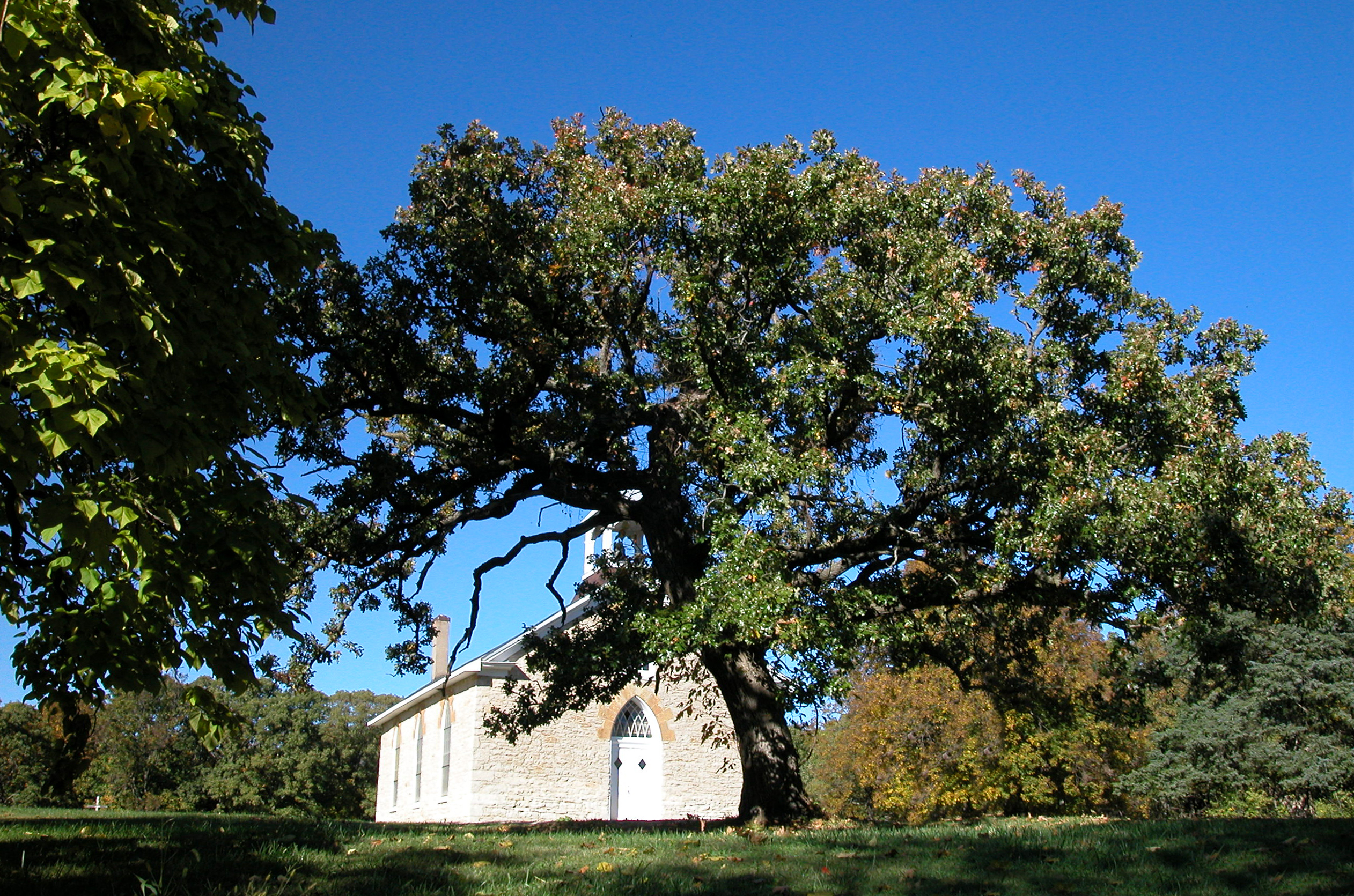
PHOTO CREDIT: Starhill Forest Arboretum.

by Don Corrigan

The term “Post Oak” means different things to different people:

• To Virginians, Post Oak is an unincorporated community in Spotsylvania.

• To folks in western Missouri, Post Oak is a community in Johnson County.

• To Texans in the city of Houston, Post Oak is a mixed-use skyscraper.

• To folks in East Texas, Post Oak is a shopping mall in College Station.

For citizens in Missouri’s Greentree City of Kirkwood, a post oak is a tree, but no ordinary tree. On March 1, the post oak will be officially and most definitively declared “Kirkwood Tree of the Year 2025.”

The post oak tree program is from 10 a.m. to noon at the Kirkwood Performing Arts Center at 210 E. Monroe Ave. Visitors can consult with tree specialists and forestry experts at information tables.

“My goal for the March 1 event is to build enthusiasm among Kirkwood residents to plant more trees,” said Kirkwood Mayor Liz Gibbons. “As everyone can see, we have been losing some tree canopy in the city.

“Holding an event to highlight the ‘Kirkwood Tree of the Year,’ and to inform citizens on the advantages of a fuller canopy, should get us to the goal of replacing lost tree canopy.”

Continue reading

Image

Wine Sculptures Attest: Missouri Vineyard Experts And Botanical Garden’s Henry Shaw Helped Save World’s Wine Industry

This French statue depicts the American “New World” as a young woman propping up a sickly old woman – France. The grateful French erected it at Montpellier in gratitude for U.S. help in defeating phylloxera, a parasite destroying French vineyards. Photo courtesy of Robert Scheef

by Don Corrigan

Americans visiting wine country in France often express surprise when coming upon an intriguing statue in Montpellier. It depicts a younger woman holding and soothing an older woman.

The statue is a representation of France and America helping one another with viticulture. When France’s vineyards were dying from the pest, phylloxera, in the 1800s, Missourians came to the rescue.

Missouri vineyard experts gave French winemakers American rootstock, which is resistant to the parasite. The trick involved grafting the majority of France’s grape plants with hearty American rootstock.

The “Wine Ladies” statue celebrates this curative. An older woman depicts France as ill and dying, whereas the younger woman illustrates America coming to help and soothe. It is a very touching story.

Missouri Wine Country gave a vineyard gift not only to France, but to the world. The Missouri Botanical Garden’s Henry Shaw was a lover of grapes, a wine enthusiast, and he consorted with Missouri’s viniculture experts.

Shaw’s cadre of viniculture specialists included George Engelmann, Charles V. Riley, George Husmann and Hermann Jaeger. When the parasite known as phylloxera began destroying Europe’s wine industry in the 1870s, Shaw’s experts reacted.

Engelmann and other Missouri horticulturalists, including Husmann and Jaeger, developed and organized a shipment of phylloxera-resistant American grapevines to send to France.

The shipped grapevines were used as hardy root stocks to which European vines were grafted. The grafting enabled the French vines to withstand the deadly attack and Europe’s wine industry was saved.

Continue reading

Image

Happy Honeysuckle Hackers: Legislators Push Bills To End Nursery Sales Of Invasives

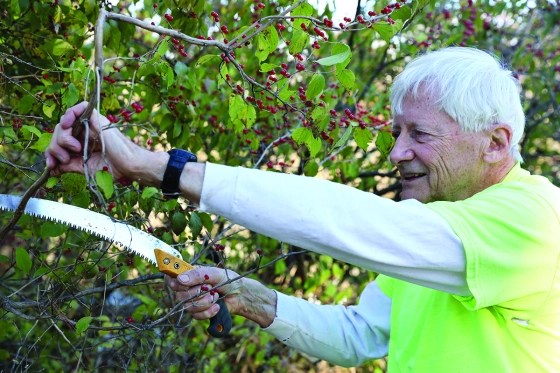
Alan Hopefl of Kirkwood, who has earned a nickname as the “Honeysuckle Slayer,” said he cannot understand why any state legislator would support nurseries selling harmful invasive plants.

by Don Corrigan

This past fall youngsters volunteered with Back To Nature STL to hack out invasive bush honeysuckle in St. Louis suburbs. Volunteers have an uphill fight, in part, because state nurseries continue to sell invasive plants.

“Volunteers can take heart now because there is legislation in Jefferson City to stop the sale of these plants,” said Bonnie Harper of Open Space St. Louis, which had 45 “Honeysuckle Hack” events in 2024 with its Back To Nature STL program.

“Honeysuckle Hack” events had their origin under the Open Space Council in Kirkwood, an organization renamed as Open Space St. Louis with a new headquarters in Sunset Hills. Regardless of name or headquarters location, the hacking continues.

“We have ‘Honeysuckle Hack’ events scheduled to summer now, with the most recent in January at Jefferson Barracks,” said Harper. “Hacking out invasives is labor intensive work, so it’s great to learn that the legislature may end their sale at nurseries.”

Rep. Bruce Sassmann, R-Bland, is sponsor of HB60. Sassman said honeysuckle hackers should take heart, but he said his proposed law is just a small step in the right direction on a big problem.

“Every day invasive species are threatening the health of our nation’s vital agricultural and natural lands,“ said Sassman. “Forests are being infested, cropland production is being impacted, streams are being impacted, wildlife is losing habitat.”

The U.S. Department of Agriculture defines an invasive species as one whose introduction causes economic harm, environmental harm, or harm to human health.

Continue reading