
Monthly Archives: April 2021

Flance Early Learning Center in St. Louis Announced As 2021 U.S. Department of Education Green Ribbon School

Picture2The U.S. Department of Education announced Flance Early Learning Center in St. Louis, MO is among the 2021 U.S. Department of Education Green Ribbon Schools award honorees.

Flance Early Learning Center was nominated by the Missouri Department of Elementary and Secondary Education, in partnership with Missouri Green Schools. Flance Early Learning Center serves a racially, culturally, developmentally, and socioeconomically diverse population of children between ages 6 weeks and 6 years. Flance ELC was founded with a desire to give all children the best possible start in life, regardless of their families’ socioeconomic status. Indeed, 86% of the school population qualifies for free and reduced-priced lunch.

The school building was built with LEED certification in mind and two-thirds of the grounds are planted with water-efficient and regionally appropriate plants, but this school doesn’t stop there. Flance continues to lower its environmental impact with the adoption of composting and recycling, has lowered its greenhouse gas emissions by 37% since tracking began two years ago, and is onboarding a full-time Sustainability Coordinator next month.

Flance is also committed to improving the health of students, families, and the community. Flance was named the only Gold Level Healthy Way to Grow Center in the United States by the American Heart Association in October 2020. In partnership with Affinia Healthcare, Flance houses an onsite health clinic to provide a wide range of health services for Flance families. As a designated EnVision Center by the U.S. Department of Housing and Urban Development since May 2020, the early learning center has provided over 25 tons of free, fresh produce valued at over $180,000 to families and local community neighbors via a weekly free fresh food box program.
Continue reading

Birding Tour of Columbia Bottom Conservation Area

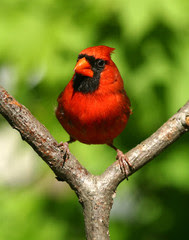
Red bird MDCSpring is here! Join us as we search for migrating and nesting birds throughout Columbia Bottom Conservation Area.


Date: Thursday, May 6, 2021 – 7:30am to 11:00am (Register by May 5)

Location: Columbia Bottom Conservation Area

We will meet at the parking lot next to the visitor’s center. Then do some birding around the visitor’s center before making our way to the confluence point. We will caravan with stops at various habitat locations in search for birds such as bobolink, dickcissels, lesser and greater yellow legs, prothonotary, northern parula, and more.

The birding adventure will end by the parking area near the confluence trail (parking lot N) with walking the road to the confluence (assuming it is not flooded – Some areas may not be accessible if the rivers are high, so we may not be able to go as far as intended.)

If you have them, please bring binoculars and spotting scopes. We can provide binoculars and guidebooks if you need to borrow one. Wear appropriate footwear and clothing as we may get muddy.

All ages are welcome. Please register each individual attending before or by May 5 as spaces will be limited to 30 individuals. Social distancing will be practiced and please bring a mask.

EPA Region 7 Feature: A Town, a Flood, and Superfund: Looking Back at the Times Beach Disaster Nearly 40 Years Later

EPA Reg 7 Times Beach

Pictured: EPA Region 7 Website – Read this story by clicking the link below.

Most St. Louisans have heard the story of the Times Beach environmental disaster that made the small city a ghost town. This Environmental Protection Agency Region 7 (EPA) article gives a detailed timeline of how Times Beach, Missouri, became an environmental and public health warning spurring new laws and public awareness. Please read an excerpt from the EPA’s website and a link to read the full article, including the timeline of events surrounding the Times Beach demise. 

(Below excerpt from the EPA Region 7 Website.) 

EPA Region 7 Feature: By Jenn Little, Office of Public Affairs

The striking images above show one town, but two entirely different landscapes. On the left, abandoned homes dot the gridded street plan. On the right, 19 years later, trees have begun to cover the street lanes in the empty community.

This town, Times Beach, Missouri, was the site of one of the worst environmental disasters in our nation’s history. Nearly 40 years ago, an individual was paid to spray material on the roads to suppress the dust in this small Midwest town. What the town didn’t know was that he was spraying those roads with a mixture of the highly toxic chemical compound, dioxin, and waste oil. When the town was inundated by a terrible flood in December 1982, that toxic mix spread beyond the roads and covered the town.

As part of EPA’s 50th anniversary commemoration, we look back on the events surrounding the Times Beach disaster. Over its 50-year history, EPA’s enforcement and compliance work has played an integral and crucial role in protecting human health and the environment. The Times Beach tragedy was one of several like it at the time and helped spur the creation of the Superfund law, paving the way for countless cleanup and remediation actions at sites across the country.

Here is the story about that Times Beach tragedy.

Read the full article HERE

UNCOVER THE MYSTERIES OF BATS WITH MDC AND USFWS EXPERTS DURING VIRTUAL PROGRAM MAY 4

Much about bats seems mysterious and hidden.  They’re active mainly in the dark of night, and they roost and hibernate in caves and other secretive places.  Bats are the only mammals in Missouri that can truly fly and much of their complex vocalizing occurs beyond the range of human hearing.  Yet we can appreciate bats for their help in controlling mosquitoes and crop pests.

Learn more about these elusive creatures at a virtual presentation hosted by the Missouri Department of Conservation (MDC).  Bats of Missouri will take place Tuesday, May 4 from 6:30-8 p.m. and is a free online program open to all ages.  Presenters include MDC Naturalist and bat researcher Shelly Colatskie, and MDC State Bat Ecologists Jordan Meyer and Jeanette Bailey.  Joining the MDC experts will be U.S. Fish and Wildlife Service Fish and Wildlife Biologist Vona Kuczynska.

Continue reading

Earth Day Special Panel Webinar: Keeping Our Water Healthy: Native Plants & Watersheds April 22

GrowLogo

The Missouri Prairie Foundation’s (MPF) Grow Native! program is hosting a free special Zoom webinar for Earth Day on Thursday, April 22 at 4:00 p.m. with Grow Native! professional member Stream Teams United. Titled “Keeping our Water Healthy” the panel webinar will feature seasoned professionals discussing the importance of native plants for a healthy watershed. Registration is required for this free webinar at moprairie.org or CLICK HERE to register. Registrants will receive a link to a recording of the webinar.

The webinar will be moderated by Stream Teams United Executive Director Mary Culler, with panelists Ronda Burnett with the Missouri Department of Conservation;, Dale Blevins, a U.S. Geological Survey emeritus hydrologist and MPF past president; and Dr. Lisa Shulte Moore of Iowa State University. The webinar will begin with Stream Teams United’s new educational video “Keeping our water healthy – it starts with you,” and the panelists will break down how native plants play an important role in providing clean water for people. There will be a question and answer session for registrants.

Learn about actions to keep watersheds healthy by watching Stream Teams United’s video on YouTube at https://www.youtube.com/watch?v=yg8FjyXbyCI&t=1s and find more resources on Grow Native!’s website at https://grownative.org/learn/manage-stormwater/.

The nonprofit Missouri Prairie Foundation is a 55-year-old prairie conservation organization and nationally accredited land trust. Grow Native! is MPF’s 21-year-old native plant marketing and education program serving the lower Midwest. For more information about webinars and master classes, the Grow Native! program, or the Missouri Prairie Foundation, call 888-843-6739 or send a message to info@moprairie.org.

Image

Politics & Pandemic: Battle Looms in Mo. Farm Country

Family farms make a difference in animal welfare and the environment versus the impact of factory farms. Photo: LTD Photography.

UPDATE TO STORY:

The hog farm in Livingston County proposed by United Hog Systems has withdrawn its permit application. Read the story in the Kansas City Star newspaper HERE.

by Don Corrigan

There’s not always a lot  of common ground between environmentalists and landowners in rural red state Missouri. Property owners and farmers want freedom to use the land as they wish, while environmentalists favor regulations to protect land and water in the public interest.

That divide between environmentalists and landowners is mirrored in the general partisan divide between liberals and conservatives, Democrats and Republicans in Missouri. One place where the divide is bridged and agreement can be found is on the ill effects of expanding CAFOs (Concentrated Animal Feeding Operations).

Landowners worry that CAFOs, which are giant factory farms, will fill the surrounding air with the overwhelming odors from huge reservoirs of animal waste. They also worry that the pools of waste will breach, resulting in major contamination of groundwater as well as nearby lakes and streams.

Small family farms also feel threatened by the prospect of being taken over by well-financed corporate farm operations. These kill independent farms. Farmers worry their children may end up going to work as virtual sharecroppers for a giant company with headquarters out of state or even out of the country.

Continue reading

Department of Natural Resources Awards $41.2 million In Assistance To The Metropolitan St. Louis Sewer District

Mo DNR

Metropolitan St. Louis Sewer District will make collection system improvements

The Missouri Department of Natural Resources awarded a total of $41.2 million in financial assistance to the Metropolitan St. Louis Sewer District for upgrades to its collection system. The project is estimated to cost $43.2 million and is expected to be completed by January 2023.

The project is part of the sewer district’s Public Inflow and Infiltration Reduction Program to rehabilitate the existing collection system throughout the entire service area. This program is part of an ongoing effort to reduce the number and volume of overflows in the sewer district’s combined sewer and sanitary sewer systems.

Funding for the sewer rehabilitation project consists of a $40.2 million low-interest loan and a $1 million grant through the Clean Water State Revolving Fund. To complete the project, the sewer district will provide an additional $2 million in local funds. The department’s funding is estimated to save ratepayers $1 million in principal and approximately $8 million in interest over the loan’s 20-year term.

“Improving the key infrastructure that Missouri communities rely on every day continues to be one of our top priorities,” said Governor Mike Parson. “We are absolutely committed to doing all we can to assist with infrastructure improvement projects large and small.”

Continue reading

Sign Up For ‘Forest & Farms’ Earth Day Special For April 22

The Missouri Humanities Council and Heritage Programs recently volunteered to plant native trees to help replenish tree populations along the Katy Trail.  It’s all to kick-off a virtual program, “Forest & Farms: Explore the Historical Transformation of the Missouri River Valley,” to air April 22.

Panelists, Dan Burkhardt (Co-founder, Magnificent Missouri), Meridith McAvoy Perkins (Executive Director, Forest ReLeaf of Missouri), and Ken McCarty (Natural Resource Management Program Director, Missouri State Parks), will present on the historical transformation of the Missouri River Valley from lush bottom land forest to fertile farmland. They will explore how Missourians have shaped and been shaped by this landscape.

The program will showcase the “Trees of Treloar” conservation project of Magnificent Missouri, a mini-native tree arboretum at the Treloar Trailhead on the Katy Trail. Forest ReLeaf members and others will discuss finding a balance between reforesting the land and preserving the region’s cultural and agricultural heritage.

“Forest & Farms” will take place on Earth Day, April 22, 2021 at 6:30 P.M. (CST), and invites participants to discover the history of forests and farms along the Katy Trail. Today’s trail bikers and hikers can better appreciate what the landscape was — and what it can be! Participant Q&A to follow the panel discussion.

This virtual free event will be presented on Zoom and FB Live. To register CLICK HERE.

The program is a part of “Missouri’s Natural Environment: 200 Years and Beyond” series. This is a year-long series that coincides with the state’s bicentennial to explore Missouri’s natural landscapes. To learn more CLICK HERE.

EPA & Partners Install Trash Traps in St. Louis, Maplewood and University City Streams

trash_trout_trash_trap_st_louis

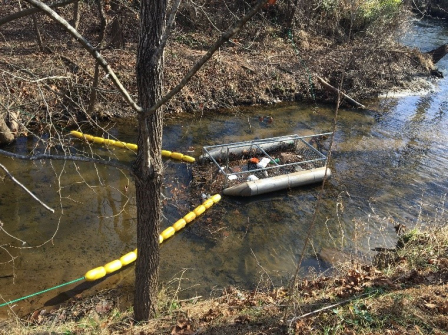
A “Trash Trout” trash trap floats on Deer Creek in Deer Creek Park in Maplewood, Missouri. (Photo credits: Missouri Confluence Waterkeeper, Ashville GreenWorks, and Trash Trout.)

The Trash-Free St. Louis Project to show how solving marine debris starts inland

EPA Region 7’s Trash-Free Waters program, along with Wichita State University’s Environmental Finance Center and the Missouri Confluence Waterkeeper organization, are working with local community groups on a project to install and maintain three trash traps in St. Louis area streams.

A stream trash trap is a mechanical system that includes a floating boom and net that funnel and gather floating debris near embankments, canals, or stormwater outfalls before it can reach  primary waterways like streams, rivers, lakes, and oceans.

Three different types of trash traps are being installed at the following locations: “Trash Trout” at Deer Creek in Maplewood, Missouri; “B2B Beaver” at Mackenzie Creek in St. Louis; and, “Litter Gitter” at River Des Peres in University City, Missouri.

“Stream trash traps, like the ones being deployed in St. Louis, help build awareness of this issue and make the amount and composition of trash more visible, all the while helping to clean up litter in waterways,” said Jeff Robichaud, EPA Region 7’s Water Division director. “St. Louis has the ability to influence change and reduce the impacts caused by trash in urban streams and rivers that feed into the Gulf of Mexico.”

St. Louis serves as an ideal location to launch the pilot project to study trash and litter, as it sits on the confluence of the two most prominent American rivers, the Mississippi and Missouri. Their watersheds combined form the largest single watershed in the United States and flow south to the Gulf of Mexico and Atlantic Ocean.

“The debris and trash that enters these two watersheds often makes its way through storm sewers and remains hidden until storms and rain empty the debris from storm sewers into small streams and larger rivers,” Robichaud said. “This is a positive step in helping to keep River Des Peres – and the Mississippi River it flows into – cleaner for both the animals that live there and humans who rely on it,” said Diane Bauhof, executive director of the St. Louis Aquarium Foundation.

Continue reading

Missouri State Museum and Daniel Boone Regional Library Present “Missouri Trailblazer: Thomas Hart Benton” Virtual Program April 20

MO State Parks Generic         

 Missouri State Museum and Daniel Boone Regional Library invite the public to a virtual program titled, “Missouri Trailblazer: Thomas Hart Benton,” at 1 p.m., Tuesday, April 20.

Viewing the mural, A Social History of the State of Missouri, is one of the most exciting parts of a visit to the Missouri Capitol. Painted by Thomas Hart Benton in 1936, the mural tells the story of the state from its pioneer beginnings to the industrial 20th century. Join Dr. Sarah Jones, art historian and museum interpreter, to discuss Benton’s life and career including the story of his Missouri mural and his role in the rise of American Regionalism. 

Adults and teens are welcome. Those interested in attending must register online to receive a Zoom link to the program at events.dbrl.org/event/4946747. The event will be recorded for later viewing.

This program is a monthly series in honor of Missouri’s bicentennial, highlighting Missouri’s most significant trailblazers who have had an impact on our culture through major events, leadership, innovation and more.

For more information about the event, call the Missouri State Museum at 573-751-2854.

For more information on state parks and historic sites, visit mostateparks.comMissouri State Parks is a division of the Missouri Department of Natural Resources.