Blog Archives

Image

Missouri Prairie Foundation Annual Dinner to be held August 17, 2024

Missouri Prairie Foundation invites you to a celebration of prairies on Saturday, August 17, 2024 in Columbia, Missouri at the Stoney Creek Hotel. Our keynote speaker will be Dr. Chris Barnhart, Distinguished Professor Emeritus at Missouri State University. Doors open at 5 p.m. for the silent auction, drinks, and social hour, followed by dinner at 6 p.m., and subsequent presentation of awards and Dr. Barnhart’s presentation, “Conserving Prairie Royalty: The Regal Fritillary.”

Tickets are $75 each for Missouri Prairie Foundation and Grow Native! Professional members, $85 for the general public, and free for MPF Lifetime members. Tables for six will be available for purchase for $450 by MPF or Grow Native! members, and $400 for MPF Lifetime members. The deadline to register is August 8.

Registration for the 2024 Annual Dinner is now open.

Continue reading

Image

EE’s Roving Correspondent! – Corrigan Pilloried On HMS Endeavour After Capt. Cook Mix-up On British Tour

Corrigan and Boston Globe reporter Brian MacQuarrie climbing to the ruins of Whitby Abbey on the North Sea Coast.

by EE Staffers

EE’s Corrigan served time in a pillory aboard the HMS Endeavor after he confused Captain Cook with Captain Hook of the legendary Peter Pan myth. Endeavor’s crew was miffed, noting Cook is real, Hook is a fake.

Corrigan was in the midst of a whirlwind global reporting tour in June in the United Kingdom with Mizzou J-School Alumni Brian MacQuarrie and Keith Schmidt. The three were on Mizzou’s London Reporting Program last century.

The HMS Endeavor is anchored near the English harbor at Whitby, a favorite haunt of the legendary Captain Cook. The ship’s crew pointed out that Hook was a mythical pirate with a hooked arm. Not so with Cook.

“Cook was a real seaman, a brilliant navigator. He was a favorite of Americans during his time sailing around the world,” said an indignant Endeavor crew member. “Americans need to know that their own Ben Franklin admired Cook.”

EE’s Don Corrigan being punished for his many transgressions aboard Captain Cook’s HMS Endeavour in Whitby.

Corrigan was unable to research the authenticity of those remarks while placed in the pillory. The wooden device secures the head and hands of scoundrels and has been used for public humiliation for centuries.

“After finally being released from the pillory, I was able to confirm the information about Ben,” said Corrigan. “Ben Franklin did advise American sailors not to hassle Cook, even when battling the Brits in the 1770s.

“Franklin wrote a directive to colonial ship captains instructing them ‘to treat Cook and his crew as common friends to mankind,’ if ever encountered at sea. Do not attack him,” Corrigan noted.

Some reasons why Ben Franklin regarded Cook as a “friend of mankind” – who deserved special treatment:

Continue reading

Image

“American Flatulence” – New Podcast Covers Environmental Threats From Methane

By EE Staffers

Environmental writer Don Corrigan recently appeared on the podcast, “Best Part Of The Book,” hosted by Mark Perzel. Veteran broadcaster Perzel keeps the interview lively and fun, but it occasionally veers into serious environmental territory.

For example, Perzel asks about increasing concerns over the cattle industry’s growth worldwide – and the resulting hikes in methane, a gas that contributes to climate change. The methane comes from cattle flatulence.

As weird as it sounds, “farts” are indeed a source of global warming. When cows fart, they release CH4 into the atmosphere. In America, about 20% of the methane emitted in the country comes directly from cows.

Although methane isn’t the number one cause of global warming, in the aggregate, it’s a serious contributor. It’s also a source of emissions that could be addressed easily with science and technology.

Here’s a link to the podcast; it’s a real  gem:  https://link.chtbl.com/BestPartOfTheBook

Continue reading

Image

“In Search of Manhood” – Toxic Masculinity Can Translate Into A Toxic Environment

by Don Corrigan

Study environmental disasters in America and inevitably you will find toxic men behind the scenes. They’re the “deciders” who mindlessly release dangerous materials into the air, into our rivers and lakes, into caverns, caves and landfills.

Examine the various histories of lead contamination, dioxin dispersal, plastics pollution, radioactive waste dumping, and chemical releases and inevitably you will find the male CEOs in the top offices and the men in the board room.

The Mr. Burns character in the animated FOX-TV series, The Simpsons, is a recurring character and not just a cartoon fantasy. He exists. Mr. Burns is the devious, greedy, billionaire owner of a pollution-generating nuclear energy operation.

He is assisted at all times by loyal, sycophantic advisers. Burns is between 80 and 120 years old. He is a stereotype of corporate America with his desire to increase his own wealth and power – and displays an inability to feel sympathy for underlings or victims of his perfidy.

The threat from toxic contamination of our environment will never, ever completely go away until we can reduce the toxicity of men in power – and actually redefine what real men should be.

McFarland Publishing will publish, In Search Of Manhood: American Men’s Movements Past and Present, in August. The book looks at popular culture characters that can only be described as “toxic.”

Continue reading

Image

MDC Purchasing Select Species of Tree Seed From Landowners

Photo: MDC

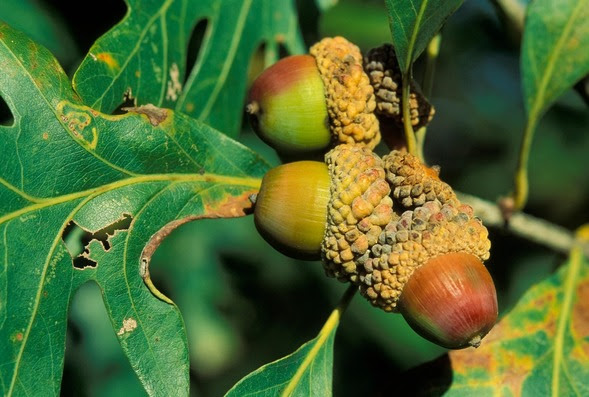
The Missouri Department of Conservation’s (MDC) George O. White Tree Nursery in Licking is currently purchasing seed from the public for a variety of tree and shrub species within southeast Missouri.

“The nursery conducts seed collections annually, and collected seeds are grown into bare root seedlings,” said MDC Community Forester Jennifer Behnken. “The nursery will stop accepting seed once the quota has been reached for that tree or shrub, so please contact us beforehand if you have questions.”

In southeast Missouri, collected seeds can be brought to MDC’s Southeast Regional Office (Monday – Friday, 8 a.m. – 4:30 p.m.) and the Cape Girardeau Conservation Nature Center (Tuesday – Saturday, 8 a.m. – 4:30 p.m.)

Seeds currently being accepted are below (prices are by the pound of fruit):

Continue reading

Image

Save Family Farms: Stronger Economies and Healthier Environments

by Jack Farish

The Missouri Rural Crisis Center (MRCC) is about fighting for rural people, according to Tim Gibbons. Motivated to fight injustice, Gibbons began working with MRCC in 2005, and now serves as director of communications.

“Our work is focused on farm and food justice,” said Gibbons. “We came out of the 1980s farm crisis as a collection of farmers who were already organizing in Missouri.”

The farm crisis Gibbons mentioned began in the late 1970s with an unprecedented economic and technological boom.

“Farmers were buying land and new technology,” Gibbons said. “But then we entered a rural recession. Farmers had loans they couldn’t pay for and the USDA, the dominant lender at the time, was foreclosing on farms.”

The Rise of Corporate Agriculture

By the 1980s, a new economic reality, in combination with new legal policy and industrialization of agriculture, began to discourage the family-farm model.

Continue reading

Image

The Audubon Center: Not Just For The Birds!

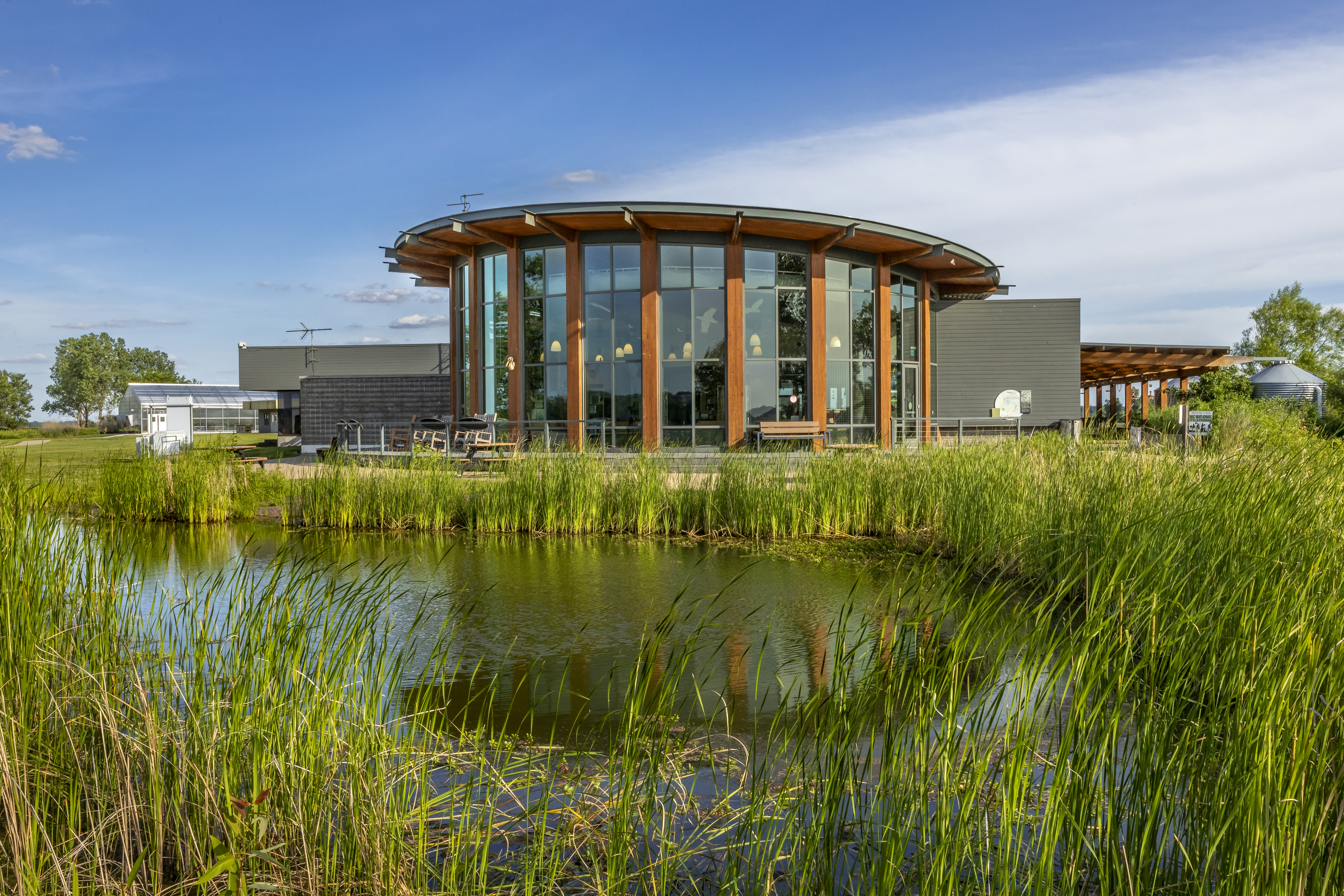
Photo by Rob Schultz. Provided by Ken Buchholz.

By Jess Holmes

Nestled away in an eastern tendril of St. Charles County is avian education center that isn’t just for the birds. The Audubon Center at the Riverlands’ floor-to-ceiling windows display the tall, grassy banks of the Mississippi—a large variety of birds fluttering and gliding throughout the expansive green space.

Visitors can meander the 8.5 miles of hiking trails and learn about the importance of a premier migratory bird sanctuary. Throughout the seasons, more than 300 bird species can be found where this crucial piece of land meets river. The center even provides guests with seasonal checklists, so they know which flying friends to look for.

Natural beauty aside, The Audubon Center, directed by Ken Buchholz for the last eight years, is doing wonders for surrounding communities, Florissant and Ferguson, in particular.

The Center’s mission is “to connect people to the beauty and significance of the Mississippi River and the Great Rivers confluence, to inspire conservation of the river’s rich diversity in birds, wildlife, and other natural resources, and to support healthy, vibrant communities.” They’re doing just that.

Continue reading

Image

Jacks Fork/Current River Trippin’ – Season For Summertime Floats, Nature Site Fun – It’s Here!

by Don Corrigan

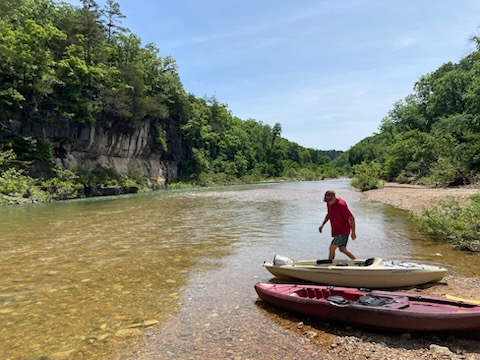
Most Missouri outdoor enthusiasts know the joy of a canoe, kayak or tubing trip down the clear, flowing, pristine rivers of the Ozarks. Did I mention that these Ozark waters are cold!

On a sweltering day, a short swim in the icy waters can shock a hot, sweaty body back to a much cooler reality. And, a river-cooled view of the world can last several hours – before another dunking is required.

Emery Styron, who once published The River Hills Traveler, sold the paper and now lives in Iowa City. Nevertheless, he comes back down to the heart of Missouri for a plunge in the Ozark rivers several times a year.

Continue reading

Image

U.S. Sustainability Award: Washington, D.C. Event To Recognize Nerinx Hall Initiatives 

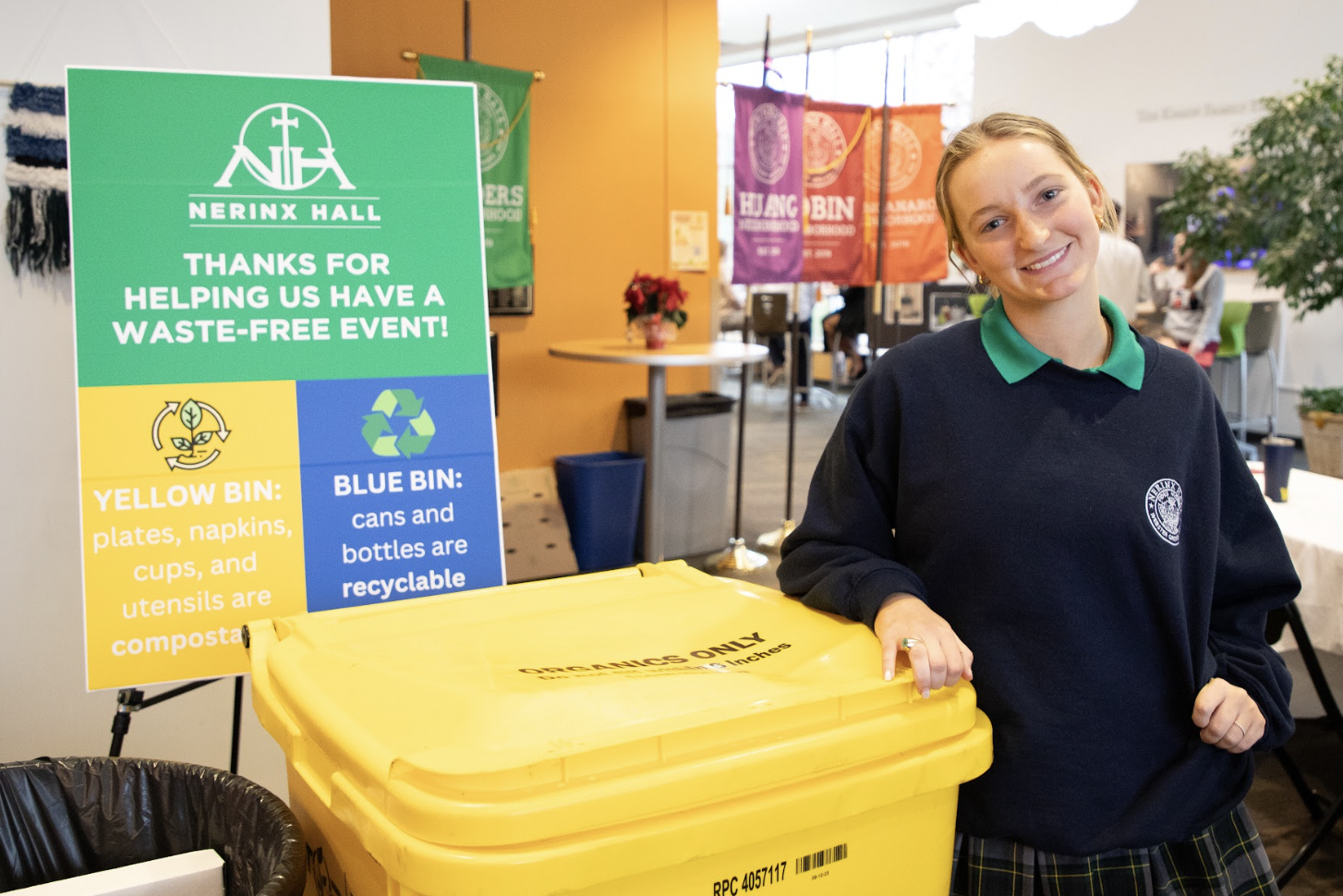
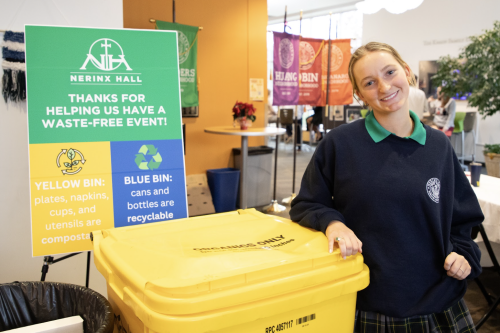
In 2019, Nerinx implemented a school-wide composting program. It extends beyond the cafeteria and includes parent events and rentals as well. Students volunteer to ensure all items are placed in appropriate containers as we strive for zero-waste events.

By Don Corrigan

Nerinx Hall High School in Webster Groves is now a 2024 U.S. Department of Education Green Ribbon School, which recognizes achievement in a school’s commitment to sustainability and environmental stewardship.

Principal Molly Grumich will travel to Washington, D.C., in July when Nerinx will be presented with the honor. Award selections for 41 schools across the nation were made in April in connection with a Summit for Healthy and Sustainable Schools at the White House.

“These awards represent thousands of students, and countless hours of hard work, ensuring equitable access to healthy, climate-resilient learning environments,” said U.S. Education Secretary Miguel Cardona.   “Students are prepared for the sustainability challenges of the present and future.”

Grumich expressed pride in the school’s achievement and attributed the school’s commitment to sustainability and holistic education to traditions of the Sisters of Loretto in Kentucky.

“Our institution prioritizes the empowerment of young women who are deeply engaged with their communities and the world around them,” said Grumich. “This recognition underscores our efforts to instill in our students a profound sense of environmental responsibility and stewardship.”

At their Nerinx, Kentucky headquarters, the Loretto Sisters operate the Loretto Motherhouse Farm. The 789-acre farm emphasizes a responsible relationship with the land with such conservation practices as intensive cover cropping, planting crops without soil tilling and rotational grazing.
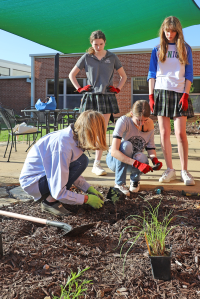
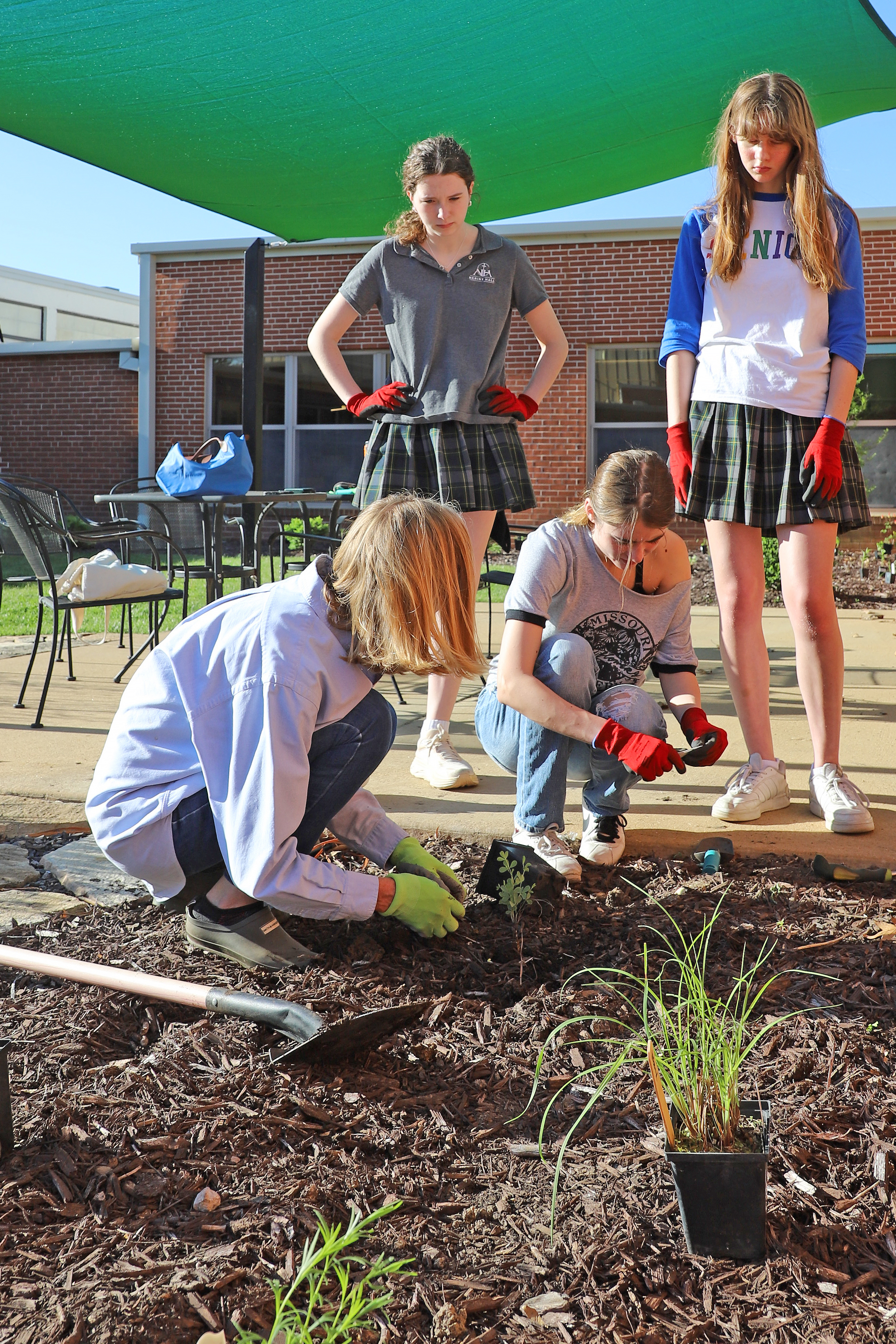
Students researched plants native to Missouri and then sourced a representative sample of the plants and planted them in the courtyard at Nerinx Hall.

Loretto Sisters’ Land Ethic affirms that “those responsible for the land at any particular time should regard it as a sacred trust, received with gratitude, tended with care for its integrity and long-term sustainability.”

The Loretto Community also emphasizes carbon reduction as a way to address climate change and its harmful effects. The Earth can be repaired by sequestering greenhouse gas and planting deep-rooted plants and grasses.

Migrant justice is another tenet of Loretto philosophy with a commitment to inclusivity, diversity and anti-discrimination. Part of learning about the Earth and its needs involves systematically listening to dispossessed people.

Nerinx Planet Patrol

Josie Fedele, president of the students’ Nerinx Planet Patrol, said her high school is excited about the Green Ribbon School Award and the school’s accomplishments. As the patrol president, she wants to redouble those efforts in the 2024-25 academic year.

“Of course, I am concerned about climate change,” said Fedele of Ballwin. “But I want to do things that are doable at the community level. I want to concentrate on composting, on recycling, on finding ways to reduce energy use at our school.”

Jody Patterson, who is director of student access at the school, said composting correctly is not as easy as it sounds. She said the school has found ways to compost everything that’s part of the cafeteria lunch program.

Beth Bucher, who teaches theology at Nerinx, said that religious beliefs commission us to be good stewards of the creation in a way that sustains, protects, and enhances all living things on the planet.

“I am not a real religious person myself, but I know that it’s right to consider the impact of our actions on others and not just for ourselves,” said Fedele of the planet patrol. “One thing I want to address is student stress.”
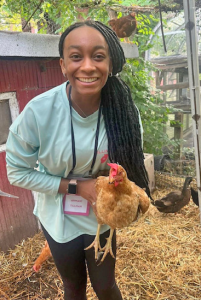
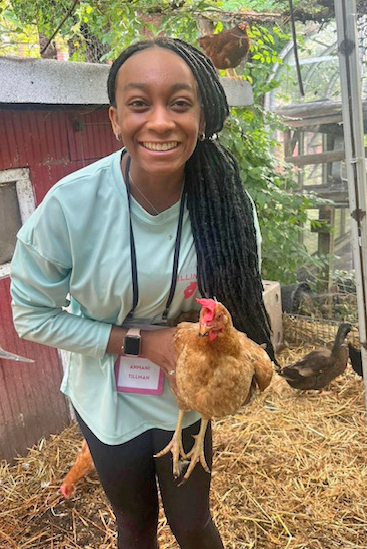
All 11th grade students take part in a program called Junior Experience to enhance connections among classmates, expose students to new programs and ideas through exploration and diversity training, and have fun! Students on this junior experience helped tend chickens on an urban farm.

According to Fedele, working in gardens and caring for native plants can be a stress reliever. She also said she was grateful that Nerinx, and Webster Groves generally, make for a “walkable community” – and she finds walking to be a great stress reliever.

Principal Grumich said the school will continue to look for ways to reduce energy use and has mare great strides by replacing traditional lighting with LED lights. Also, there will be more emphasis on reducing “event trash” that can be harmful aesthetically and environmentally.

Outside on the parking lot, Grumich said the school will work to reduce unnecessary idling by vehicles. Also, there will be organized efforts to encourage more carpooling by students to and from school.

Sustainability By Example

Grumich said sustainabile and environmental practices are best encouraged by example, rather than by scolding others about how their behavior is somehow unacceptable. That approach is consistent with the mission of the Green Schools Award program.
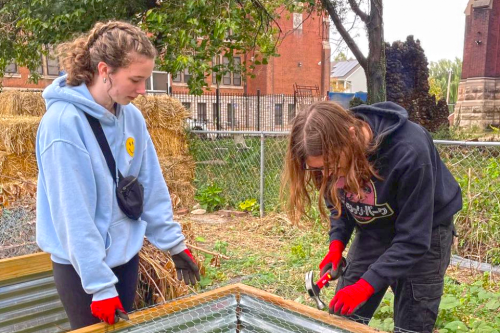
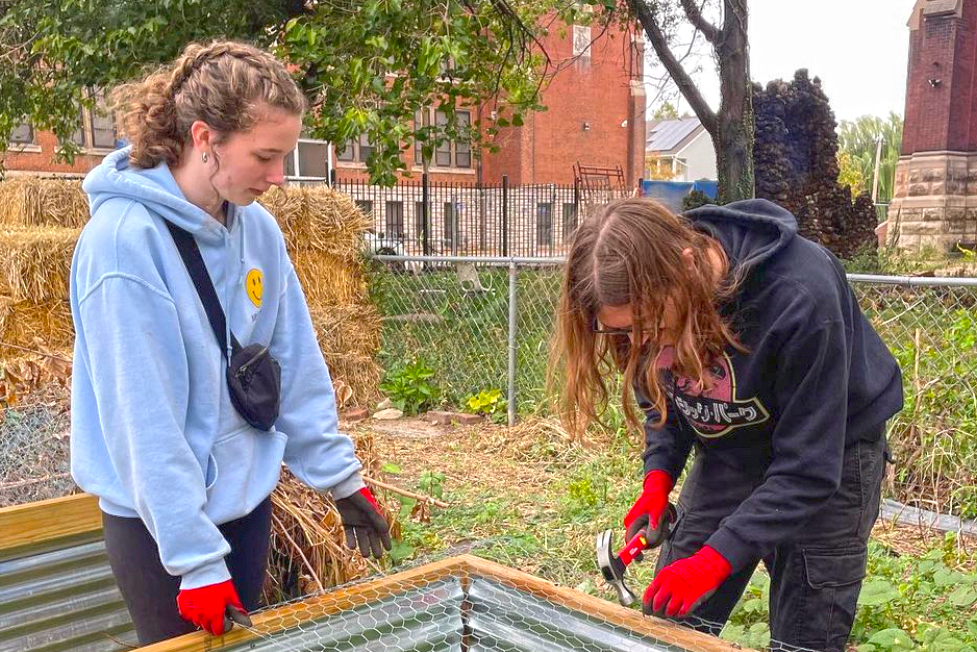
Students in the Eco-Act program regularly perform service at sites dedicated to sustainability efforts. Here, students helped cover raised beds at New Roots Urban Farm.

Nerinx Hall High School on East Lockwood Avenue is receiving the honor in July, not just for its efforts to minimize environmental impacts, but also for enhancing health and wellness initiatives.

“We are not doing sustainable things just to try to win awards,” said Grumich. “These things are all in line with the Loretto mission and in doing the best to empower our young women to make a better future.”

The U.S. Department of Education’s program established the federal recognition awards in 2012 as a platform for promoting sustainable practices in schools nationwide. Nerinx Hall is the first Catholic all-girls school in Missouri to achieve the green award recognition.


Image

“No Mow” Movement Benefits Pollinators and Lawn Mower Pushers

By Jess Holmes

While the “No Mow” trend may feel like a snowflake’s excuse to be a lazy homeowner, it’s proving to be quite the opposite. This initiative is extending beyond its initial purpose of protecting pollinators. It’s becoming a way for citizens to reconnect with the natural spaces in their literal backyards.

The “No Mow” initiative was brought to the United States after its success in the United Kingdom through the organization, Plantlife.

Plantlife’s mission is to connect people with nature, and secure a world rich in wild plants and fungi.

Clean-cut gardening styles have been symbols of wealth and prestige for centuries. Chateaus, chalets, and palaces have always maintained this high value of structured green spaces. And today, modern-day Midwestern towns sport homes with edged, bright green lawns with tight lines and trimmed bushes are still the rage for homeowners. But, at what cost?

Carrie Coyne is the Horticulture Program Facilitator at St. Louis Community College Maremac, as well as the Chair of the Green Space Advisory Commission in Webster Groves, MO. Alongside her team of environmentally-conscious commission members, she has helped popularize the “No Mow” movement in Webster Groves, including getting Mayor Laura Arnold to lift grass length maximums for the entire month of April.

“I see the benefit to the ‘No Mow’ initiative as two fold,” Coyne said. “First, there is a benefit to educating the general public. Having this initiative embraced by the city and being able to publicize through their website and social media platforms has helped the message get out into the community.

“I do feel like the initiative is sort of a gateway, like polar bears and monarch butterflies. They’re all cute things that can encourage people to think about larger environmental issues,” she said.

Continue reading