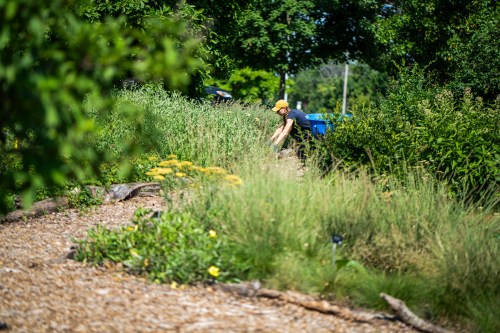
Open House Set For Meramec Greenway at Unger Park Design

by Don Corrigan

The public is invited for an open house on Aug. 19, from 4 to 6 p.m., where a final design for the Meramec Greenway realignment project in Unger Park will be showcased.

The event will take place at the Pavilion in Unger Park and will be the last opportunity for area residents to give feedback on the development of this portion of the Meramec Greenway.

The open house comes in the wake of some controversy over a proposal to link St. Louis County’s Unger Park with a bridge over the Meramec River to Kirkwood’s Greentree Park. That proposal has encountered opposition, but officials say the bridge plan is “preliminary” at best.

Great Rivers Greenway (GRG) has reportedly been conducting a feasibility study for a pedestrian and bicycle bridge that would connect the two parks. It also would tie together a trail network that runs along either side of the Meramec River.

“Rivers are a barrier, obviously, so this is an opportunity for people to connect across a major waterway,” said Great Rivers Greenway’s Emma Klues.

“In our studies and our surveys, people tell us they want us to work on these kinds of opportunities,” said Klues, vice president of communications and outreach for GRG. “They want these connections.”

The possibility of such a Meramec River Bridge was first evaluated during a flood study of Unger Park, which itself is now being redeveloped by GRG in partnership with St. Louis County.

Environmentalists opposing the bridge plan note that the increasingly violent floods in the area are becoming very problematic.

Higher flood waters on the Meramec, and torrents that rip away the shore land, make a new bridge dicey – and costly, according to these area residents. There is no shortage of evidence of river bank erosion.

The proposal to be shown on Aug. 19 at the open house apparently does not contain a new bridge across the Meramec River.

It does include a reroute of the trail coming through Unger Park to avoid the  areas that flood frequently along the Meramec. It also includes new amenities and a lookout point along the river at a higher elevation to avoid flooding issues.

Image

Explore One of Missouri’s Remaining Lowland Swamp and Bottomland Forest

Some of the Allred Lake Natural Area’s bald cypress trees (shown here) are estimated to be over 500 years old. Photo: MDC.

The Missouri Department of Conservation (MDC) invites Missourians and visitors to explore Allred Lake Natural Area (NA) — home to one of the best remaining examples of lowland swamp and bottomland forest habitat in the state.

Located in the Bootheel region of Missouri, the area spans a diverse and ecologically rich landscape, including a 76-acre portion designated as a Missouri Natural Area. This designation recognizes the area’s exceptional educational and scientific value, and MDC actively manages the site to preserve its unique plant and animal communities.

“Allred Lake is a rare and beautiful reminder of the swampy wilderness that once covered much of southeastern Missouri,” said MDC Conservation Agent Clarissa Stroder. “It’s an outstanding place for nature study, birding, and quiet appreciation of some of the state’s oldest natural features.”

Continue reading

Image

Road Rage Incidents Partisan Warfare Now Seems To Be Erupting Over Bicycling

Michael Morales at the American Crit Cup race at Downer in Milwaukee, Wisconsin.

by Don Corrigan

Partisan fights in America can be triggered by such issues as climate change, immigration, school choice, taxation, and more. Now, add a new one to the mix: rights of bicyclists and pedestrians.

Forbes Magazine recently reported on “street fights” between bicyclists and pedestrians vs. automobile partisans. Obviously, bicyclists and pedestrians are destined to lose most battles with motorized vehicle drivers on roadways.

Some drivers view cyclists as impediments because they travel slower. They also are viewed as obstacles because they take up road space, especially in areas where bike lanes have been created for their benefit.

Drivers may not understand that cyclists have the same legal rights on the road as vehicles in most jurisdictions. Also, pedestrians have cross walks and of the right-of-way that many drivers are prone to ignore.

Vehicle-related rage directed at cyclists is often called “bike rage” and is classified as traffic violence. Bike rage in Missouri is often linked to the state’s broader road rage problem. In any case, road rage can be deadly.

Continue reading

Image

Sweet Corn Sunday: Lots of butter, brats and a new book!

By Don Corrigan

Magnificent Missouri’s annual “Sweet Corn Sunday” will once again be rocking in the Missouri River Valley near Treloar. Festivities are slated for 11:30 a.m. to 3 p.m., August 10, and will be located along the trail at Treloar, Peers and Marthasville.

Each family that attends will receive a free copy of the illustrated “The Katy Trail Country Store Corridor.” Tram rides on the trail will be available, but hikers and bikers also are encouraged to take advantage of various transit activities.

All three locations of the festivities — Treloar, Peers and Marthasville — will have something to offer including storytelling, music and munchies.

Image

Green Energy For Kirkwood? Feds Pull Plug, But State Electric Utilities Remain Optimistic

By Don Corrigan

Missouri Sen. Josh Hawley and Attorney General Andrew Bailey took victory laps last week when the Department of Energy defunded a long-awaited Grain Belt Express electric transmission line through the state.

The $4.9 billion loan guarantee given to the developers of the Grain Belt Express has been canceled, but cities such as Kirkwood, Farmington, Hannibal and Rolla continue to look forward to receiving the line‘s cleaner energy at some point in the future.

Kirkwood Electric Director Mark Petty has long predicted that cheaper, green energy would be in Kirkwood’s future once the utility line delivering Kansas wind turbine energy got past some political and landowner objections. That future may now be delayed.

Both Hawley and Bailey claimed they were major players in tripping up the future of the transmission line. Hawley has referred to the Grain Belt Express project as a “green scam,” a “boondoggle loan,” and as an “elitist land grab.”

Bailey said the project was sold to the people of Missouri as some kind of “Green New Deal,” but that he had forced “a positive first step” in ending the project altogether. He blasted eminent domain use in securing farm property for transmission lines.

Continue reading

Image

Save The Date: Missouri Prairie Foundation Annual Dinner, August 16, 2025

The Missouri Prairie Foundation (MPF) Annual Dinner is a celebration of prairies. This year’s event will be held Saturday, August 16, 2025 in Columbia, Missouri at Stoney Creek Hotel, 2601 S. Providence Road.

“We are extremely pleased that Dr. Jesse Nippert—University Distinguished Professor of Biology at Kansas State University—will be our special guest speaker for this event,” said MPF Executive Director Carol Davit. In addition to Dr. Nippert’s presentation on the dynamics of tree/grass resource competition—“Managing for Healthy Tallgrass Prairies in an Era of Woody Plant Encroachment”—guests at the dinner event will enjoy a social hour, drinks, and silent auction featuring outdoor gear, artwork, outdoor experiences, and more, with proceeds benefiting MPF’s conservation work. MPF and Grow Native! program awards will also be presented during the evening.

MPF is grateful to event in-kind sponsors: Modern Litho and Bass Pro Shops®.

To purchase individual tickets and tables of six, and to find more details about the event, visit moprairie.org/annualdinner. Registration is required to attend; the registration deadline is August 7, 2025. If you have questions, please email info@moprairie.org.

The Missouri Prairie Foundation is a 59-year-old, nationally accredited land trust that protects and restores prairie and other native grasslands through acquisition, management, education, and prairie research. The organization owns 35 properties totaling more than 5,000 acres of prairie across the state, and, with partners, inspires the conservation of thousands more. The Missouri Prairie Foundation is also home to the 25-year-old Grow Native! native plant education and marketing program and administers the Missouri Invasive Plant Council.

Image

MDC Reminds the Public to Keep Wildlife Wild This Summer

Photo courtesy the Missouri Department of Conservation.

As Missouri families head outdoors to enjoy the beauty of summer, the Missouri Department of Conservation (MDC) is reminding everyone to appreciate wildlife from a distance and keep wild animals wild.

With warmer weather, you may encounter young wildlife such as racoons, baby birds, rabbits, and other animals that may appear to be orphaned or abandoned.

“Human interference, even with good intentions, can often do more harm than good,” said Russell Duckworth, MDC protection regional supervisor. “It’s natural to want to help when you see a baby animal alone. But what many people don’t realize is that in most cases, the young are not abandoned, and their mothers are usually nearby, watching and waiting for humans to leave so they can safely return.”

MDC reminds the public that picking up, feeding, or attempting to care for wild animals not only disrupts their natural behaviors but may also violate state wildlife laws.

“Missouri law prohibits the possession of many species of wild animals without a valid permit,” said Duckworth. “Removing a wild animal from its environment can lead to serious consequences for both the animal and the person. It’s also important to remember that wild animals can carry diseases and parasites that pose risks to people and pets.”

MDC recommends observing wildlife from afar, since wild animals can become dangerous as they mature. Although it is tempting to take them into homes, the best help people can offer wild animals is to leave them alone. It’s also best to secure trash and avoid feeding wildlife.

“When people feed wild animals, either directly or by leaving out pet food or unsecured garbage, they’re encouraging unnatural behaviors that can lead to animals becoming aggressive or dependent,” said Bridget Jackson, MDC regional recreational use specialist. “It’s essential that wild animals remain wary of humans for their own safety.”

To help Missourians better understand how to responsibly interact with nature, MDC offers educational materials, public workshops, and online resources at mdc.mo.gov.

If you encounter wildlife that may be injured or truly orphaned, contact your local MDC office before taking any action.

“The best way to help wildlife is to let wild animals stay wild,” added Jackson. “Observing nature is a wonderful part of summertime in Missouri. By keeping our distance and respecting wildlife, we can all play a part in conserving the state’s natural heritage.”

For more information about Missouri wildlife or to report concerns about wild animals, visit MDC online at mdc.mo.gov or contact your local MDC office.

Image

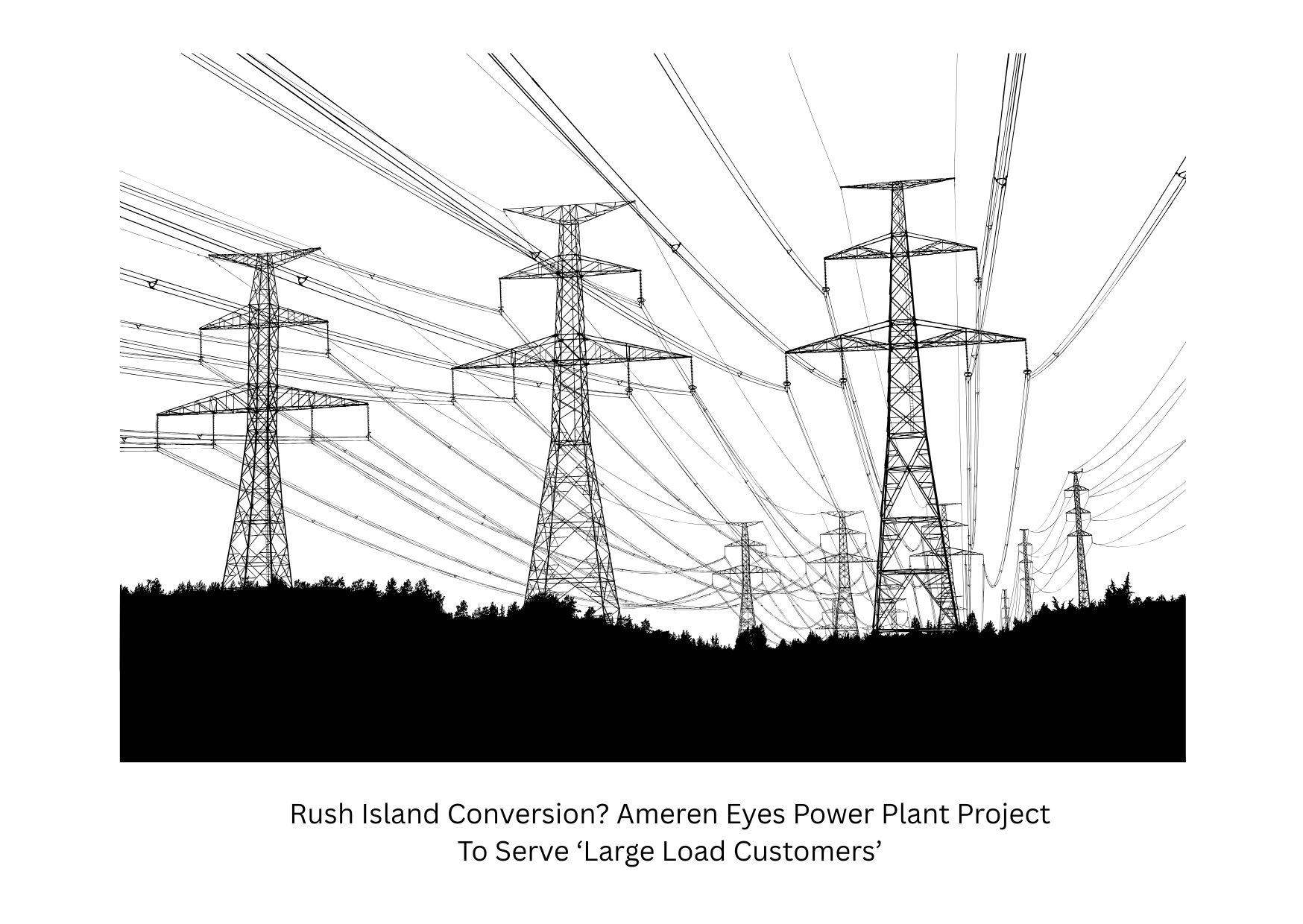
Clean Power Option: Missouri A.G. Bailey Throws Wrench Into Green Energy Plans For Cities From Hannibal, to Kirkwood, to Springfield

By Don Corrigan

Kirkwood Electric Director Mark Petty has long been a supporter of the green energy that could be supplied by the Grain Belt Express transmission line proposed to come through Missouri.

In 2022, Petty optimistically predicted that cheaper, green energy would be in Kirkwood’s future once the utility line delivering Kansas wind turbine energy got past some political and landowner objections.

Those obstacles continue. Now Missouri Attorney General Andrew Bailey has thrown up additional roadblocks with his accusations that the Grain Belt line developer through the state may be supplying fraudulent energy information. Bailey wants an investigation.

A Grain Belt Express spokesperson for the Invenergy Company has responded to Bailey’s charges with obvious indignation.

“We should be building energy infrastructure in America, but the Missouri Attorney General is instead playing politics with U.S. power,” said Martin Grego, a project spokesperson.

“Electricity demand is rising across the country, and we urgently need transmission infrastructure to deliver power,” added Grego. “Projects like Grain Belt Express are the answer to providing all forms of affordable and reliable electricity to U.S. consumers.”

In a memorandum to the Missouri Public Service Commission, Bailey accused Grain Belt of supplying “at best speculative and faulty, or at worst intentionally fraudulent information in their application (for the project), including in their impact analysis.”

Continue reading

Image

Happy Honeysuckle Hackers! Governor Signs 2025 Bill To Curb Proliferation Of Invasive Plants

PHOTO: Missouri Gov. Mike Kehoe signs into law a bill to address the spread of invasive plants in the state amid supporters of the legislation passed in the 2025 statehouse session.

by Don Corrigan

Missouri Gov. Mike Kehoe on June 14 signed a law halting sale in the state of six invasive plants. They are:  sericea lespedeza, burning bush, Callery pear, Japanese honeysuckle, perilla mint, and wintercreeper.

Implementation date for the legislation is Aug. 28 The legislation allows four plants in the bill to continue to be sold through Jan. 1, 2027, and two others to be sold through Jan. 1, 2029, to mitigate revenue losses for plant sellers, who may have an inventory of some species.

“The Missouri Invasive Plant Council is extremely pleased with this wonderful news and thanks Gov. Kehoe and Missouri legislators for their support of this bill,” said Carol Davit, chairperson of the Missouri Invasive Plant Council.

“The bill will help protect Missouri’s working lands and native habitats from these harmful invasives,” Davit added.

Continue reading

Image

Alternative Energy Future: State And National Leaders Are Declaring War On Renewables; But Movement To Replace Dirty Power May Now Be Unstoppable

By Don Corrigan                        

It’s easy to think that renewable energy has hit a wall both in Missouri and nationally. Political forces have aligned like the planets, at all levels, to declare war on green energy.

Not every environmentalist is glum, however. There’s a silver lining out there somewhere. Even so, the prospects for renewables do not look very bright at this point in 2025.

Consider that:

• Billions in budget subsidies have been cut for home solar and energy efficiencies
• Wind and solar energy projects will be shut down and new ventures are shuttered.

• Congress has passed bills to support a revival of mining and drilling in America.

• Missouri has a statehouse majority that has signed onto more mining and drilling.
• A 2008 initiative passed by voters to encourage renewables is largely forgotten.

Also in Missouri, Attorney General Andrew Bailey has declared war on the Grain Belt Express transmission line to deliver green energy throughout the state. The powerline to deliver wind-generated electricity from Kansas, through Missouri to Indiana has faced roadblocks before.

Cities in Missouri that were looking forward to buying cheaper, greener electricity are frustrated. Among the cities waiting on Grain Belt Express transmission line completion are Columbia, Hermann, Kirkwood, Hannibal and more than 30 other municipalities.

In 2008, Missouri voters passed Proposition C by a whopping 66% to 34% margin. Proposition C requires that Missouri utilities expand investment in clean energy sources like wind and solar to reach renewable energy targets.

Despite that overwhelming popular support for clean energy, leadership in the Missouri legislature failed to carry out the will of the people by supporting and accelerating clean energy expansion.

Even though the cost and environmental advantages of clean energy has overcome  the lack of political will in many other U.S. states, legislative inaction in Missouri has slowed clean energy expansion.

Continue reading