Check out the video below about how the Legends of Conservation came to live and how you can have the exhibit come to your next gathering or event.
You can also visit the Legends of Conservation website or Facebook page.
Check out the video below about how the Legends of Conservation came to live and how you can have the exhibit come to your next gathering or event.
You can also visit the Legends of Conservation website or Facebook page.
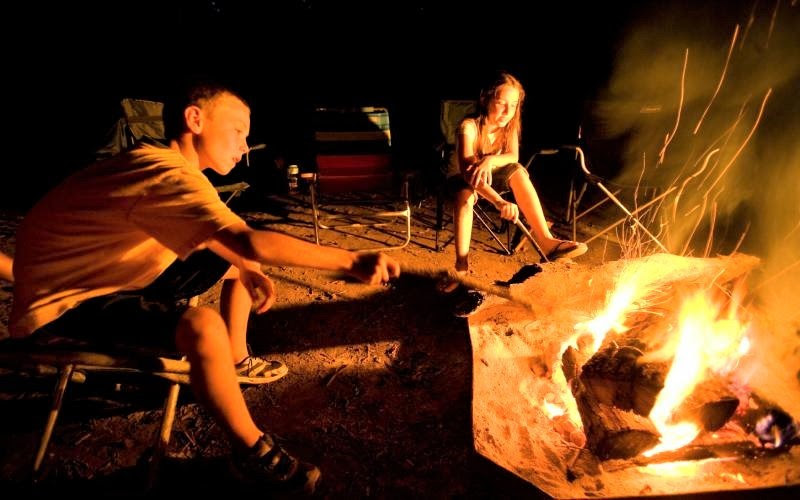
As people celebrate this summer, the Missouri Department of Conservation (MDC) reminds everyone to be careful with fireworks, campfires, and other sources of fire that could cause a wildfire.
FIREWORKS: Don’t light fireworks in any areas where the sparks could ignite dry grass, leaves, or other potential fire fuel. Always have an approved fire extinguisher and an available water supply to douse sparks or flames. Wet the area around where fireworks are being discharged. Check with local ordinances and authorities for bans on fireworks and open burning.
People should be able to identify blooms and know potential health risks and the symptoms of exposure.
As people head out to enjoy the outdoors this summer, the Missouri Department of Natural Resources wants everyone to stay safe by being aware of possible harmful algae blooms in Missouri waterways. It is important to know what harmful algae blooms are, how to identify them and understand the potential health risks both to people and their pets.
Harmful algae blooms are clusters of cyanobacteria, often referred to as blue-green algae, that can grow in lakes, ponds and slow-moving or pooled streams. Cyanobacteria are capable of producing dangerous toxins that can cause illness and even death in people and animals. While they typically appear during summer and early fall, harmful algae blooms can occur any time of year.
Continue reading
Missouri Department of Conservation (MDC) work teams have completed a significant renovation and reroute to the multi-use trail on the Daniel Boone Conservation Area in Warren County near Jonesburg. The trail, which is 6.8 miles in total length, is open to hiking, biking, and equestrian use.
One of the main reasons for the reroute was to allow portions which had experienced significant wear a chance to recover. The Daniel Boone Conservation Area also encompasses the 923-acre Razor Hollow Natural Area. The project modified the route for biking and horseback use to protect sensitive resources in the area. Users are asked to follow the posted signs regarding access.
A new scientific study authored by Saint Louis Zoo researchers concludes that immersive, naturalistic exhibits in zoos can elicit positive changes in physiological and psychological measures of health and well-being of visitors. In other words – a visit to the zoo is good for your health!
The study titled “Changes in human health parameters associated with an immersive exhibit experience at a zoological institution” was published on Friday, April 17, 2020, in PLOS ONE.
“At a time when the number of people living in urban areas is on the rise, and humans and the natural world are more disconnected, we are now fully realizing why we need the human-animal-nature bond to ensure public health,” said Sharon Deem, DVM, Ph.D., Director of Saint Louis Zoo Institute for Conservation Medicine and senior author of the study. “The evidence from this study supports the role of zoos and other green spaces in providing health benefits to zoo visitors,” said Deem.
The Missouri Department of Conservation (MDC) is excited to announce the launch of its new podcast, Nature Boost, with a focus on the positive impact the outdoors has on each of us.
Research has shown that spending time outdoors is linked to an increase in overall physical health. Being outside has also proven to help decrease stress and anxiety, and help lower depression. For example, spending time in nature, conservation areas, backyards, and urban parks may ease stress levels, including increasing attention spans and creative problem-solving skills by as much as 50 percent.
“We’re very excited to share this Nature Boost experience with both our seasoned outdoor enthusiasts and those brand new to discovering nature,” said MDC Director Sara Parker Pauley. “It’s a chance to learn about the incredible natural resources we have right here in Missouri, including how those nature experiences are changing lives every day.”
By Don Corrigan
People are sheltering in place during the 2020 pandemic for good reason, but on May 23 it might be nice to come out of your shell to celebrate World Turtle Day. It’s the 20th anniversary of this annual event that was founded by American Tortoise Rescue.
The purpose of World Turtle Day is to educate people about what they can do to protect the habitats of turtle and tortoises. It’s also a celebration of the great joy that these reptiles bring to so many people on a daily basis. Humans love turtles.
As the weather warms up and more people head outside, they may encounter a variety of newborn animals. Though young wildlife oftentimes appears to be abandoned, that’s usually not the case. The Missouri Department of Conservation (MDC) reminds residents that interfering with wildlife can do more harm than good.
“Young animals are rarely orphaned,” said MDC State Wildlife Veterinarian Sherri Russell. “If the young is left alone, the parent will usually return. Parents are normally out searching for food and cannot constantly attend to their offspring.”
The Missouri Department of Conservation (MDC) says Peanut the Turtle is back at Powder Valley Nature Center in Kirkwood after undergoing a recent surgery at the Saint Louis Zoo.
The procedure was performed by the Zoo’s assistant director of animal health, Dr. Chris Hanley, and veterinary resident, Dr. Kari Musgrave. Due to a condition known as follicular stasis, Peanut had to have both of her ovaries surgically removed. Peanut is in the process of recovering and doing well.
Peanut the Turtle has attracted attention all over Missouri, along with national and worldwide fame, as an anti-littering mascot. At a young age, the red-eared slider wandered into a plastic six-pack ring and it stuck around her shell.
As her shell grew, it was constricted by the plastic ring and developed an unusual, figure-eight shape. In 1993, when she was about nine years old, someone found her and brought her to the Saint Louis Zoo where the ring was removed.
They named her Peanut because of her shell’s shape and gave her to staff at MDC. Peanut has been under the care of MDC since then, where she has served as a popular ambassador for litter awareness.
Earlier this year, staff at MDC’s Powder Valley Nature Center, where Peanut lives, began noticing that something was “off” about her behavior.
Missouri State Parks, a division of the Department of Natural Resources, announced phase one of a phased approach to resuming normal operations.See more below.