Category Archives: Home

Bear Sightings Reported in St. Louis and Nearby Counties—MDC Biologists Say Don’t Feed Them

blackbear MDC

Photo: Missouri Department of Conservation

The Missouri Department of Conservation (MDC) has received several reports of recent bear sightings in Fenton—as well as others in neighboring Jefferson, Franklin, and Crawford Counties.  They remind us that black bears are becoming a growing part of the St. Louis regional landscape.

Why the increase in sightings lately?  MDC’s ongoing bear research indicates the Show-Me-State is currently home to around 800 black bears, and that population is growing by 9% each year.   Only one species can be found in this state—the American black bear—though multiple color phases can be found in Missouri with, such that a bear’s fur can be brown, red, cinnamon in color.

“Most of our bears are found in the southern part of the state.  That’s where we have the largest tracts of forested habitat,” said Tom Meister, MDC Wildlife Damage Control Biologist for MDC’s St. Louis Region.

However, research also shows the population is expanding, both in total numbers and range. As the population grows and expands, bears are showing up in areas further north. Additionally, late spring/ early summer is prime time for bears to be on the move. Young bears begin to wander seeking food and an area to settle and adult males begin moving large distances in search of females. The recent uptick in sightings is likely a combination of bear range expanding and the time of year when bears can move large distances.

These creatures are part of our state’s natural history and many people enjoy the thought of seeing one of these impressive animals.  With an expanding population of bears, however, comes an increased potential of human-bear interactions.

While generally not aggressive, like any wild animal black bears are driven to find food.  It takes a lot of calories to fuel an animal that typically weighs several hundred pounds and they can be attracted to a variety of food sources this time of year.

“The bears have been out of hibernation since spring.  Now they’re hungry.  They were dormant for all winter, and they’re looking for food.  So, we don’t want to tempt them,” Meister said.

Food, or rather the lack of it, is key to avoiding conflicts with bears.  Meister stressed not to offer them food, either intentionally or unintentionally.  Intentionally feeding bears can be dangerous as it makes the bears comfortable around people. It can also lead bears to cause significant damage to property while searching for a meal.

Continue reading

Collaborative Effort to Track Plastic Through Mississippi River

Three kayakers mdc

Photo by MDC Staff, courtesy Missouri Department of Conservation.

A small group of kayakers paddle out into the waters of North America’s largest river on a cloudy Saturday morning.  One of them sets a small plastic bottle adrift on the choppy surface.  With a mysterious antenna protruding from the bottle’s side, the current carries the miniature vessel away to a fate unknown.  It’s a high-tech twist on the classic message in a bottle.  Except this message can shed valuable information on how plastic pollution affects our waterways.

The Missouri Department of Conservation (MDC) St. Louis Region Stream Teams are helping in a big way with a unique initiative to bring greater awareness of the impact plastic trash has on our watersheds, and ultimately, our oceans.

A cooperative of mayors along the Mississippi River called the Mississippi River Cities and Towns Initiative (MRCTI) has partnered with the United Nations Environment Program, National Geographic Society, and the University of Georgia to fight plastic pollution along the Mississippi. The resulting program, called the Mississippi River Plastic Pollution Initiative (MRPPI), is launching a pilot with three cities along the upper, middle, and lower Mississippi.  St. Louis represents the middle area, with St. Paul, Minn., representing the upper portion, and Baton Rouge, La., stands in for the lower Mississippi.  This pilot program is set to expand to the entire Mississippi watershed in 2022.

Data collection is the first phase of the initiative to find out how much trash, and what kinds, are making it into the Mississippi–along with how exactly it travels through our waterways.

Continue reading

Missouri Prairie Foundation & Grow Native! Offer Weekly Webinars & Master Classes in May 2021

Brown belted bumble bee by Ed Spevak

Pictured: Brown-belted bumble bee by Ed Spevak.

The Missouri Prairie Foundation and its Grow Native! native program continue its popular online programming.

Nearly 7,000 live attendees have enjoyed the online programming offered by the Missouri Prairie Foundation (MPF) and its 21-year-old Grow Native! program from January through April 2021. MPF continues its popular webinar and master class schedule in May.

During these virtual learning opportunities hosted each week at 4:00 p.m., participants can learn from a variety of speakers on topics such as bumble bees, prairie mammals, prairie history, and pollinator gardening.

Speakers will include Katie Lamke, a conservation biologist for the Xerces Society; Doug Helmers, retired USFW private lands coordinator and MPF board member; Dr. Sean Maher, Associate Professor in the Biology Department at Missouri State University; Doug Ladd, retired director of conservation for The Nature Conservancy; and Paula Diaz, with GardeNerd Consultations.

Webinars are free, 30-minute programs, with time for questions after the presentations. Master classes are more specialized, with presenters sharing 50-minutes of material, with time for questions after the presentations. Master classes are free to MPF members and Grow Native! professional members, and $15 for non-members.

Not a member? Join at moprairie.org/membership/ and attend all master class programming as a benefit of membership. Landscape architect continuing education credits are available for master classes and most webinars.

May Webinars and Master Class Schedule: 

Wednesday, May 5: MPF Master Class: Bumble Bees of Missouri with Katie Lamke

Wednesday, May 12: MPF Webinar: Small Mammal Ecology in a Fragmented Landscape with Dr. Sean Maher

Thursday, May 19: MPF Webinar: We did This – How Humans Created, Destroyed, and are Resurrecting America’s Tallgrass Prairies with Doug Ladd

Wednesday, May 26: Grow Native! Webinar: 10 Steps to Moving Beyond Monarchs with Paula Diaz

Register online for each webinar and master class, and a Zoom link will be emailed to you the week of the event. Recordings of the programming will be sent to all registrants. The free webinars will be posted publicly at the MPF YouTube Channel.

The nonprofit Missouri Prairie Foundation is a 55-year-old prairie conservation organization and nationally accredited land trust. Grow Native! is MPF’s 21-year-old native plant marketing and education program serving the lower Midwest. For more information about webinars and master classes, the Grow Native! program, or the Missouri Prairie Foundation, call 888-843-6739 or send a message to info@moprairie.org.

Flance Early Learning Center in St. Louis Announced As 2021 U.S. Department of Education Green Ribbon School

Picture2The U.S. Department of Education announced Flance Early Learning Center in St. Louis, MO is among the 2021 U.S. Department of Education Green Ribbon Schools award honorees.
Flance Early Learning Center was nominated by the Missouri Department of Elementary and Secondary Education, in partnership with Missouri Green Schools. Flance Early Learning Center serves a racially, culturally, developmentally, and socioeconomically diverse population of children between ages 6 weeks and 6 years. Flance ELC was founded with a desire to give all children the best possible start in life, regardless of their families’ socioeconomic status. Indeed, 86% of the school population qualifies for free and reduced-priced lunch.

The school building was built with LEED certification in mind and two-thirds of the grounds are planted with water-efficient and regionally appropriate plants, but this school doesn’t stop there. Flance continues to lower its environmental impact with the adoption of composting and recycling, has lowered its greenhouse gas emissions by 37% since tracking began two years ago, and is onboarding a full-time Sustainability Coordinator next month.

Flance is also committed to improving the health of students, families, and the community. Flance was named the only Gold Level Healthy Way to Grow Center in the United States by the American Heart Association in October 2020. In partnership with Affinia Healthcare, Flance houses an onsite health clinic to provide a wide range of health services for Flance families. As a designated EnVision Center by the U.S. Department of Housing and Urban Development since May 2020, the early learning center has provided over 25 tons of free, fresh produce valued at over $180,000 to families and local community neighbors via a weekly free fresh food box program.

Continue reading

Birding Tour of Columbia Bottom Conservation Area

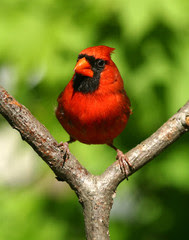
Red bird MDCSpring is here! Join us as we search for migrating and nesting birds throughout Columbia Bottom Conservation Area.


Date: Thursday, May 6, 2021 – 7:30am to 11:00am (Register by May 5)

Location: Columbia Bottom Conservation Area

We will meet at the parking lot next to the visitor’s center. Then do some birding around the visitor’s center before making our way to the confluence point. We will caravan with stops at various habitat locations in search for birds such as bobolink, dickcissels, lesser and greater yellow legs, prothonotary, northern parula, and more.

The birding adventure will end by the parking area near the confluence trail (parking lot N) with walking the road to the confluence (assuming it is not flooded – Some areas may not be accessible if the rivers are high, so we may not be able to go as far as intended.)

If you have them, please bring binoculars and spotting scopes. We can provide binoculars and guidebooks if you need to borrow one. Wear appropriate footwear and clothing as we may get muddy.

All ages are welcome. Please register each individual attending before or by May 5 as spaces will be limited to 30 individuals. Social distancing will be practiced and please bring a mask.

EPA Region 7 Feature: A Town, a Flood, and Superfund: Looking Back at the Times Beach Disaster Nearly 40 Years Later

EPA Reg 7 Times Beach

Pictured: EPA Region 7 Website – Read this story by clicking the link below.

Most St. Louisans have heard the story of the Times Beach environmental disaster that made the small city a ghost town. This Environmental Protection Agency Region 7 (EPA) article gives a detailed timeline of how Times Beach, Missouri, became an environmental and public health warning spurring new laws and public awareness. Please read an excerpt from the EPA’s website and a link to read the full article, including the timeline of events surrounding the Times Beach demise. 

(Below excerpt from the EPA Region 7 Website.) 

EPA Region 7 Feature: By Jenn Little, Office of Public Affairs

The striking images above show one town, but two entirely different landscapes. On the left, abandoned homes dot the gridded street plan. On the right, 19 years later, trees have begun to cover the street lanes in the empty community.

This town, Times Beach, Missouri, was the site of one of the worst environmental disasters in our nation’s history. Nearly 40 years ago, an individual was paid to spray material on the roads to suppress the dust in this small Midwest town. What the town didn’t know was that he was spraying those roads with a mixture of the highly toxic chemical compound, dioxin, and waste oil. When the town was inundated by a terrible flood in December 1982, that toxic mix spread beyond the roads and covered the town.

As part of EPA’s 50th anniversary commemoration, we look back on the events surrounding the Times Beach disaster. Over its 50-year history, EPA’s enforcement and compliance work has played an integral and crucial role in protecting human health and the environment. The Times Beach tragedy was one of several like it at the time and helped spur the creation of the Superfund law, paving the way for countless cleanup and remediation actions at sites across the country.

Here is the story about that Times Beach tragedy.

Read the full article HERE

UNCOVER THE MYSTERIES OF BATS WITH MDC AND USFWS EXPERTS DURING VIRTUAL PROGRAM MAY 4

Much about bats seems mysterious and hidden.  They’re active mainly in the dark of night, and they roost and hibernate in caves and other secretive places.  Bats are the only mammals in Missouri that can truly fly and much of their complex vocalizing occurs beyond the range of human hearing.  Yet we can appreciate bats for their help in controlling mosquitoes and crop pests.

Learn more about these elusive creatures at a virtual presentation hosted by the Missouri Department of Conservation (MDC).  Bats of Missouri will take place Tuesday, May 4 from 6:30-8 p.m. and is a free online program open to all ages.  Presenters include MDC Naturalist and bat researcher Shelly Colatskie, and MDC State Bat Ecologists Jordan Meyer and Jeanette Bailey.  Joining the MDC experts will be U.S. Fish and Wildlife Service Fish and Wildlife Biologist Vona Kuczynska.

Continue reading

Earth Day Special Panel Webinar: Keeping Our Water Healthy: Native Plants & Watersheds April 22

GrowLogo

The Missouri Prairie Foundation’s (MPF) Grow Native! program is hosting a free special Zoom webinar for Earth Day on Thursday, April 22 at 4:00 p.m. with Grow Native! professional member Stream Teams United. Titled “Keeping our Water Healthy” the panel webinar will feature seasoned professionals discussing the importance of native plants for a healthy watershed. Registration is required for this free webinar at moprairie.org or CLICK HERE to register. Registrants will receive a link to a recording of the webinar.

The webinar will be moderated by Stream Teams United Executive Director Mary Culler, with panelists Ronda Burnett with the Missouri Department of Conservation;, Dale Blevins, a U.S. Geological Survey emeritus hydrologist and MPF past president; and Dr. Lisa Shulte Moore of Iowa State University. The webinar will begin with Stream Teams United’s new educational video “Keeping our water healthy – it starts with you,” and the panelists will break down how native plants play an important role in providing clean water for people. There will be a question and answer session for registrants.

Learn about actions to keep watersheds healthy by watching Stream Teams United’s video on YouTube at https://www.youtube.com/watch?v=yg8FjyXbyCI&t=1s and find more resources on Grow Native!’s website at https://grownative.org/learn/manage-stormwater/.

The nonprofit Missouri Prairie Foundation is a 55-year-old prairie conservation organization and nationally accredited land trust. Grow Native! is MPF’s 21-year-old native plant marketing and education program serving the lower Midwest. For more information about webinars and master classes, the Grow Native! program, or the Missouri Prairie Foundation, call 888-843-6739 or send a message to info@moprairie.org.

Image

Politics & Pandemic: Battle Looms in Mo. Farm Country

Family farms make a difference in animal welfare and the environment versus the impact of factory farms. Photo: LTD Photography.

UPDATE TO STORY:

The hog farm in Livingston County proposed by United Hog Systems has withdrawn its permit application. Read the story in the Kansas City Star newspaper HERE.

by Don Corrigan

There’s not always a lot  of common ground between environmentalists and landowners in rural red state Missouri. Property owners and farmers want freedom to use the land as they wish, while environmentalists favor regulations to protect land and water in the public interest.

That divide between environmentalists and landowners is mirrored in the general partisan divide between liberals and conservatives, Democrats and Republicans in Missouri. One place where the divide is bridged and agreement can be found is on the ill effects of expanding CAFOs (Concentrated Animal Feeding Operations).

Landowners worry that CAFOs, which are giant factory farms, will fill the surrounding air with the overwhelming odors from huge reservoirs of animal waste. They also worry that the pools of waste will breach, resulting in major contamination of groundwater as well as nearby lakes and streams.

Small family farms also feel threatened by the prospect of being taken over by well-financed corporate farm operations. These kill independent farms. Farmers worry their children may end up going to work as virtual sharecroppers for a giant company with headquarters out of state or even out of the country.

Continue reading

Department of Natural Resources Awards $41.2 million In Assistance To The Metropolitan St. Louis Sewer District

Mo DNR

Metropolitan St. Louis Sewer District will make collection system improvements

The Missouri Department of Natural Resources awarded a total of $41.2 million in financial assistance to the Metropolitan St. Louis Sewer District for upgrades to its collection system. The project is estimated to cost $43.2 million and is expected to be completed by January 2023.

The project is part of the sewer district’s Public Inflow and Infiltration Reduction Program to rehabilitate the existing collection system throughout the entire service area. This program is part of an ongoing effort to reduce the number and volume of overflows in the sewer district’s combined sewer and sanitary sewer systems.

Funding for the sewer rehabilitation project consists of a $40.2 million low-interest loan and a $1 million grant through the Clean Water State Revolving Fund. To complete the project, the sewer district will provide an additional $2 million in local funds. The department’s funding is estimated to save ratepayers $1 million in principal and approximately $8 million in interest over the loan’s 20-year term.

“Improving the key infrastructure that Missouri communities rely on every day continues to be one of our top priorities,” said Governor Mike Parson. “We are absolutely committed to doing all we can to assist with infrastructure improvement projects large and small.”

Continue reading