
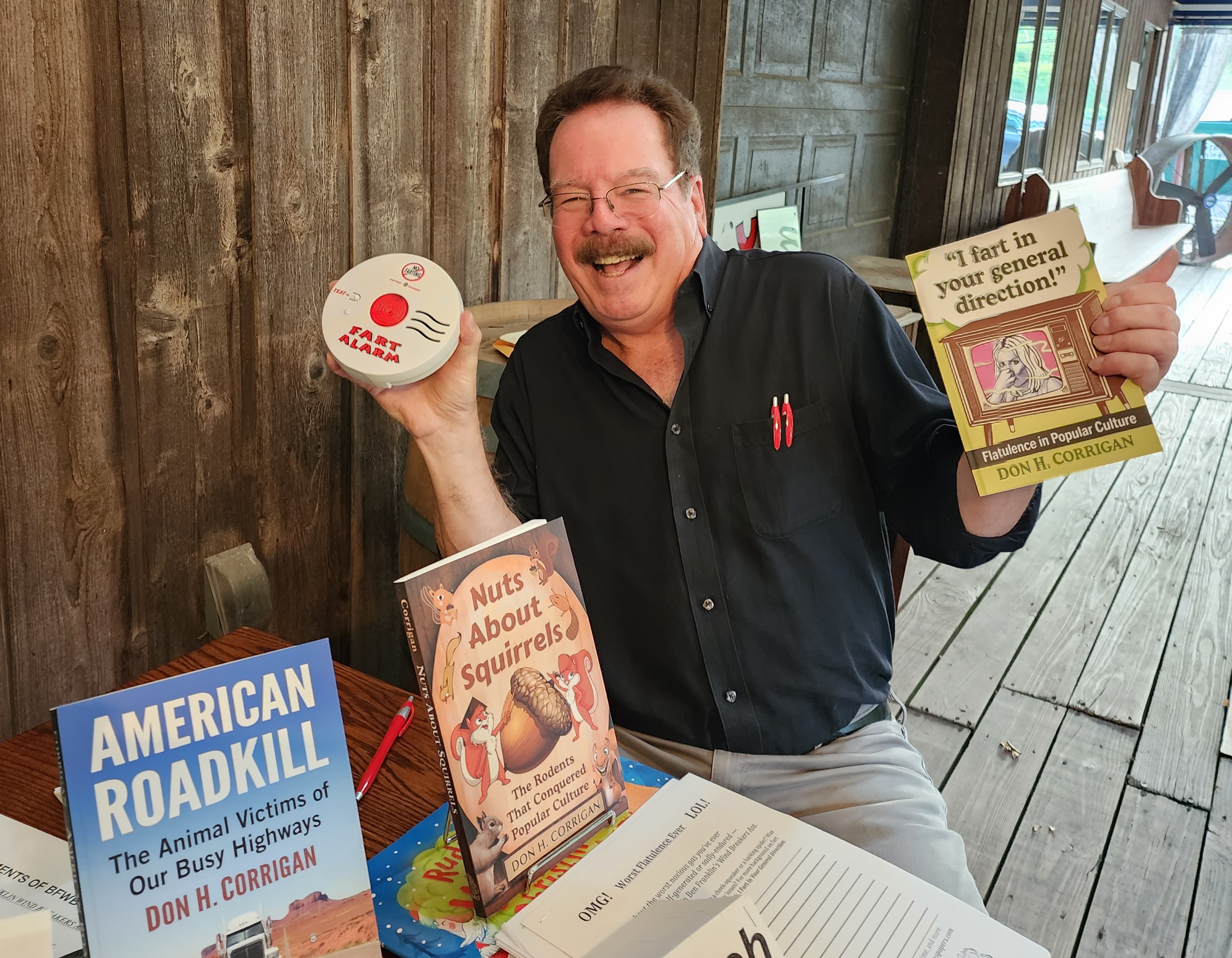
 by Don Corrigan
Environmental book author and EE reporter Don Corrigan is looking for skinny-dipping tales from Missouri outdoor enthusiasts for a paper presentation in Atlanta this spring. He can be reached by email at: corrigan@timesnewspapers.com.
Corrigan’s paper, “Skinny Dipping & Happiness,” has been accepted for presentation at the annual convention of the Popular Culture Association of America in Atlanta in April.
When the Founding Fathers wrote about “Life, Liberty and the Pursuit of Happiness,” they neglected to emphasize how integral skinny-dipping was to happiness in a new land, according to Corrigan.
“Less than 100 years later, Mark Twain, a son of Missouri and America’s premiere scribe, captured the joy of skinny-dipping when writing about Huck Finn swimming in the Mississippi River just east of Hannibal’s Cardiff Hill,” Corrigan said.
Twain conveyed the sense of youthful freedom associated with swimming naked in rivers, a popular 19th century pastime. The act of skinny dipping became a literary motif for innocence, connection with nature, and youthful rebellion against prudish convention and traditional mores.
Today, Twain’s Missouri is known as the “Great Rivers State,” a slogan reflecting its rich river heritage, including the great rivers which form its borders, and more than 110,000 miles of streams.
Tales and folklore involving skinny-dipping come from every corner of the Show-Me State. Skinny-dipping has taken place in Twain’s river waters, in sinkholes and underground lakes found in caves, and in rocky shut-ins and what’s left of the calderas of ancient volcanoes.
Folklore from these locations runs deep and wild. Corrigan notes:
• Centuries ago, Native Americans who swam in the buff below Mississippi River bluffs, had to worry about being carried off by the Piasa Bird, a giant carnivore.
• College kids from the University of Missouri have taken dips at the Pinnacles north of Columbia for more than a half century – under the “senile ridge” of the deteriorating bluffs that give the Pinnacles their name and reputation.
• Skinny-dipping by hippies at Castor River Shut-ins drove the widow Amidon to sell it to the state so rangers could patrol the nature site bearing her name.
• Skinny dippers at Blue Spring in Missouri may learn that they are in waters once enjoyed by a mischievous mule named Popcorn, who swan-dived off nearby bluffs.
“Skinny dipping can be healthy and can boost moods, improve circulation, and increase Vitamin D exposure,” said Corrigan.
“Skinny dipping is a source of happiness and fun pop culture folklore, but it also carries risks from sharp underwater rocks snagging vitals, to legal issues such as trespassing and public indecency charges.
 Environmental Echo