
By Don Corrigan
It’s easy to think that renewable energy has hit a wall both in Missouri and nationally. Political forces have aligned like the planets, at all levels, to declare war on green energy.
Not every environmentalist is glum, however. There’s a silver lining out there somewhere. Even so, the prospects for renewables do not look very bright at this point in 2025.
Consider that:
• Billions in budget subsidies have been cut for home solar and energy efficiencies
• Wind and solar energy projects will be shut down and new ventures are shuttered.
• Congress has passed bills to support a revival of mining and drilling in America.
• Missouri has a statehouse majority that has signed onto more mining and drilling.
• A 2008 initiative passed by voters to encourage renewables is largely forgotten.
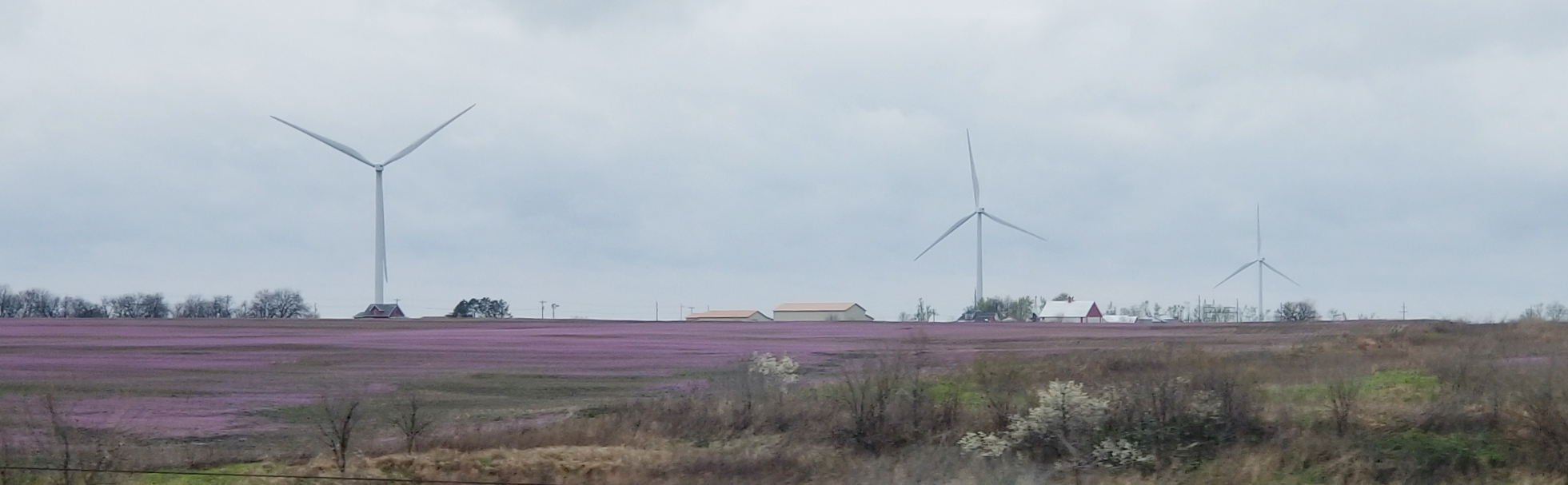
Also in Missouri, Attorney General Andrew Bailey has declared war on the Grain Belt Express transmission line to deliver green energy throughout the state. The powerline to deliver wind-generated electricity from Kansas, through Missouri to Indiana has faced roadblocks before.
Cities in Missouri that were looking forward to buying cheaper, greener electricity are frustrated. Among the cities waiting on Grain Belt Express transmission line completion are Columbia, Hermann, Kirkwood, Hannibal and more than 30 other municipalities.
In 2008, Missouri voters passed Proposition C by a whopping 66% to 34% margin. Proposition C requires that Missouri utilities expand investment in clean energy sources like wind and solar to reach renewable energy targets.
Despite that overwhelming popular support for clean energy, leadership in the Missouri legislature failed to carry out the will of the people by supporting and accelerating clean energy expansion.
Even though the cost and environmental advantages of clean energy has overcome the lack of political will in many other U.S. states, legislative inaction in Missouri has slowed clean energy expansion.
What Polls Say:
A recent Associated Press story cited polling done in 2025 that shows that public support for clean energy like wind and solar has eroded since 2022. American support for renewables is lowest among Republicans, but has even lost some support among Independents and Democrats.
Renewable energy supporters blame the loss of support on opposition from President Donald Trump. He has criticized solar as inefficient and unreliable, because sunlight is not always dependable.
He also has taken aim at turbine-powered electricity, which must depend on windy days and the weather. He has described the turbine structures as ugly windmills that take a toll on bird populations.
John Hickey, a past head of the Sierra Club in Missouri, said the seeming loss of support for renewables that was reported by the Associated Press should not depress Show-Me-State environmentalists. He said the fine print in the AP account actually tells a different story.
The AP polling by NORC Center for Public Affairs Research showed that public support was substantially higher for solar farms (52%) and wind farms (41%) than for offshore drilling for oil and gas (33%) and coal (23%).
“When you get into the fine details, the polling cited by AP actually shows that clean energy is still the preference for the majority of people in the United States,” Hickey said.
Hickey said he believes market forces will eventually make green energy a winner in competition with older, dirtier fossil fuels. However, spokesman for alternative energy industries are angry over the recent passage of the so-called “Big Beautiful Bill” in Congress that takes aim at renewables.
“This bill will strip the ability of millions of American families to choose the energy savings, energy resilience, and energy freedom that solar and storage provide,” said Ross Hooper, president of the Solar Energy Industries Association.
Clamoring For Renewables
Hickey points out that in 2010, Missouri generated 81% of its electricity by burning coal. By 2023, coal’s share of electricity generation was down to 59%.
Dirty coal cannot be cleaned up, and adding scrubbers to old plants to lessen pollution is inefficient and terribly expensive, especially when coal mining and coal transport costs are added.
Solar, wind and energy efficiency are displacing coal as the preferred source of electricity in Missouri, as is reflected in the phaseout of coal plants in the St. Louis region.
“Coal cannot compete on price with clean energy and look at Missouri as an example,” said Hickey. “The Meramec Coal Plant in St. Louis County closed in 2022. The Rush Island Coal Plant in Jefferson County closed in 2024.
“The Sioux Plant in St. Charles County is scheduled to close in 2032. The Labadie plant in Franklin County is scheduled to close in 2042,” added Hickey. “Despite Trump’s rants against clean energy, coal plants are closing across Missouri, and across our country.”
Hickey said President Trump and Congressional allies may be able to slow down clean energy investment, but he said the economic and environmental advantages of clean energy will continue to drive the transition away from dirty energy.
“Consider that 40 cities across Missouri are choosing to contract with the Grain Belt Express for wind energy,” said Hickey. “Those cities include Kirkwood, Rolla, Farmington and more. Municipalities across rural Missouri are signing up to switch from dirty coal to wind energy.”
 Environmental Echo