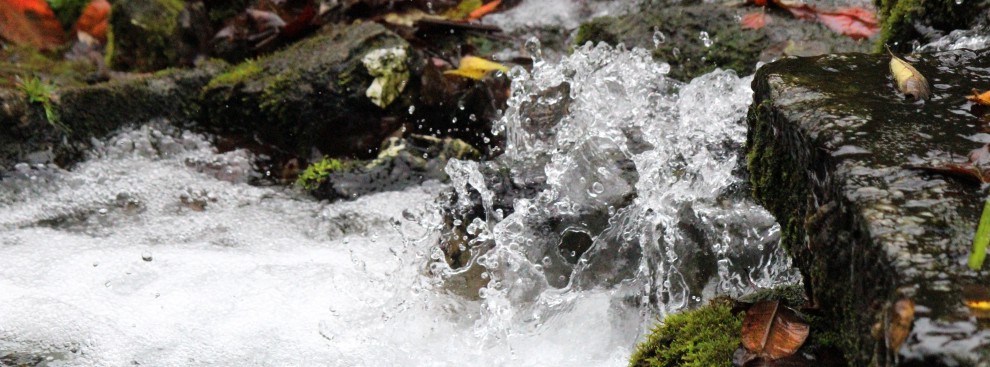
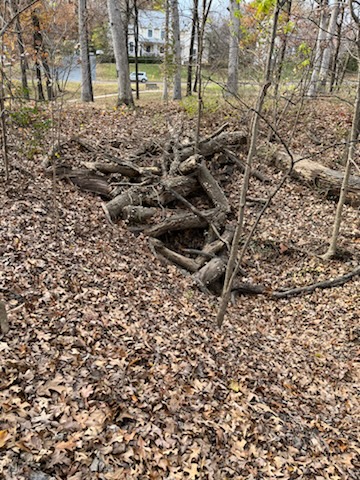
Sinkholes in Blackburn Park in Webster Groves are relatively small, but can clog with leaves and brush.
by Don Corrigan
Missouri is famous for mood rings, monster trucks, ice cream cones, toasted ravioli, floatable streams and show caves. Something the Show-Me-State should also be known for is its sinkholes.
Missouri is the Sinkhole State with huge, medium and teeny sinkholes. It has urban and rural, prairie and forest sinkholes. Technically a sinkhole is defined as a natural depression in the ground that can swallow lots of rain, but also on occasion a car or even a house.
For a good look at some small suburban sinkholes, take a walk in Blackburn Park in the St. Louis suburb of Webster Groves. For a good look at rural sinkholes, take a drive to Boone County south of Columbia.
The largest known sinkhole in Missouri encompasses approximately 700 acres southeast of where Interstate 70 crosses the Missouri River. Records are not kept about depth, but some sinkholes in Boone County are greater than 100 feet deep.
Rock Bridge Memorial State Park, located five miles south of Columbia, is a 2,273-acre park with sinkholes, a rock bridge, and an underground stream. The park also has a trail called the Sinkhole Trail.
Heavy rain across southern Missouri this fall opened up a new set of problems beyond flooding – sinkholes. When they open, they can swallow garages, houses and drain lakes and ponds.
The suburb of Webster Groves and parts of South St. Louis County are dotted with sinkholes, according to Missouri Department of Natural Resource geologic maps.
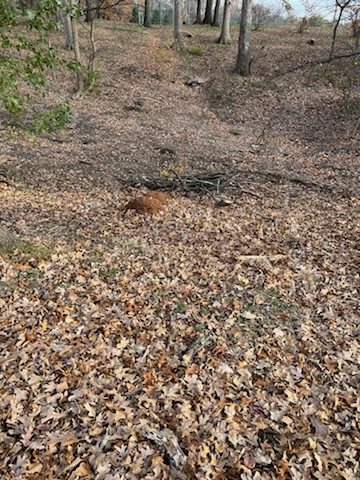
The inclines in park sinkholes can attract kids and sleds with winter snow.
A DNR map shows sinkhole locations throughout St. Louis and the state of Missouri. Anne Lamitola, who has served as director of public works for Sunset Hills and Ladue, notes that there is a concentration of sinkholes in the in Sappington area of St. Louis County
There is another large sinkhole in Sunset Hills off of Maret Drive near Laumeier Sculpture Park. According to Lamitola. Sinkholes can be a sign of potential trouble.
“We do get complaints about areas in Sunset Hills that seem to remain constantly wet, and the issue there is springs,” Lamitola added. “However, it may be that nearby sinkholes are responsible for funneling the water into those places.”
Sinkholes: No One’s Fault
Sinkholes are no one’s fault, unless you want to point a finger at Mother Earth. Some geologists argue that they are Earth’s way of playing practical jokes on unsuspecting humans.
Missouri has a karst geology, a landscape characterized by caves, springs, sinkholes and “lost streams,” created as groundwater dissolves soluble rock such as limestone or dolomite.
A sinkhole is a rounded depression in the landscape formed when underground cavities collapse. Several sinkholes in Webster’s Blackburn Park have provided fun places to sled and play for kids. However, unstable sinkholes can pose dangers.
Sinkholes can be unpredictable. For this reason, they should not be used to drain waste water or storm water. The city of St. Louis learned this the hard way in the cholera epidemic of 1849.
Gallons and gallons of waste water pumped into sinkholes resurfaced to cause deadly disease in a period of flooding. No one can guarantee that they won’t cause problems at some point, especially if they clog.
Water that drains into sinkholes at Jefferson Barracks will resurface in several springs along the Mississippi River, according to “Geologic Wonders and Curiosities of Missouri” by the late Thomas Beveridge.
Beveridge wrote that a number of those springs have flowed black in the past, an indication of severe pollution. One advantage in dealing with sinkholes in the Jefferson Barracks area is that the military records.
The military has been mapping the area for more than 150 years and officials have ground maps with all the sinkholes identified. Officials at the military post at Jefferson Barracks said sinkholes are just fissures in the rock below the ground, that cause the ground itself to depress, collapse and cave in.
“They open and they close. They get plugged up and create ponds, and then they open and the ponds disappear,” said a Jefferson Barracks spokesperson. “They can be pretty unstable. It’s pretty risky business if you build a road or a house on top of a sinkhole area.”

