
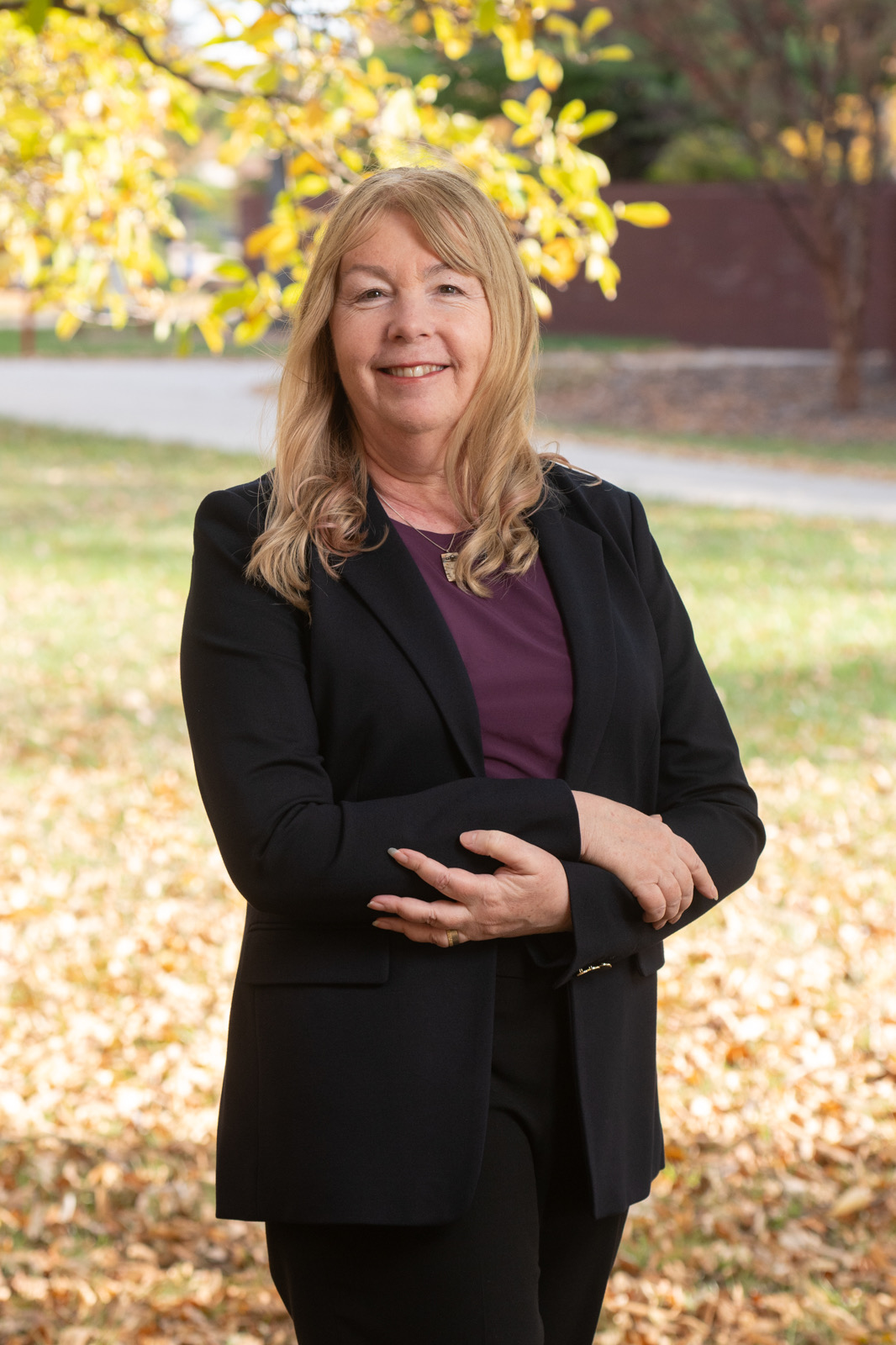
SIU-E Professor of Environmental Sciences Dr. Sharon Locke has been conducting GHG inventory studies throughout the St. Louis metro area. Inventory studies of greenhouse gas emissions provide cities with benchmarks to track and compare emissions for years to come.
by Don Corrigan
Webster Groves, Mo., might seem an unlikely candidate for a greenhouse gas emissions study. It lacks factory smokestacks or methane-belching landfills. Nevertheless, residents can learn about a city GGI study in September.
The Webster Greenhouse Gas Inventory (GGI) Report is preliminary. A full report goes to the city council in October. The GGI presentation at 7 p.m., Sept. 3, at Webster Groves Public Library will provide details on how and why the study was conducted.
Residents may be surprised to learn that quiet, idyllic, suburban Webster Groves is responsible for hundreds of tons of emissions sent into the atmosphere annually. Also of note: Something can actually be done about this situation.
The session on the inventory program will be presented by Sharon Locke, professor of environmental sciences at Southern Illinois University at Edwardsville; and by Shawn Finnegan, who serves as sustainability coordinator for Webster Groves.
“Webster Groves contracted Dr. Locke and a graduate student intern to conduct an inaugural inventory of greenhouse gas emissions,” said Finnegan. “The initiative identifies major sources of GHG emissions at, both, the community and government levels.
“By analyzing these emissions and their sources, our city can adopt ‘best practices’ to reduce its carbon footprint,” Finnegan explained. “And, by doing that, the city can contribute to regional and global sustainability goals.”
Finnegan said Locke teaches college coursework in environment, sustainability, watershed management and conservation. Her main interest these days is community-engaged research with local governments.
Through local partnerships, she has developed city greenhouse gas inventories for Granite City and Collinsville, Illinois and the St. Louis metropolitan region. Locke holds global leadership roles in geoscience education and received a Fulbright Specialist Award in 2023.
Collinsville GGI Study
Collinsville is a St. Louis suburb in Illinois that is roughly the same size and population as Webster Groves with about 25,000 people. Both communities are largely residential and are served by outside utilities.
In the Collinsville study, Locke found that residential use of electricity and natural gas by homes, offices and schools accounted for more than 160,000 tons of CO2 emissions annually. Non-residential properties produced another 87,000 tons.
Other GGI emissions studied in Collinsville involved transportation, both private and public; solid waste disposal emissions; and processing water and waste water treatment emissions.
The 38-page study made recommendations on ways that Collinsville could address its emissions production of gases determined to be major contributors to climate change. Finnegan noted two ways that Webster Groves is already reducing its carbon emissions.
“Currently, the city has two different financial incentive programs available to help residents and businesses reduce their carbon footprint,” said Finnegan. “They are the Solar Rebate Program and the Green Dining Microgrant Program.
“The Solar Rebate Program offers residents a $500 rebate for installing solar panels on their homes,” explained Finnegan. “The Green Dining Microgrant Program offers food service businesses grant funding to help lower environmental impact, specifically targeting energy efficiency improvements.”
The Collinsville study included recommendations for programs promoting more efficient use of water, increased use of LED lighting in the city, more use of electric vehicles in the city fleet and the installation of more charging stations.
Roadmap For Webster
“I see our GGI inventory as providing a roadmap for us,” said Finnegan. “Benchmarking emissions has so many benefits. It helps identify areas for improvement, sets realistic goals for reduction, and finds appropriate strategies for a good return on investment.
“There are so many different ways this inventory can be used, but the greatest advantage is that it provides a starting point,” added Finnegan. “Without an analysis of our emissions, any effort to reduce our carbon footprint in the future is just shooting in the dark.”
The Sept. 3 WGPL session on the emissions inventory program is part of the regular Eco-Ed Awareness program. After a brief hiatus in July and August, the series is picking up with the meeting entitled: “Results Are In: Webster Groves Greenhouse Gas Inventory.”
The final 2024 Eco-Ed session is slated for Oct. 1 and is titled, “Watershed Wander: Shady Creek Discovery,” conducted by David Wilson. He will lead an eye-opening walking tour of the Shady Creek Watershed in Larson Park.
The Eco-Ed Lecture Series is jointly hosted by the Sustainability Commission and the Green Space Advisory Commission. All of the events are free and open to the public and provide information from field experts in the St. Louis region.
Both commissions are working on topics for the 2025 series, which will likely be released in early 2025. There will be a slot on recommended actions for reducing the city carbon footprint as a result of the GGI study.
 Environmental Echo