
by Don Corrigan
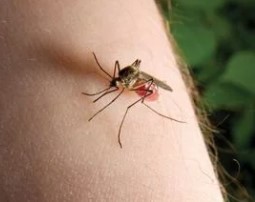
Missouri has reported a number of deaths over the past decade from mosquito-borne West Nile virus. Health officials recently warned that the potentially lethal virus has been found in biting mosquitos St. Louis County.
In late July, Saint Louis County Department of Public Health recorded its first instances of West Nile virus positive mosquitoes this year. The detected virus serves as a heads up that mosquito prevention remains critical, especially with this summer’s heavy rains.
“The presence of West Nile virus positive mosquitoes in our area is a reminder that preventive measures are very important,” said Dr. Kanika Cunningham, county health department director. She said measures can be taken by the county, its municipalities and informed citizens.
West Nile virus is the leading cause of mosquito-borne disease in the continental United States. It’s most commonly transmitted to humans by infected mosquitos during the summer months.
Most people infected by the virus do not feel sick, although about 1 in 5 people who are infected develop fever or other symptoms. The symptoms can include headache, body aches, joint pain, vomiting, diarrhea, or rash.
About 1 out of 150 infected people develop a serious, sometimes fatal, illness. The Webster-Kirkwood area has experienced infections and even fatalities in the past.
“Even though serious West Nile virus cases in humans are rare, it is important to minimize our exposure,” said Cunningham. “We can do this by eliminating opportunities for mosquitoes to breed and multiply. We can take steps to prevent mosquito bites.”
There is no vaccine to prevent, or medications to treat, West Nile Virus in humans. People who are at high-risk for severe illness include: adults over the age of 50; immune-compromised individuals; and those with other chronic illnesses including cancers, diabetes, hypertension, and kidney disease.
Humans, Birds & Pets
Eastern Missouri had some of its worst outbreaks of West Nile Virus in the early 2000s. The virus was especially hard on birds, and crows virtually disappeared from areas of Missouri for several years.
In 2002, there were 129 reported cases of human West Nile Virus in the Metro St. Louis area. Sixty-two of those cases came from St. Louis County, 56 from the city of St. Louis.
There were five deaths attributed to West Nile in Missouri in 2002.
In crows, the disease is nearly 100 percent fatal. For those weary of crows spilling garbage onto streets, or tired of waking to the sharp sounds of their “caws,” the disappearance of crows may not represent bad news.
However, ornithologists caution that humans should not be glad to see any large change in a population of birds. The fluctuations can impact certain ecological balances.
Common backyard birds – such as robins, mockingbirds and sparrows – are more susceptible to West Nile than pigeons and doves. Raptors may move into areas to fill the ecological void left by a diminished crow population.
West Nile is a bird virus and domestic birds are equally at risk as the native bird populations. On the other hand, pet populations are less susceptible to the virus. It’s generally rated as a “non-risk” as far as cats and dogs are concerned.
County Health Director Cunningham noted two programs that address the issue of West Nile Virus. The DPH Vector-borne Disease Prevention Program provides comprehensive vector-borne disease prevention.
These control services are guided by an Integrated Pest Management (IPM) regimen. IPM is an evidence-informed, ecosystem-based strategy that uses a combination of control techniques that are effective to protect public health, as well as the environment.
The program routinely collects mosquito samples throughout Saint Louis County to test for the presence of WNV and other arboviral diseases to help determine where to focus control efforts.
For unincorporated Saint Louis County and municipalities that contract with DPH, the program monitors and treats standing water in public areas as part of its preventive larviciding program.
Larviciding uses sprays for adult mosquitoes in areas with reported West Nile-positive mosquitoes or high numbers of the types of mosquitoes that transmit the virus.
To find out where the county will be spraying, call 314-615-4-BUG (314-615-4284) for the nightly mosquito- spraying schedule.
For more information on mosquito prevention, contact DPH’s Vector-borne Disease Prevention Program office at 314-615-0680 or visit the program’s website at: https://stlouiscountymo.gov/st-louis-county-departments/public-health/vector-borne-disease-prevention/
What Residents Can Do
The St. Louis County Health Department offers these steps that residents can take to prevent the spread of West Nile virus:
• When outdoors, wear long-sleeved shirts, long pants, and light-colored, loose-fitting clothing.
• Apply insect repellents registered by the Environmental Protection Agency (EPA) that contain one of the following active ingredients: DEET, picaridin, oil of lemon eucalyptus, para-menthane-diol, or IR3535. Always follow the directions on the label.
• Do not use products that contain oil of lemon eucalyptus or para-menthane-diol on children younger than 3 years of age, and never apply insect repellants of any kind to children under 2 months of age.
• Although the risk is low, it can be possible for a pregnant woman to transmit the virus to her baby during pregnancy, delivery, or breastfeeding. Guidance from the Centers for Disease Control and Prevention (CDC) emphasizes that insect repellent is safe to use during pregnancy to prevent mosquito bites.
• At least once a week, residents should eliminate any sources of standing water by draining garbage cans, buckets, toys, flowerpots, wading pools, pet dishes, and other objects.
• Treat birdbaths, decorative ponds, and other water sources that cannot be drained with products containing the active ingredient Bacillus thuringiensis israelensis , also known as Bti, a naturally occurring bacterium.
• Ensure that drainage pipes are properly sloped. Flexible drainage pipe is commonly used to drain water from downspouts. However, if it is not properly installed, the pipe can hold water and breed mosquitoes.
 Environmental Echo