Monthly Archives: June 2024

Video

Saint Louis Zoo WildCare Park Projected to Generate Over $660 Million in Regional Economic Impact Within 10 Years

The Saint Louis Zoo WildCare Park released a new fly-through rendering video and an economic impact report projecting that the project will generate over $660 million in economic activity across the St. Louis region within the next 10 years.

“We are creating a place where endangered and threatened animals can thrive,” said Dwight Scott, Dana Brown President & CEO, Saint Louis Zoo. “But this report makes it clear WildCare Park will help the regional economy thrive too.”

WildCare Park, a safari park and conservation center under development in north St. Louis County, is expected to open to the public in 2027.

The economic impact report totals WildCare Park’s estimated operational expenditures, visitor spending both on and off site and the project’s larger impact on regional employment and wages, business sales and tax revenue through 2034.

The report estimates WildCare Park will generate:
– Average attendance of 421,900 guests each year after opening with approximately 65% of guests originating from outside St. Louis City and St. Louis County.

– WildCare Park guests will spend about $184 million at regional businesses outside of the safari park within the next 10 years.

– An annual average of 384 jobs, which includes positions at WildCare Park and in the region.

– A total of $97.3 million in governmental revenue, including $49.9 million in state and local tax revenues.

Jason Hall, CEO of Greater St. Louis Inc., applauded the combined economic impact of both the Saint Louis Zoo in Forest Park and WildCare Park in north St. Louis County, expected to total over $2.5 billion over the next decade.

“The Saint Louis Zoo alone already averages around $200 million of economic value annually, a number enhanced by its considerable cultural impact,” said Hall. “With the additional value WildCare Park brings to the metro, the Zoo will continue to act as an increasingly significant economic engine for our region.”

The development of WildCare park is estimated to cost $230 million funded through multiple sources, including philanthropy, external financing proceeds, which includes Zoo and Saint Louis Zoo Association cash reserves and tax revenue generated by Prop Z passed by St. Louis County voters in 2018. With the passage of Prop Z, St. Louis County residents will be able to experience WildCare Park admission-free.

“WildCare Park will bring with it a major tourism boost for our region and an economic boost for north St. Louis County,” said St. Louis County Executive Dr. Sam Page. “The Zoo is a favorite of locals as well as a national tourist destination and WildCare Park will join the list of must-sees when in the St. Louis region.”

The report estimates that guests to WildCare Park will generate significant spending in a wide range of local industries.

“This project is an amazing opportunity for businesses in north St. Louis County,” said Rebecca Zoll, President/CEO North County Inc. “With around $184 million in off-site guest spending over the next decade, hospitality, retail, transportation and entertainment sectors will all get a significant boost.”

Even before WildCare Park opens to the public, the organization is staffing up with quality full-time positions and will post the job openings on its website here: stlzoo.org/employment.

“We want WildCare Park to be a job creator within and beyond its gates for the region,” said Sabarras George, Saint Louis Zoo WildCare Park Director. “As we grow, I look forward to seeing our region’s businesses do the same.”

Tourism Economics and Canopy Strategic Partners prepared the WildCare Park economic impact report based on analysis from the economic impact model IMPLAN. The operational spending accounts for expenditures from 2021 through 2034, which includes planning and development (2021 through 2026) and the first eight years of operations (2027 through 2034). The guest spending impacts are for the eight-year period from 2027 through 2034. Impact modeling is based on an IMPLAN input-output (I-O) model for two regions: City of St. Louis/St. Louis County and St. Louis, MO-IL metropolitan statistical area (MSA).

The economic impact report and more updates on WildCare Park are available at stlzoo.org/wildcarepark.

About Saint Louis Zoo WildCare Park  

Located in north St. Louis County with a target public opening of 2027, the Saint Louis Zoo WildCare Park features two completely different, but complimentary components. The first is what the public will experience: An outdoor adventure that sends guests on a safari through herds of animals roaming wild over gently rolling, grassy meadows and through native forests. The second component is the Kent Family Conservation and Animal Science Center, a dedicated conservation facility within WildCare Park designed to sustain endangered and threatened species, made possible by the generosity of the Jerry and Judy Kent Family. The 17 animals on site now live in the pastures and barns in this area, while the remainder of the barns and pastures are constructed.

Over the last two years, activity at WildCare Park has included demolition of a few older buildings, fence installation and grading around the perimeter of the property, restoration of 260 acres from golf course turf to native grasses, removal of honeysuckle and other invasive plant species, construction of barns and a utility building, and renovation of the headquarters building with a new observation deck.

The Zoo expects more than 250 animals will live on site by the public opening in 2027. For the public opening, the focus is on endangered ungulates — hoofed mammals such as Grevy’s zebra, addax, Somali wild ass, giraffe and white rhino — as well as kangaroos, birds and other threatened species.
Image

The Audubon Center: Not Just For The Birds!

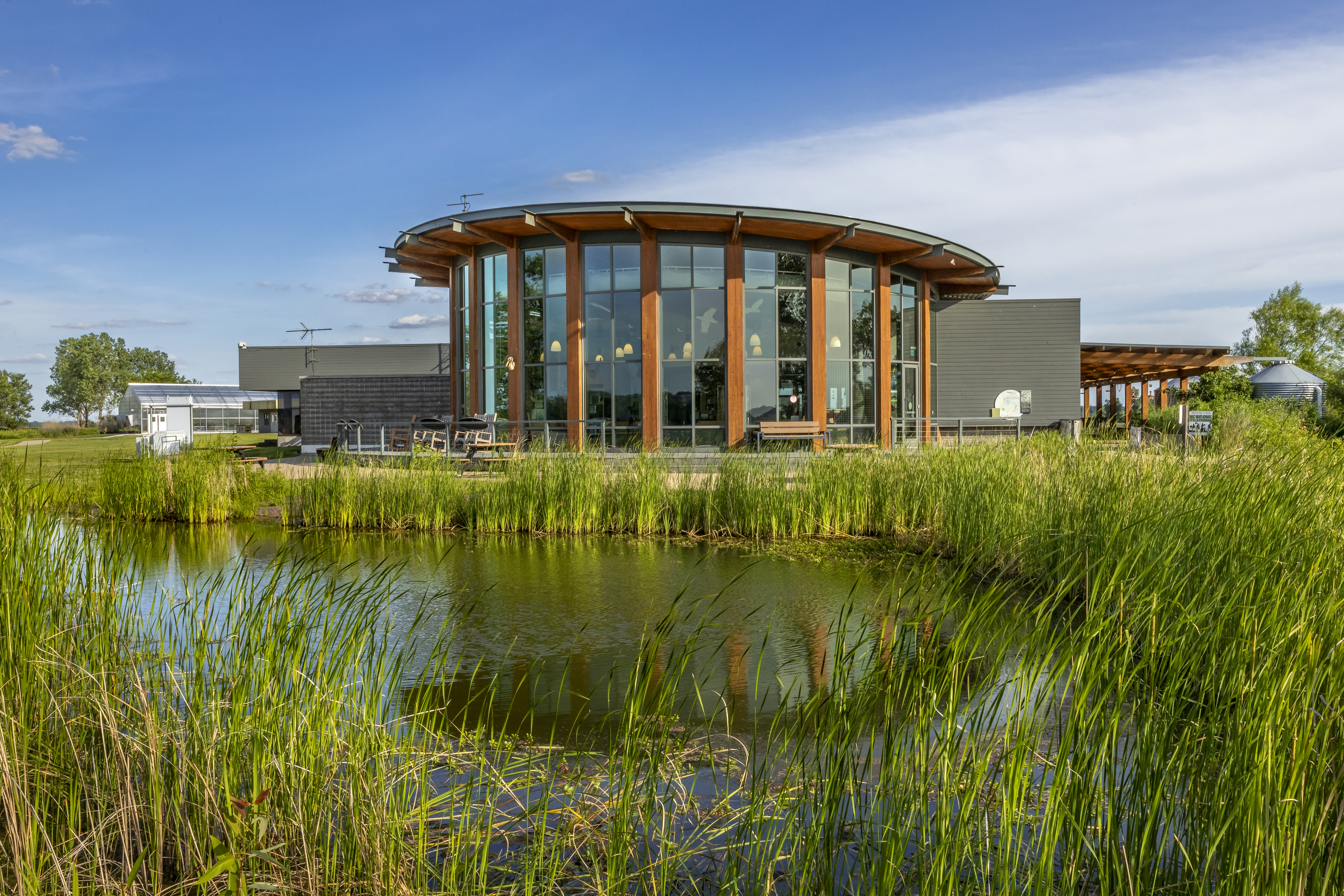
Photo by Rob Schultz. Provided by Ken Buchholz.

By Jess Holmes

Nestled away in an eastern tendril of St. Charles County is avian education center that isn’t just for the birds. The Audubon Center at the Riverlands’ floor-to-ceiling windows display the tall, grassy banks of the Mississippi—a large variety of birds fluttering and gliding throughout the expansive green space.

Visitors can meander the 8.5 miles of hiking trails and learn about the importance of a premier migratory bird sanctuary. Throughout the seasons, more than 300 bird species can be found where this crucial piece of land meets river. The center even provides guests with seasonal checklists, so they know which flying friends to look for.

Natural beauty aside, The Audubon Center, directed by Ken Buchholz for the last eight years, is doing wonders for surrounding communities, Florissant and Ferguson, in particular.

The Center’s mission is “to connect people to the beauty and significance of the Mississippi River and the Great Rivers confluence, to inspire conservation of the river’s rich diversity in birds, wildlife, and other natural resources, and to support healthy, vibrant communities.” They’re doing just that.

Continue reading

Image

Jacks Fork/Current River Trippin’ – Season For Summertime Floats, Nature Site Fun – It’s Here!

by Don Corrigan

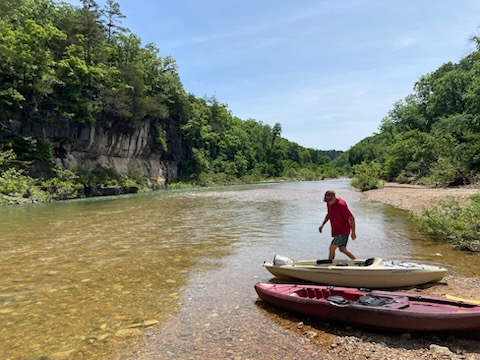
Most Missouri outdoor enthusiasts know the joy of a canoe, kayak or tubing trip down the clear, flowing, pristine rivers of the Ozarks. Did I mention that these Ozark waters are cold!

On a sweltering day, a short swim in the icy waters can shock a hot, sweaty body back to a much cooler reality. And, a river-cooled view of the world can last several hours – before another dunking is required.

Emery Styron, who once published The River Hills Traveler, sold the paper and now lives in Iowa City. Nevertheless, he comes back down to the heart of Missouri for a plunge in the Ozark rivers several times a year.

Continue reading

Horticulturalist Scott Woodberry to Speak at Powder Valley Nature Center June 28

MDC welcomes renown horticulturalist Scott Woodberry to Powder Valley Nature Center Friday, June 28 from 6:30 – 8:30 p.m. who will give a presentation on native plants. After the program, Woodberry will conduct an informative tour of Powder Valley’s native plant gardens.

Planting with natives is becoming more and more popular.  It’s easy to see why.  Native plants can offer beauty for people with lower maintenance requirements and provide essential resources for wildlife and pollinators.

To help educate the public about the benefits of native plants, the Missouri Department of Conservation (MDC) will welcome renowned horticulturalist Scott Woodberry to Powder Valley Nature Center Friday, June 28 from 6:30 – 8:30 p.m.  The nature center doors will open at 6 p.m. so visitors can tour the exhibits. MDC staff will manage tables on topics such as native planting and pollinators.

Continue reading

Busch Outdoor Education Center Invites Families to Fun Day for Kids Event June 25

Photo: Missouri Department of Conservation

The Missouri Department of Conservation (MDC) invites kids of all ages and their families to the August A. Busch Outdoor Education Center’s Fun Day for Kids event Tuesday, June 25 from 3 – 7 p.m.  This is a free event, and no reservations are necessary.

There’s a lot more than shooting at the Busch Shooting Range and Outdoor Education Center, and visitors will get a taste of the varied opportunities to enjoy the outdoors that the range offers.  Fun Day for Kids is an open house-style event, and visitors can come and go at their convenience during the event hours.

Continue reading

MDC Confirms Fourth Invasive Northern Snakehead Captured in Missouri

Photos: Missouri Department of Conservation

Fisheries biologists with the Missouri Department of Conservation (MDC) confirm a fourth northern snakehead has been recorded in the state. The fish was caught by an angler May 25 below Wappapello Lake Spillway in Wayne County.

The northern snakehead fish (Channa argus) is a long bodied, predatory fish that is not native to the U.S. This fish’s head resembles a snake, thus its name. Its body can grow up to 3 feet long with python-like coloration and pattern.

“The angler recognized they had something different and researched the fish’s characteristics, and realized it was indeed a snakehead,” said MDC Fisheries Biologist Dave Knuth. “The angler left it on the pavement for several hours thinking it would die, and it never did.”

Continue reading

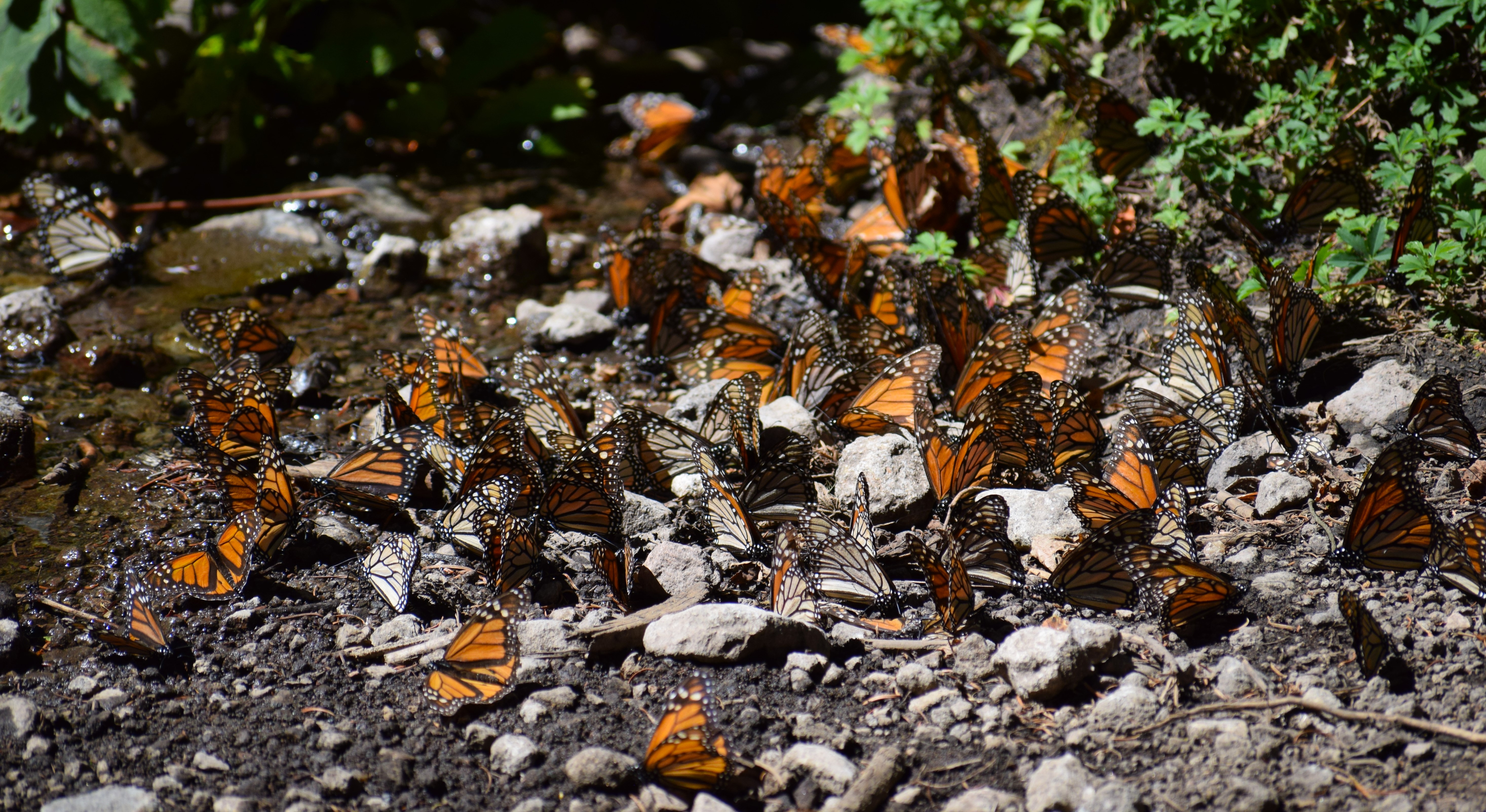
Butterfly Haven In Mexico: Glendale Couple Travels To Miraculous Monarch Hideaway

All photos provided by Rob Koenig.

by Don Corrigan

Glendale retirees Mary Ellen and Rob Koenig made the trek in March to see where Monarch butterflies winter in Mexico. However, the mysterious creatures left a lasting impression – rather than becoming a mere check mark on a bucket list.

“I think we are more passionate than ever about monarchs,” said Mary Ellen Koenig. “I was interested in animal and insects and migrations from an early age, so this was something I wanted to pursue.

“It was quite a trip to see the monarchs wintering near El Rosario,” said Mary Ellen. “A plane to Mexico City, a rocky road with a driver for three-and-one-half hours, a very steep ride on horseback, and then a steep hike up to the monarch haven.”

Continue reading

Image

U.S. Sustainability Award: Washington, D.C. Event To Recognize Nerinx Hall Initiatives 

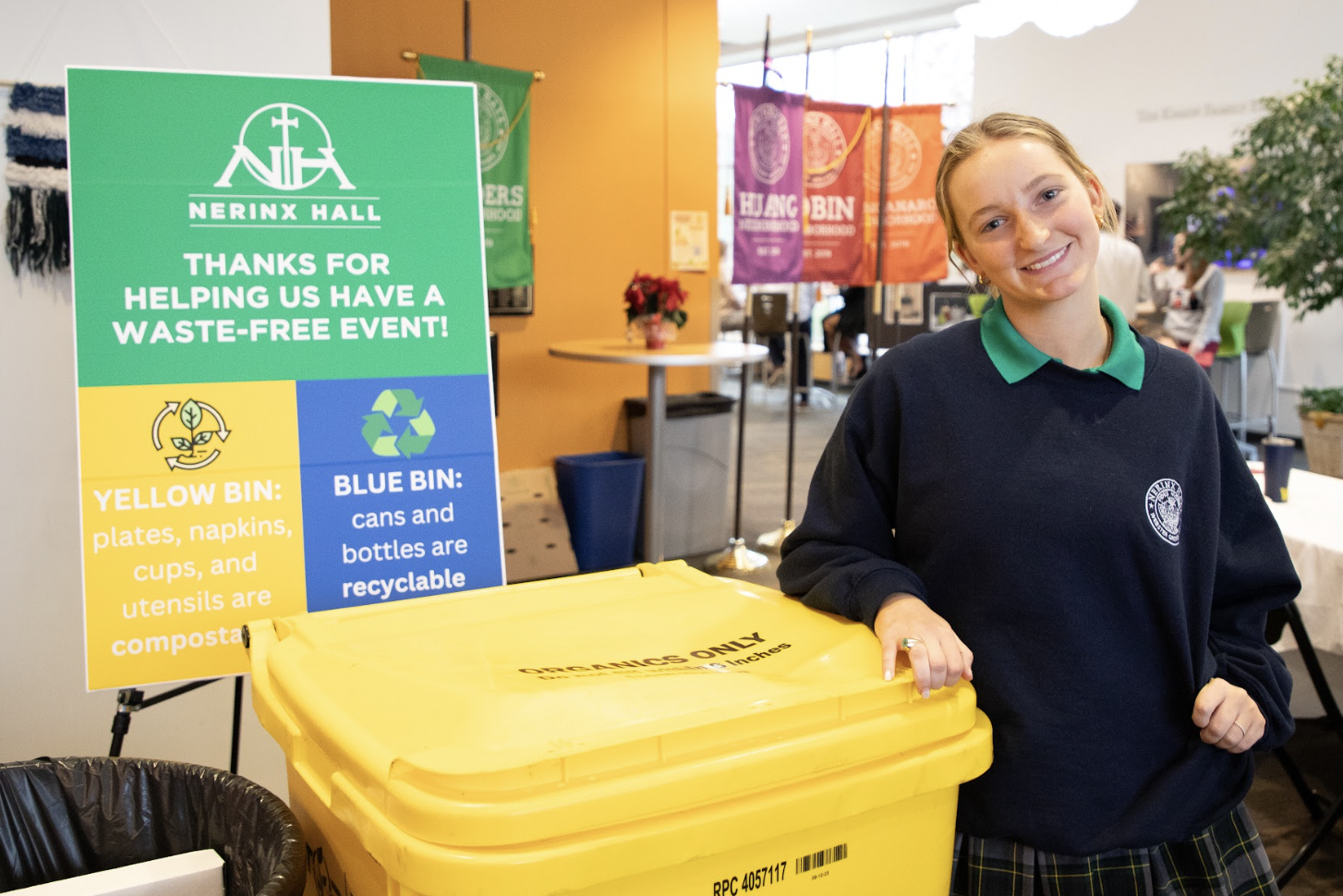
In 2019, Nerinx implemented a school-wide composting program. It extends beyond the cafeteria and includes parent events and rentals as well. Students volunteer to ensure all items are placed in appropriate containers as we strive for zero-waste events.

By Don Corrigan

Nerinx Hall High School in Webster Groves is now a 2024 U.S. Department of Education Green Ribbon School, which recognizes achievement in a school’s commitment to sustainability and environmental stewardship.

Principal Molly Grumich will travel to Washington, D.C., in July when Nerinx will be presented with the honor. Award selections for 41 schools across the nation were made in April in connection with a Summit for Healthy and Sustainable Schools at the White House.

“These awards represent thousands of students, and countless hours of hard work, ensuring equitable access to healthy, climate-resilient learning environments,” said U.S. Education Secretary Miguel Cardona.   “Students are prepared for the sustainability challenges of the present and future.”

Grumich expressed pride in the school’s achievement and attributed the school’s commitment to sustainability and holistic education to traditions of the Sisters of Loretto in Kentucky.

“Our institution prioritizes the empowerment of young women who are deeply engaged with their communities and the world around them,” said Grumich. “This recognition underscores our efforts to instill in our students a profound sense of environmental responsibility and stewardship.”

At their Nerinx, Kentucky headquarters, the Loretto Sisters operate the Loretto Motherhouse Farm. The 789-acre farm emphasizes a responsible relationship with the land with such conservation practices as intensive cover cropping, planting crops without soil tilling and rotational grazing.

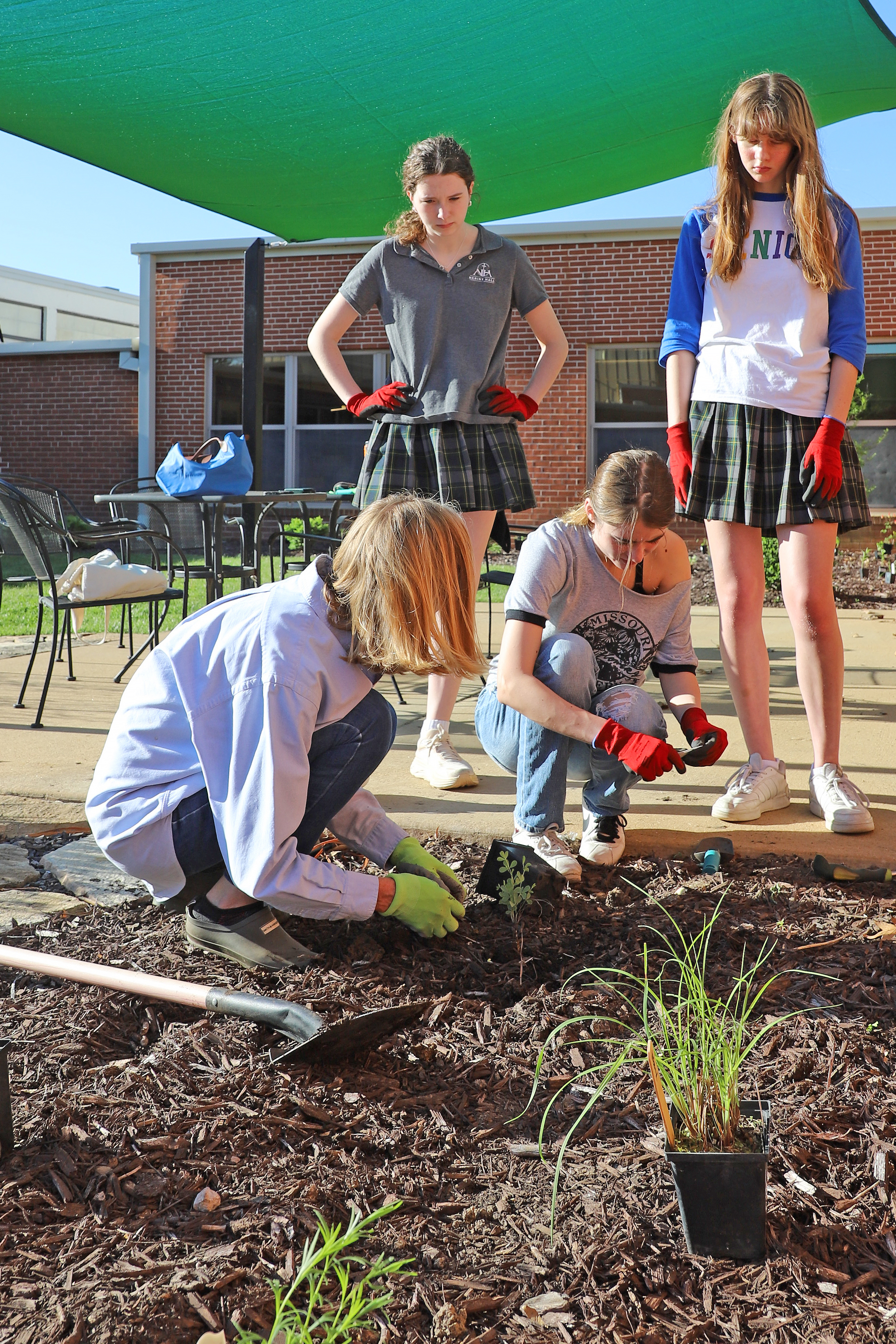
Students researched plants native to Missouri and then sourced a representative sample of the plants and planted them in the courtyard at Nerinx Hall.

Loretto Sisters’ Land Ethic affirms that “those responsible for the land at any particular time should regard it as a sacred trust, received with gratitude, tended with care for its integrity and long-term sustainability.”

The Loretto Community also emphasizes carbon reduction as a way to address climate change and its harmful effects. The Earth can be repaired by sequestering greenhouse gas and planting deep-rooted plants and grasses.

Migrant justice is another tenet of Loretto philosophy with a commitment to inclusivity, diversity and anti-discrimination. Part of learning about the Earth and its needs involves systematically listening to dispossessed people.

Nerinx Planet Patrol

Josie Fedele, president of the students’ Nerinx Planet Patrol, said her high school is excited about the Green Ribbon School Award and the school’s accomplishments. As the patrol president, she wants to redouble those efforts in the 2024-25 academic year.

“Of course, I am concerned about climate change,” said Fedele of Ballwin. “But I want to do things that are doable at the community level. I want to concentrate on composting, on recycling, on finding ways to reduce energy use at our school.”

Jody Patterson, who is director of student access at the school, said composting correctly is not as easy as it sounds. She said the school has found ways to compost everything that’s part of the cafeteria lunch program.

Beth Bucher, who teaches theology at Nerinx, said that religious beliefs commission us to be good stewards of the creation in a way that sustains, protects, and enhances all living things on the planet.

“I am not a real religious person myself, but I know that it’s right to consider the impact of our actions on others and not just for ourselves,” said Fedele of the planet patrol. “One thing I want to address is student stress.”

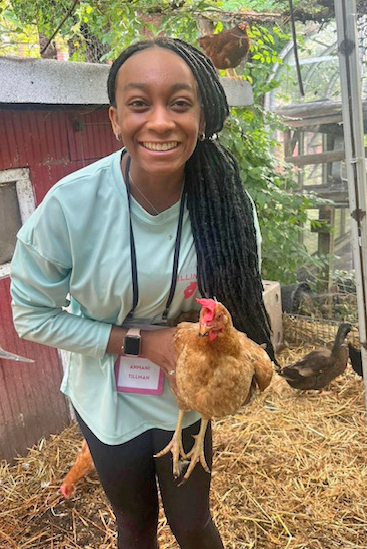
All 11th grade students take part in a program called Junior Experience to enhance connections among classmates, expose students to new programs and ideas through exploration and diversity training, and have fun! Students on this junior experience helped tend chickens on an urban farm.

According to Fedele, working in gardens and caring for native plants can be a stress reliever. She also said she was grateful that Nerinx, and Webster Groves generally, make for a “walkable community” – and she finds walking to be a great stress reliever.

Principal Grumich said the school will continue to look for ways to reduce energy use and has mare great strides by replacing traditional lighting with LED lights. Also, there will be more emphasis on reducing “event trash” that can be harmful aesthetically and environmentally.

Outside on the parking lot, Grumich said the school will work to reduce unnecessary idling by vehicles. Also, there will be organized efforts to encourage more carpooling by students to and from school.

Sustainability By Example

Grumich said sustainabile and environmental practices are best encouraged by example, rather than by scolding others about how their behavior is somehow unacceptable. That approach is consistent with the mission of the Green Schools Award program.

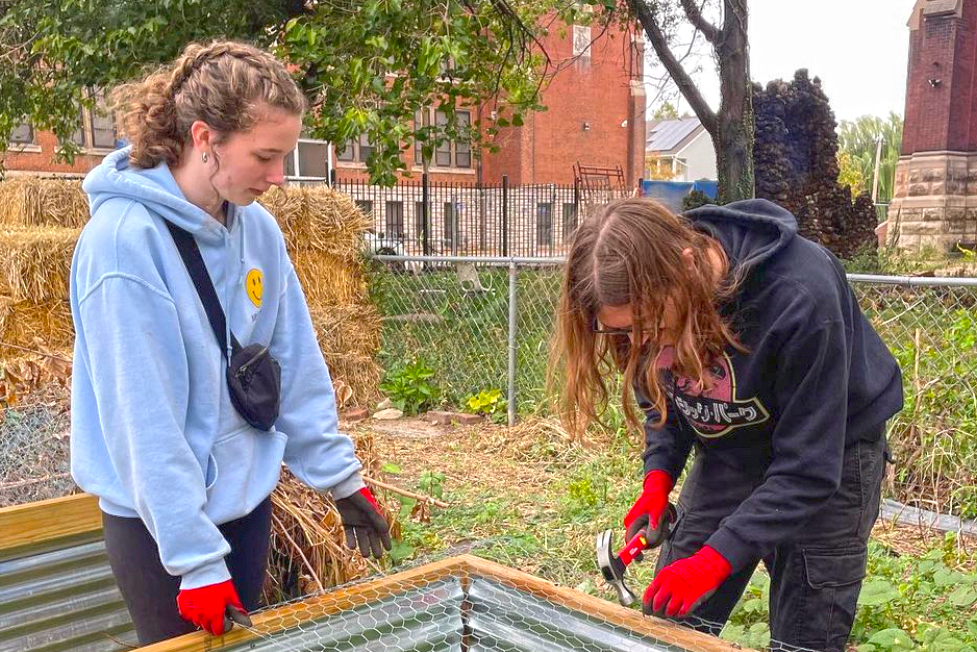
Students in the Eco-Act program regularly perform service at sites dedicated to sustainability efforts. Here, students helped cover raised beds at New Roots Urban Farm.

Nerinx Hall High School on East Lockwood Avenue is receiving the honor in July, not just for its efforts to minimize environmental impacts, but also for enhancing health and wellness initiatives.

“We are not doing sustainable things just to try to win awards,” said Grumich. “These things are all in line with the Loretto mission and in doing the best to empower our young women to make a better future.”

The U.S. Department of Education’s program established the federal recognition awards in 2012 as a platform for promoting sustainable practices in schools nationwide. Nerinx Hall is the first Catholic all-girls school in Missouri to achieve the green award recognition.