
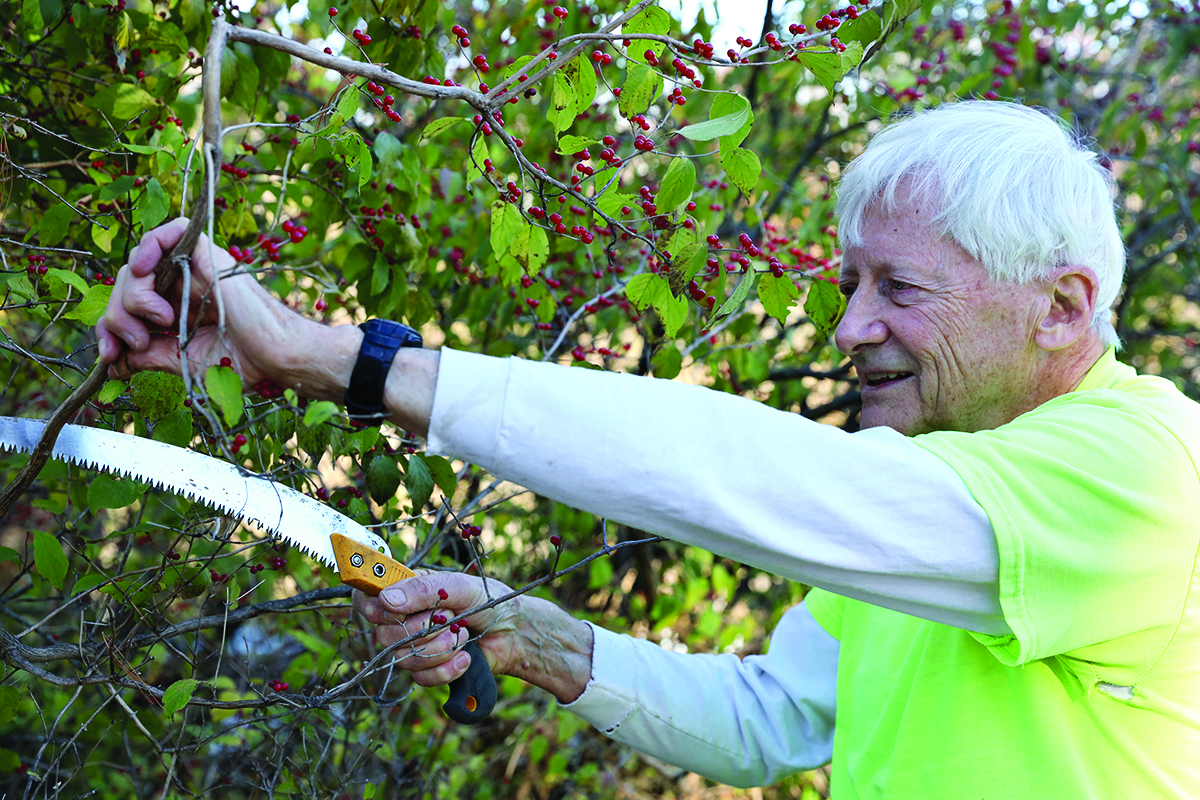
Above: Alan Hopefl clears the invasive honeysuckle bush. Photo courtesy Ursula Ruhl/Webster-Kirkwood Times.
by Don Corrigan
Some people see a bit of Christmas this time of year in the red berries and
fading green leaves of honeysuckle. Alan Hopefl only sees an enemy. He
sees it as an invasive that deserves no quarter.
“I’ve probably done 3,000 hours of honeysuckle cutting just in Emmenegger
Park in the past decade,” said Kirkwood resident Hopefl. “Emmenegger is
close for me. I can get to it walking from my backyard.
“Sometimes when I cut plants down close to a neighborhood, residents will
come out and ask if they can hire me to cut them down in their yard,”
laughed Hopefl. “I am not for hire. I have enough to cut in the park areas.”
Hopefl has been a Kirkwood Park Volunteer since 2010. At that time, he
was involved in all kinds of park work, not just removing honeysuckle. But
since the pandemic, he’s been a one-man team focused on honeysuckle.
“I don’t mind being called ‘the honeysuckle slayer.’ I’m sure I’ve been called
worse things,” said Hopefl. “I have a master naturalist ticket and I’ve
studied the plant enough to know all its bad effects.”
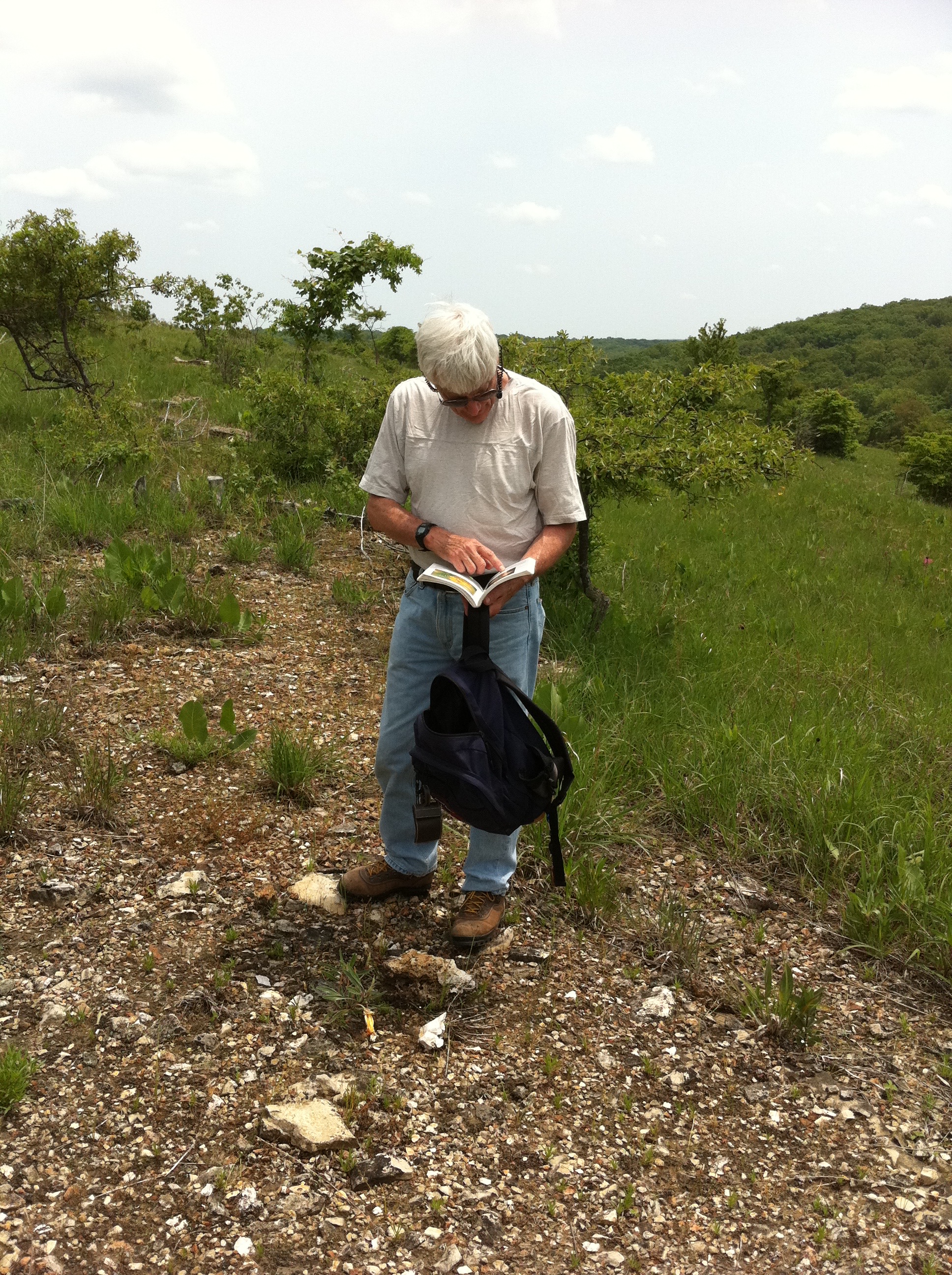
Alan studying Wildflowers of Missouri field guide on WGNSS botany hike at Victoria Glades Conservation Area. Photo courtesy Alan Hopefl.
On the honeysuckle bad behavior list:
• It chokes out good plants and native species.
• It causes ground cover to die off with the shade it creates.
• It’s persistent and extremely hard to eradicate.
• Honeysuckle damages forests and hinders tree growth.
• It attracts birds to eat its berries, which are not nutritional.
“Eating the red berries is not going to supply the energy that migratory birds
need for their long travels,” said Hopefl. “If you love birds, there are lot of
reasons to get rid of the honeysuckle.”
Mind-blowing and Awesome
Kirkwood’s Gwyn Wahlman, an outspoken nature lover, is very familiar with
Hopefl’s work. She is among the local outdoors advocates who believe his
dedication and hard work deserve special public appreciation.
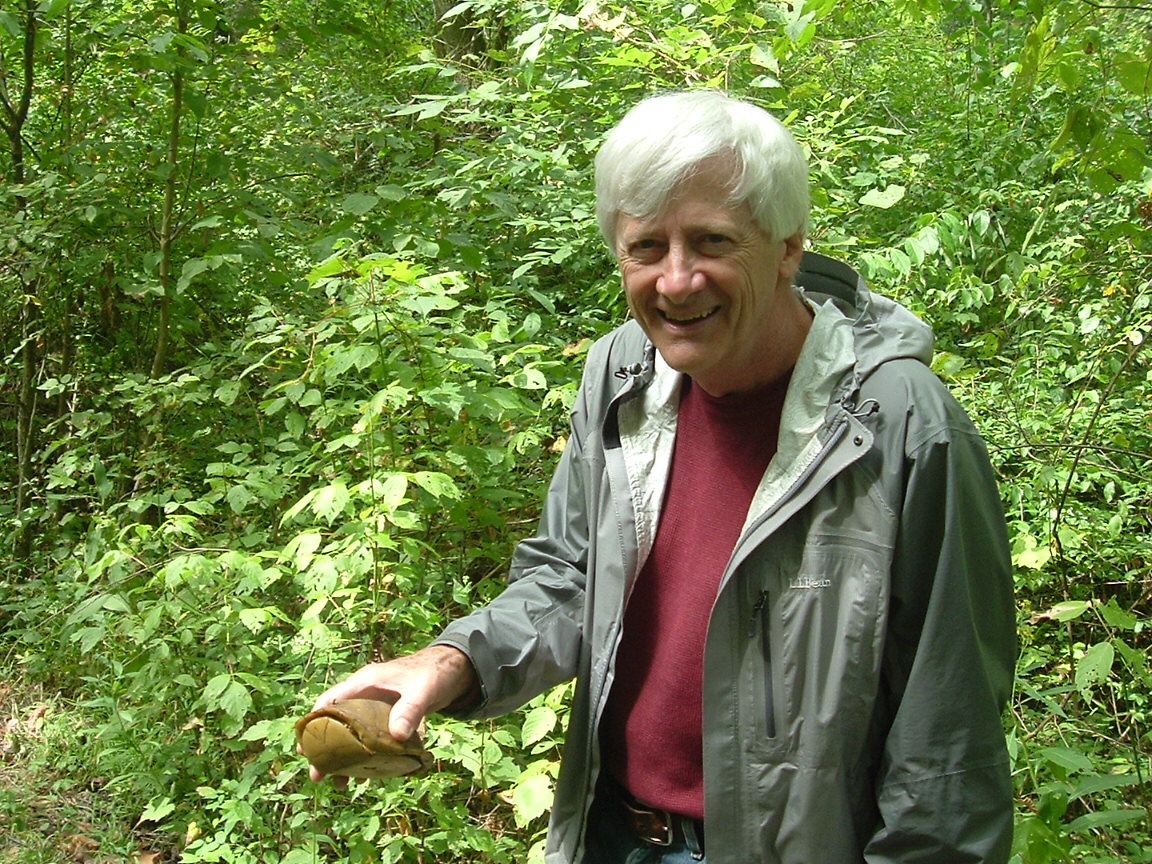
Alan with his new friend at Emmenegger. Photo courtesy Alan Hopefl.
“I was hiking Emmenegger’s loop trail recently and took a jog up the north
spur trail and walked along Cragwold,” noted Wahlman. “The amount of
honeysuckle removal work done there by Alan Hopefl is awesome.
“It’s literally hard to believe that one person did all this, especially given the
extremely steep terrain along Cragwold,” added Wahlman. “The difference
this can make in the health of the forest is mind-blowing.”
According to those who hate honeysuckle, and love to root for Hopefl, he
has single-handedly cleared the entire north end of Emmenegger, then
worked his way down Cragwold Road, and is now working up the east
ridge overlooking I-270.
Hopefl will be honored for his advocacy for nature and volunteer service at
the upcoming Kirkwood Park Board meeting on Dec. 18. According to Kyle
Henke, director of parks and recreation for the city, said Hopefl has
achieved some remarkable milestones as a volunteer.
“His passion for horticulture and nature make him an asset to the parks
department and a real source of inspiration for the entire community,” said
Henke. “Hopefl puts in countless hours and most of the time alone. His
dedication is exceptional.”
Hopefl said he’s not always alone while doing the volunteer work. Snakes
have offered unwelcome companionship. He also said deer seem to come
out of the woodwork when he’s sawing honeysuckle.
“The deer seem to hear me sawing and just show up,” said Hopefl. “They
are used to me, and they get close, and they start eating what is apparently
a free and easy meal for them.”
Goats Can’t Compete
Honeysuckle haters sometimes enlist goats to consume the plants and
clear out areas choked by the invasive. Hopefl said he is not impressed by
the work of the average billy goat.
“I have nothing against goats – I would be a goat herder, if they learned
only to eat honeysuckle,” said Hopefl. “But goats eat just about everything.
They don’t discriminate. They eat good plants along with the honeysuckle.”
Hopefl’s technique in cutting down the “bad boy plants” involves a small
saw and a brush and pot containing glyphosate.
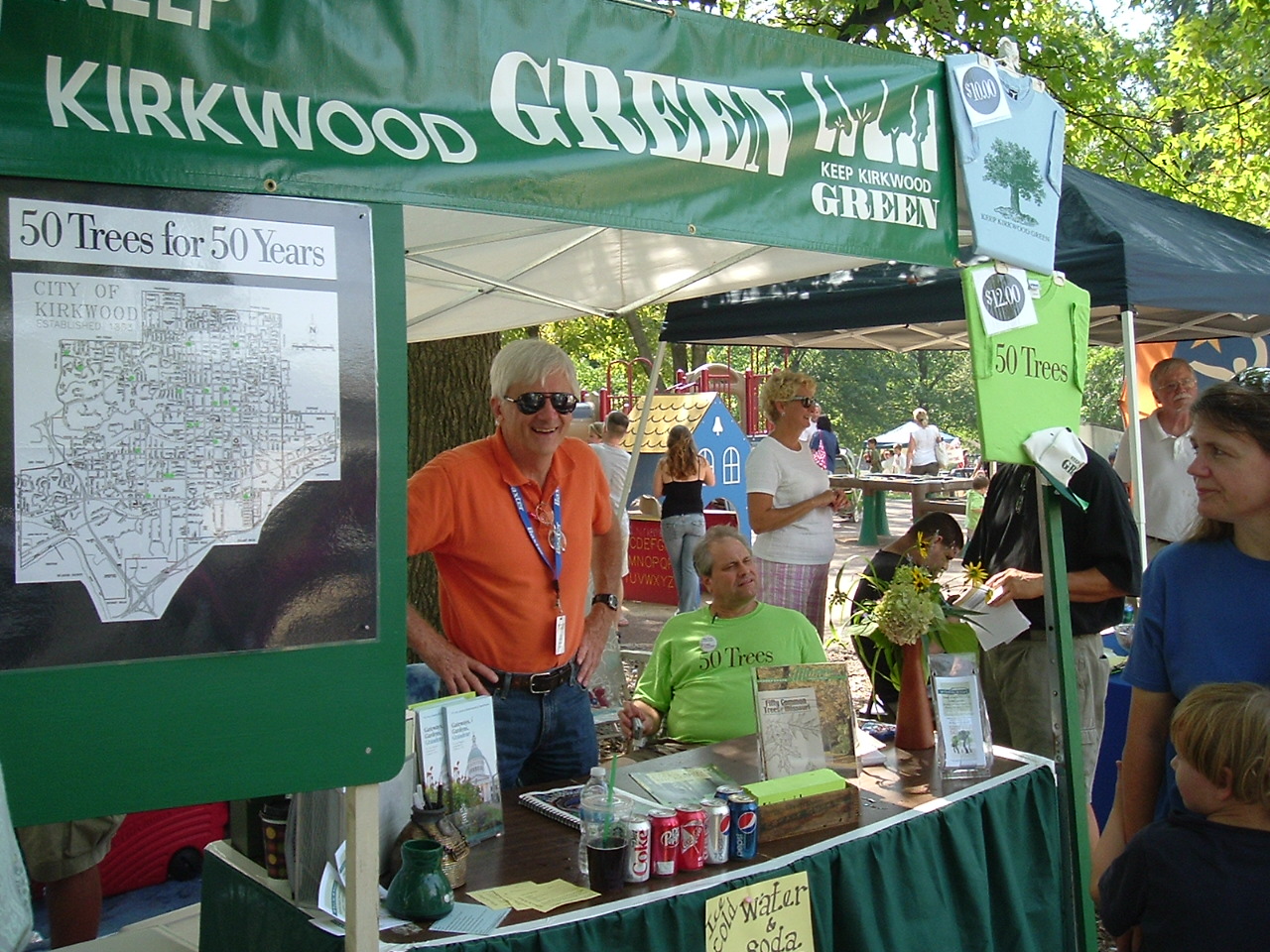
Alan volunteering with 50 Trees booth at Kirkwood Greentree Festival. Photo courtesy Alan Hopefl.
After I’m done cutting, I paint honeysuckle stumps with glyphosate which
works to keep the plants from re-sprouting,” said Hopefl. “I’ve heard that
the Bayer Company may quit manufacturing it, which is when I will probably
quit cutting down plants.
“Actually, it’s about time for a younger generation to take my place on this,”
he said. “The problem is that they may not be able to cut it down and hold
onto their cell phones at the same time. That could be an issue.”
Although Hopefl may be poking a little fun at any younger honeysuckle
slayers, he is counting on them. He has no illusions that he will win the war
in which he is now a decorated veteran.
“I know that the honeysuckle will outlive me – so, it’s a losing battle in that
sense. I know I can’t get it all,” he said. “When I am cutting it out, there are
steep places that I can’t get to, but I keep at it.
“I hack away at the stuff, whether it has sweet-smelling flowers in May or
pretty red berries in December,” declared Hopefl. “It’s a problem any time
of the year – and it needs be cut down.”
Hopefl isn’t fixated on honeysuckle. He does have other interests. For
example, he loves old Godzilla and sci-fi movies. He’s a great baker. He
loves opera, especially Mozart, and has season tickets to Opera Theater.
The honeysuckle slayer is a retired pharmacy educator. For years, he
wrote pharmaceutical reviews for a local health care business. He’s a
Kirkwood Garden Club member and donates many plants to their sales.
He’s a Webster Groves Nature Study Society member who frequents its
Monday botany walks. He has an amazing green thumb for native plants
– just more bad news for invasive honeysuckle.
 Environmental Echo