

All photos courtesy Bruce Sassmann.
By Don Corrigan
Missourians got their 93rd State Park, which is a total of 47.5 miles long, when mayors, state officials and citizen supporters had an unveiling and a little speech-making on June 30 in Windsor, Mo.
Among those in attendance was Rep. Bruce Sassmann, R-Belle, who has been
advocating for the park to extend 144 miles across the state. It would rival the Katy Trail State Park as a wonderful route for hikers, bikers, sight-seers and outdoor enthusiasts.
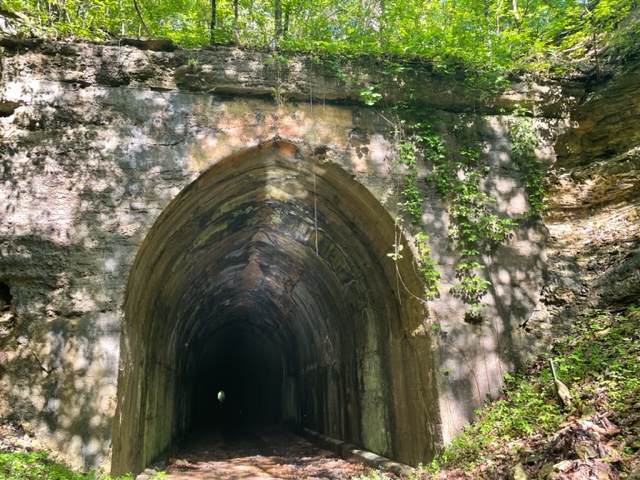 Sassmann advocates for the completion of the Rock Island Trail State Park and will frequently show photos of the corridor and the amazing sights and scenes that will be available when funding becomes available to complete the corridor’s entire length. Some of those visuals are posted with this article.
With completion of the Rock Island Trail State Park, the corridor will likely have
trailheads at Windsor, Ionia, Cole Camp, Stover, Versailles, Barnett, Eldon, Eugene Meta Argyle Freeburg Belle Bland Owensville Rosebud Gerald Beaufort and Union.
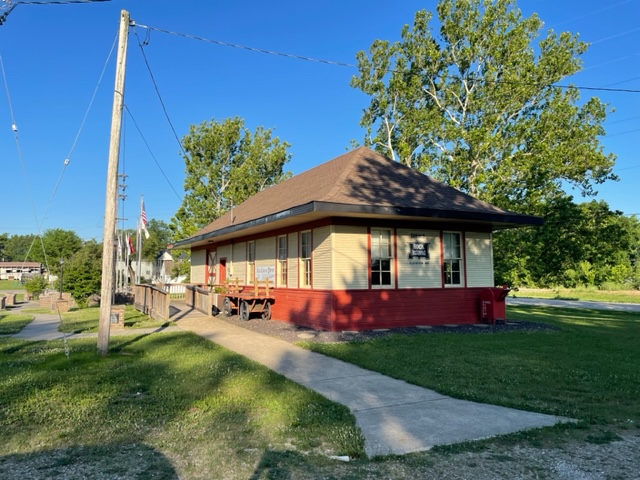
The open section now runs 47.5 miles from Pleasant Hill to Windsor. There are five trailheads, including the trailhead at Windsor that the park shares with Katy Trail State Park.
This developed section was originally considered the Rock Island Spur of Katy Trail State Park. With the acquisition of the Rock Island Railroad corridor, the developed spur became part of Rock Island Trail State Park.
Rock Island Trail State Park is part of a larger rail-to-trail system within Missouri State Parks. At Windsor, Rock Island Trail State Park connects to Katy Trail State Park, the nation’s longest developed rail-trail stretching 240 miles between Clinton and Machens in St. Charles County.
Katy is built on the former corridor of the Missouri-Kansas-Texas Railroad (MKT or Katy) and features 26 trailheads and four fully restored depots along the way. The trail is open to walkers, hikers and bicyclists with sections also open for equestrian use. Katy Trail State Park annually attracts more than 400,000 visitors.
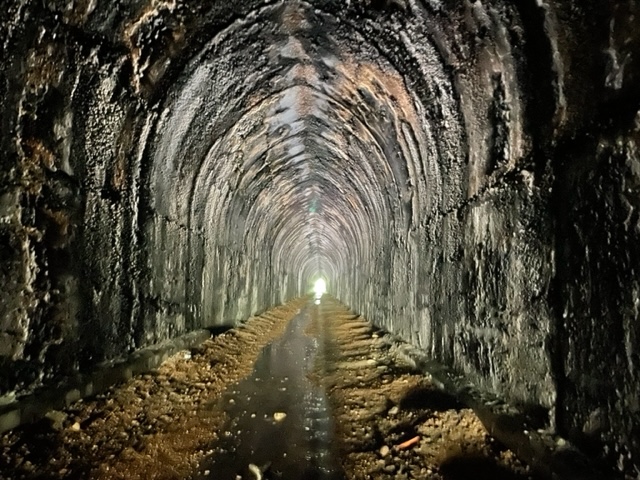
Rock Island Trail State Park will connect to Jackson County’s Rock Island Trail and will become part of a trail network spanning the entire state of Missouri, linking Kansas City to St. Louis.
At the recent unveiling of Missouri’s 93rd State Park, the Missouri Department of Natural Resources released some fascinating factoids about the corridor:
Did you know…
• The corridor includes three railroad tunnels, three deck truss bridges, five through truss bridges, four I-beam bridges and 20 deck plate girder bridges.
• At least 10 of the bridges were designed by the firm A.J. Tullock, a bridge-building firm of national and even international reputation. All are still in place and display all types and lengths of bridges required to span anything from a small stream to a major river.
• The Chicago, Rock Island and Pacific Railroad built the corridor between 1902-1904, and the engineering of the track bed, tunnels and bridges remains as built more than a century ago.

In addition to providing some fascinating factoids about the corridor, the Missouri Department of Natural Resources released this useful advisory on frequently asked questions about the corridor:
See these frequently asked questions:
1. Is the park open to the public? The developed section of Rock Island Trail
State Park, extending from Pleasant Hill to Windsor, is open to the public.
Undeveloped sections of the trail are not open for public use and trespassers will
be prosecutred in accordance with Chapter 569, RSMo; Section 253.035; RSMo
and 10 CSR 90-2.040(6).
2. I am an adjacent landowner. What if someone comes onto my property?
Missouri State Parks takes the concerns of adjacent landowners seriously,
especially with respect to the potential for intrusion onto private property. As has been the practice on the Katy Trail, it is the intent of Missouri State Parks to work cooperatively with adjacent landowners along the corridor. Missouri Statutes provide protection to landowners adjacent to recreational trails.
3. Why did Missouri State Parks take so much time to make a decision
regarding the rail corridor? The conversion of the corridor into a trail stands to
be a significant project and it was essential for Missouri State Parks to gain a
further understanding of the costs, liabilities and benefits of the potential project.
4. How much will it cost to build the 144 miles of undeveloped trail? An
estimated total of $100 million will ultimately be needed to fully develop the trail. The project’s funding will likely require a combination of private, public and corporate sources. Interested donors should contact the Missouri State Parks foundation to learn more about partnering in this effort.
5. Could Missouri State Parks build the trail in sections over years, similar to
the Katy Trail? Yes. It will not be possible to develop the trail all at once.
Development of the trail will occur in sections over several years, as each section
has different features and challenges.
6. Once the park is developed, will motorized vehicles be allowed on the trail?
All motorized equipment is prohibited except official and emergency vehicles.
Electrically assisted pedal-powered bicycles and tricycles will be allowed at a
maximum speed of 20 mph on developed sections of the trail. In addition,
electrically powered mobility devices, such as Segways and electric golf carts,
will be allowed for people with disabilities. Gas-powered vehicles, including all-
terrain vehicles and off-road vehicles are prohibited.
7. What if someone comes onto an adjacent landowner’s property? Missouri
State Parks takes the concern of adjacent landowners seriously, especially with
respect to the potential for intrusion onto private property. As has been the
practice on the Katy Trail, it is the intent of Missouri State Parks to work
cooperatively with adjacent landowners along the corridor. Missouri statutes
provide protections to landowners adjacent to recreational trails. In addition to
statutory protections, Missouri State Parks has worked cooperatively with
landowners adjacent to Katy Trail State Park to help minimize the likelihood of
trespass from the trail onto adjoining property. This was accomplished primarily
by marking the boundaries of state park property with signs placed at regular
intervals, which also warn trail users not to trespass. This message is also
provided via signage and brochures at all trailhead information depots. Missouri
State Parks will develop similar measures for Rock Island Trail State Park as
well.
8. Where will the money come from to build the trail? The project’s funding will
likely require a combination of private, public and corporate sources.


 Environmental Echo