All photos provided by Rob Koenig.
by Don Corrigan
Glendale retirees Mary Ellen and Rob Koenig made the trek in March to see where Monarch butterflies winter in Mexico. However, the mysterious creatures left a lasting impression – rather than becoming a mere check mark on a bucket list.
“I think we are more passionate than ever about monarchs,” said Mary Ellen Koenig. “I was interested in animal and insects and migrations from an early age, so this was something I wanted to pursue.
“It was quite a trip to see the monarchs wintering near El Rosario,” said Mary Ellen. “A plane to Mexico City, a rocky road with a driver for three-and-one-half hours, a very steep ride on horseback, and then a steep hike up to the monarch haven.”
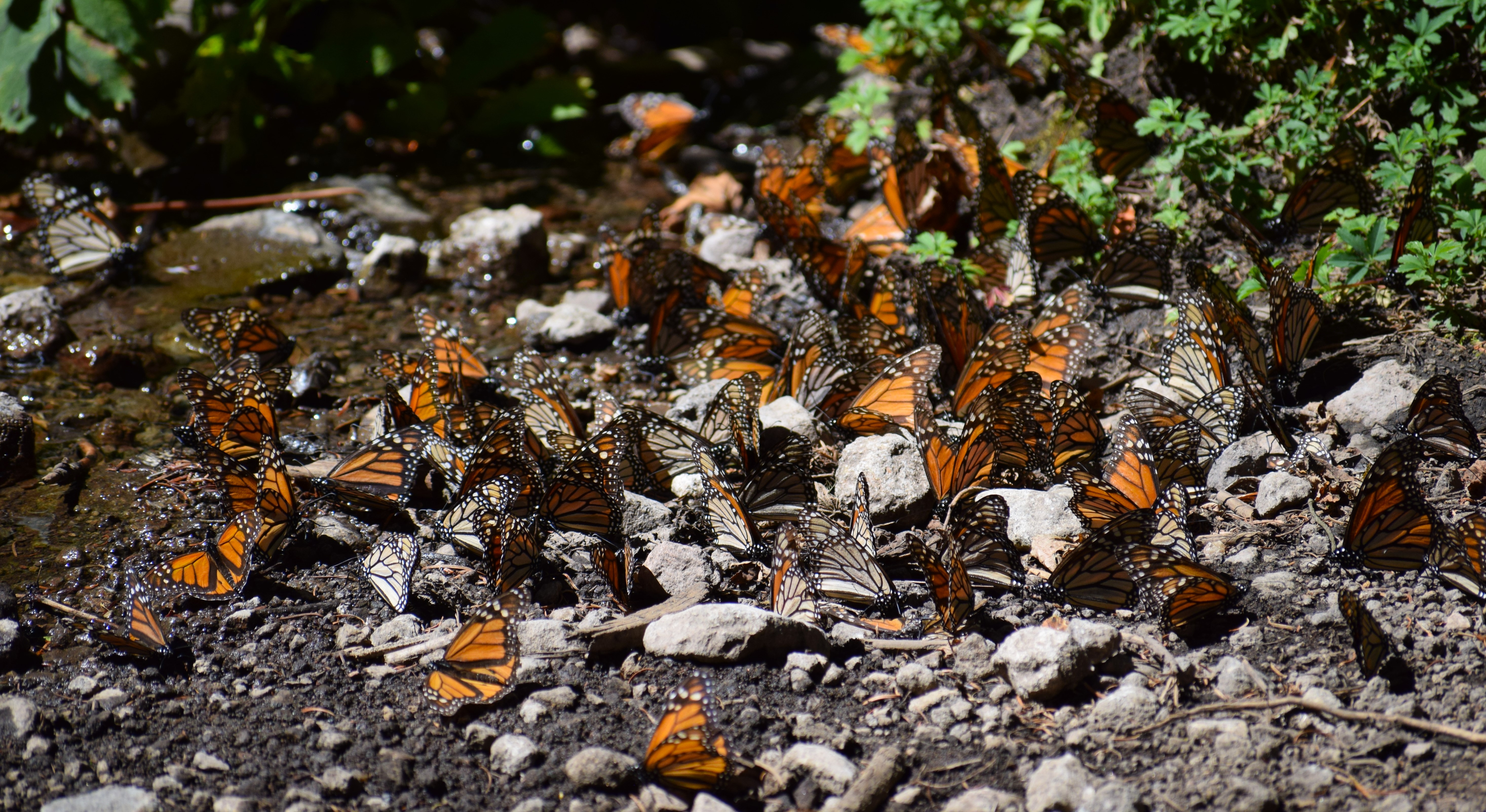
Rob Koenig said they got to the monarchs on March 7, just days before they start flying north. He said some were already packed for the long trek north. They were expected to be all gone from the forests they love by the end of March.
Monarch butterflies roost in the oyamel fir forests, which grow in a small mountainous area in central Mexico. Overwintering sites are two miles above sea level on steep, southwest-facing slopes.
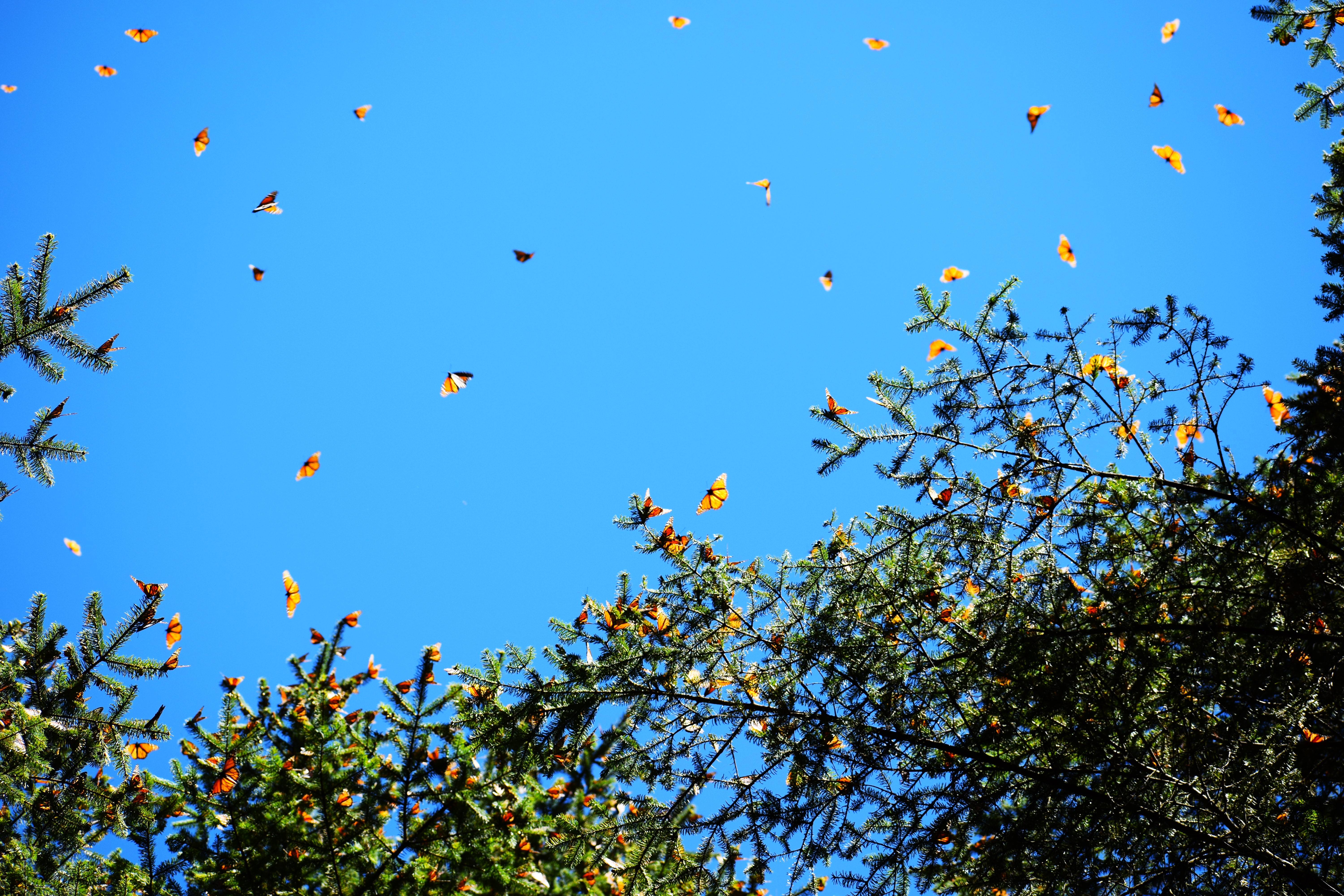
Mountain hillsides of the oyamel forests offer an ideal microclimate for the butterflies. Temperatures range from 35 to 55 degrees Fahrenheit. If the temperature lowers, the monarchs will have to use their fat reserves, which hinders their spring trip north.
“I used to write for Science Magazine, so this was really of interst to me,” said Rob Koenig, who received his master’s degree in journalism from the University of Missouri. “It’s an amazing story how the butterflies fly 3,000 miles south in the fall, and back in the spring.”
It was a long and strenuous trip from St. Louis to the oyamel forests for the Koenigs. They said they can’t imagine the ordeals of such a lengthy trip for flimsy, fluttering butterflies – and without the help of a jet airliner.
Butterflies’ Miracle Journey
Monarchs are the only butterfly to complete a two-way migration every year, according to National Geographic. Individual butterflies live four to five weeks, so it’s their descendants who will reach the northern states later this spring to complete an epic journey.
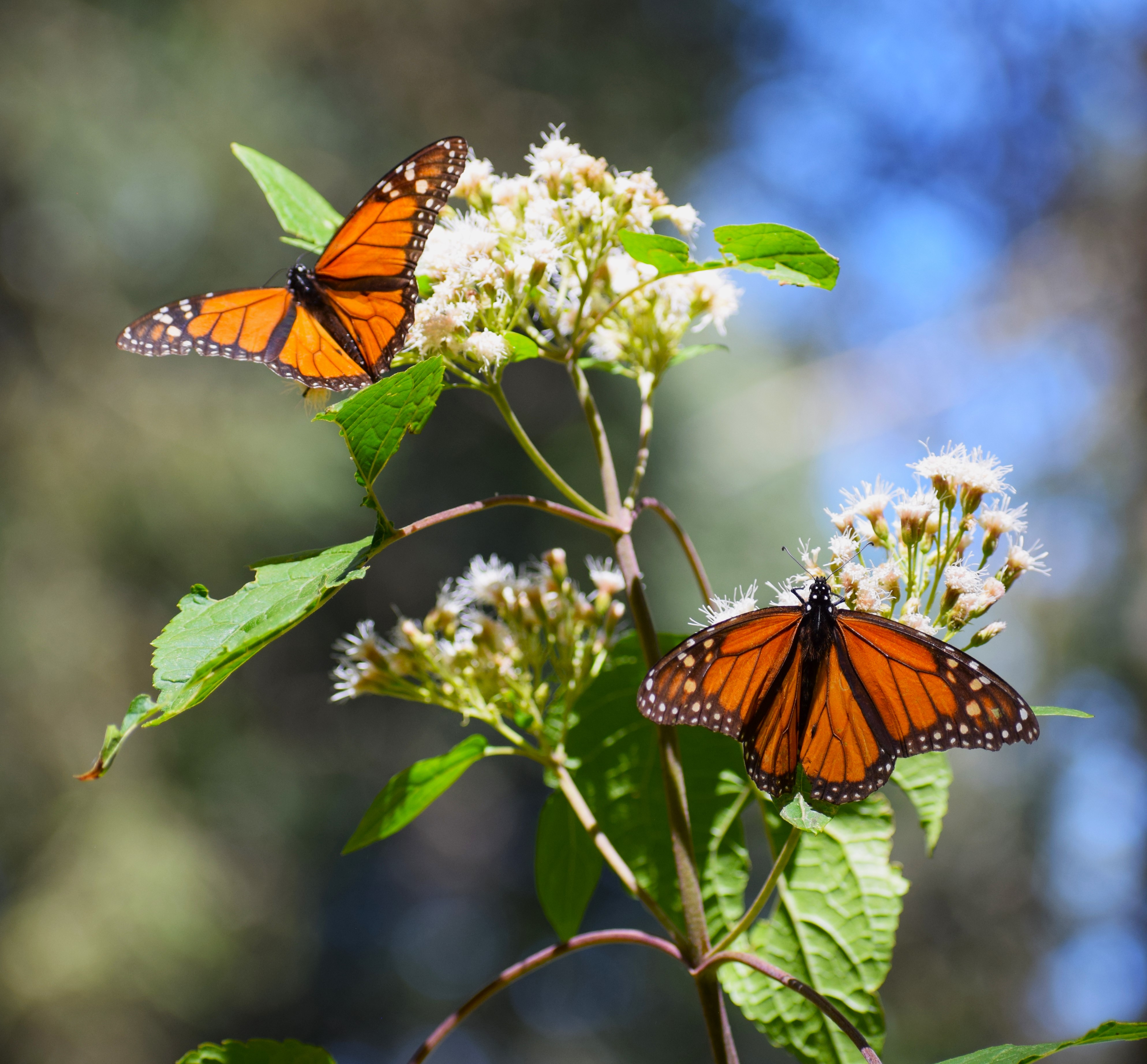
As pollinators, the monarchs’ migration across North America provides an invaluable service – an essential service for ecosystems to survive. The butterflies pollinate many flowers and dietary staples that humans enjoy, from squash to blueberries.
 “We saw huge clusters of them in the pines in Mexico,” said Mary Ellen Koenig. “The skies were filled with them by the thousands. However, there numbers are declining so much because of climate change.”
When temperatures get too warm in spring, monarchs migrate farther north than usual. Then, when winter arrives, the longer trips back to Mexico can decrease their survival rates and also hinder reproduction.
“Monarchs have also lost a lot of habitat from farming and climate change,” added Rob Koenig. “It’s not a predator problem because insects don’t eat them whether they’re caterpillars or butterflies. They have a bitter taste.”
Female monarchs lay their eggs on poisonous milkweed leaves. When the monarch caterpillar hatches, they eat the leaves. Milkweed toxins remain even after the caterpillar metamorphoses into a butterfly.
Animals that eat a monarch can become very sick. Nature has provided vivid markings on the monarch’s beautiful orange wings to warn predators to stay away from dining on the creatures as they glide in search of nectar.
The loss of prairies, meadows and grasslands means that there is less nectar available for butterflies of all species. The loss also means there are far fewer milkweeds which the monarchs absolutely depend on in their life cycles.
“When we got back to St. Louis, we planted milkweed in our yard in Glendale to help the monarchs,” explained Rob Koenig. “Their beauty is breathtaking, but we need them for a whole lot more.”
Koenigs’ Own Journeys
The Koenigs are St. Louis natives, but, like the monarchs, they have traveled thousands of miles and lived in different places for decades. Rob Koenig went to Cleveland High School in St. Louis and Mary Ellen Koenig went to Nerinx Hall High School.
Rob Koenig met his wife, Mary Ellen, after moving to Washington, D.C, in the late 1970s to work as a press spokesperson for the late St. Louis Congressman Bob Young. Mary Ellen worked on Young’s staff as well.
 After work on Capitol Hill, the two began career stints in foreign service and in diplomacy that have taken them around the world. They moved to Germany, where Rob Koenig worked for publications that took him to every European country as well as in Iran, Turkey, and Kenya.
When Mary Ellen was assigned to South Africa, Rob became an African correspondent for Science magazine and wrote articles for several other publications, including Fortune and National Geographic.
In 2013, Mary Ellen was sent to Moscow, and Rob got a job in the press section of the U.S. Embassy in Moscow. Rob analyzed and wrote on Russian propaganda during its initial invasion of Crimea and eastern Ukraine.
After Moscow, the couple moved to Bermuda where his wife became Consul General. Rob started writing a couple of novels, one of which is based on my years in Russia.
“So when we got to retirement age, we pretty much decided to come back to St. Louis and enjoy our families,” said Rob Koenig. “It has exceeded all our expectations and it has been fun to live in Glendale and to rediscover St. Louis.”
 Environmental Echo